



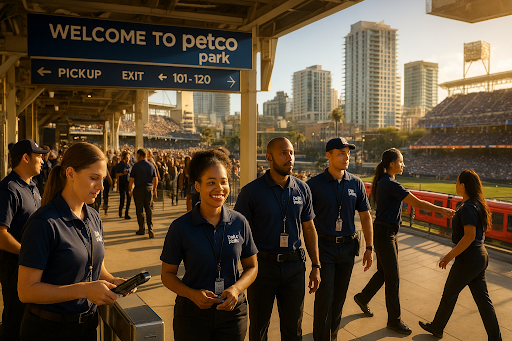
Last year, more than 200 major sporting events were held in San Diego, contributing over $800 million to visitor spending. From the 81-game home schedule at Petco Park to the game day scene that draws 40,000 fans to the Snapdragon Stadium complex — all along San Diego’s sports calendar is nearly filled year-round. The difference between a seamless operation and a logistical disaster can be as simple as the quality of the people running an event.
Live sports does not have the staffing model of a conference or festival. Gates open in waves. Concession rushes are for 12 minute windows between quarters. Security procedures change according to crowd size and the sale of alcohol. When you’re dealing with thousands of real-time guests, a event staffing team staff becomes the operational backbone. Setting up that team in a competitive labor market like San Diego involves planning that should begin weeks before kickoff.
Understanding the San Diego Sports Landscape
San Diego’s composition of venues adds to the challenge. Petco Park is located downtown, so the parking situation is a bit tight and Trolley service takes on most of that burden. The Snapdragon Stadium at Mission Valley site, the former location of Qualcomm Stadium, has introduced new traffic patterns that trip up visitors to this day. Pechanga Arena hosts everything ranging from Gulls hockey to boxing matches, in a landlocked community with narrow access roads.
Each venue draws labor from different pools. Downtown happenings can draw on hospitality employees finishing shifts at nearby hotels. The Mission Valley site would need clearly defined transportation plans, because public transit options don’t serve the stadium well. Pechanga Arena gets help from Old Town but also competes with restaurant and bar schedules for its evening staff.
Local regulations add another layer. Anyone working in an alcohol sales capacity is also required to take responsible beverage service training in San Diego. The city’s $16.85 minimum wage (as of 2024) is higher than in many similar markets, and this impacts budget calculations. And California’s stringent meal-and-rest-break laws require that you hire buffer staff to cover for the squat when your team rotates out.
Outdoor races are hardly ever a problem for the weather to deal with, but microclimates do play a role. One such day, a 72-degree afternoon downtown has been said to feel 10 degrees toastier at Snapdragon Stadium when the Santa Ana winds are chugging inland. Even outdoor post staff members need to have water and shade rotation incorporated into their shift schedules.
Building Your Staffing Framework
Start with role clarity. Live sports require seven core functions:
- Credentialing and gate management
- Concession and retail support
- Crowd control and section monitoring
- VIP and suite services
- Medical and emergency response coordination
- Parking and ground transport
- Post-event breakdown and cleaning
Each role carries different skill requirements. Gate staff need guest-service skills and the ability to defuse tension quickly. Concession workers must handle POS systems and move fast during rush periods. Crowd control requires situational awareness and radio discipline.
Map your staffing curve to attendance patterns. A weeknight Padres game could draw 25,000 fans who stream in over 90 minutes or something like that. A capacity playoff game is 42,000 people who all want to get in over a 45-minute span. Your staffing ratios should flex accordingly.
We’ve found these baselines work for most venues:
- One gate staff member per 300 anticipated entries during peak arrival
- One concession worker per 150 guests for high-traffic stands
- One security monitor per 400 seated guests in general admission
- Two dedicated crowd-control staff per choke point (stairwells, ramps, restroom corridors)
Pre-event training makes the difference. Most sports staffing failures happen because workers don’t know the facility. They can’t give accurate directions. They don’t understand where restricted areas begin and end. They panic when the fire alarm sounds during the third quarter.
A solid training protocol covers four areas:
- Facility orientation including emergency exits and rally points
- Chain-of-command clarity so staff know who handles what
- Scenario walk-throughs for common issues (lost children, medical events, ejections)
- Technology familiarization with radios, scanners, and POS systems
Training doesn’t have to take whole days at a time. Most teams are well prepared with a three-hour session the morning of an event, including visual aids and facility walk-throughs. For recurring events, refresher sessions before each game keep protocols sharp.
Hiring for the San Diego Market
San Diego’s labor market runs tight. Over 180,000 county-wide employees are in the hospitality industry and everyone is competing for the same pool of talent. Sports venues present unique obstacles because game-day employment includes the kind of irregular hours that not everyone can accommodate.
Focus on flexibility as your competitive advantage
Many potential workers have primary jobs and want supplemental income. SDSU, USD and UCSD students search for night and weekend opportunities that will not interfere with classes. Those who work hotel breakfast shifts can get afternoon or evening sports gigs.
By building a team of 200 to 300 quality laborers, you are then able to staff any event with an additional safety buffer for last minute cancellations. That requires aggressive year-round recruiting, not just for a few months before a major event.
Where to find reliable sports staff
Universities and community colleges during academic terms provide motivated workers who need flexible schedules.
Hospitality industry groups offer access to experienced professionals seeking additional shifts.
Military communities around Naval Base San Diego and Marine Corps installations supply disciplined workers comfortable with structured environments.
Referral programs from your existing top performers bring in candidates who already understand expectations.
Screen for specific attributes
Technical skills can be taught quickly. Attitude and reliability cannot.Find candidates who have a history of arriving to work on time, are able to remain calm under stress, and can relay directions efficiently.
Availability windows, transportation reliability and comfort with physical demands (standing for long periods; climbing stairs frequently; working in varied temperatures) can be covered during a 15-minute phone screening. This filters out mismatches before you invest in training.
Managing Game-Day Operations
The three hours before gates open determine how smoothly your event runs. This window allows for setup, briefings, and system checks that prevent problems later.
Your pre-event checklist should include:
- Facility walkthrough confirming all posts are accessible and properly equipped
- Radio check verifying every team member can communicate clearly
- POS system verification at all concession and retail locations
- Credential verification ensuring only authorized personnel access restricted areas
- Staff positioning placing workers at their assigned posts 15 minutes before gates open
Communication protocols prevent chaos. Establish clear radio channels for different functions. Gate operations stay on channel one. Concessions use channel two. Security and crowd control operate on channel three. Management monitors all channels and coordinates cross-functional responses.
Limit radio chatter to essential information. Teach staff to be specific and brief. “Section 114 needs crowd control” communicates more effectively than rambling descriptions.
Anticipate pressure points.
- Live sports create predictable surge moments:
- Gate opening when early arrivals rush entrance points
- Thirty minutes before first pitch when most fans arrive
- End of third inning when first concession wave hits
- Seventh-inning stretch when restroom lines peak
- Final out when everyone exits simultaneously
Position additional staff at high-traffic areas during these windows. Float supervisors who can respond quickly to emerging issues. Have backup workers ready to fill gaps when someone calls out or gets reassigned.
Solving Common Sports Staffing Challenges
High no-show rates plague sports events. Unlike corporate functions where hospitality work comes with professional expectations, game-day staffing attracts workers who treat shifts casually. A 15 percent no-show rate isn’t unusual, particularly for less desirable positions or inconvenient kick-off times.
- Combat this through:
- Confirmation calls or texts 48 hours before events
- Overstaffing by 10 percent to account for expected attrition
- Penalty systems for unexcused absences (three strikes and removal from roster)
- Incentive pay for workers with perfect attendance records
Inconsistent service quality emerges when you staff up quickly. One game might require 80 workers, another 200 or more if it is a rivalry night. That fluctuation also puts you in a position of having to use more inexperienced help for large parties, and that dilutes your service level.
- Create a tiered workforce model:
- Tier-one staff work every event and receive premium pay
- Tier-two workers get first call for additional shifts based on performance history
- Tier-three employees fill remaining needs but require closer supervision
This structure ensures your core team stays sharp while giving newer workers paths to advancement.
There are language barriers in San Diego’s diverse market. About a quarter of the county’s residents speak Spanish as their primary language, and many visitors fly in from Mexico for large sporting events.
Integrate language ability into your hiring. Bilingual staff earn premium rates and get positioned at guest-service posts where language assistance matters most. Even basic Spanish capability (“Where is section 220?” “Restrooms are down this corridor”) improves guest experience significantly.
Measuring What Matters
Track metrics that reveal operational efficiency:
- Average gate-entry time measures how quickly you process arriving fans. Under 45 seconds per person during peak arrival indicates smooth operations.
- Concession line wait time should not exceed 8 minutes at peak times. Longer waits imply either not enough staffing or bottleneck.
- Incident response time The time it takes for a supervisor to respond from the radio call
- Staff retention rate between events shows whether workers want to return. If fewer than 70 percent of your staff accept shifts for subsequent games, dig into why.
- Guest satisfaction scores from post-event surveys highlight service quality. Break these down by venue area to identify weak spots.
Collect this data systematically. Review it after every event. Use findings to adjust staffing levels, reposition workers, or modify training protocols.
Technology That Supports Your Team
Modern sports venues run on integrated technology platforms, and your staffing must align with these systems.
- Credentialing software controls facility access and tracks who enters restricted areas. Your gate staff needs quick training on the specific platform each venue uses.
- Mobile POS systems at concession stands require comfortable navigation under pressure.
- Bottleneck Employees who have difficulties using strange interfaces create a choke point in the entire location. Radio systems come in all sizes and shapes.
- Platforms for scheduling labor manage hundreds of workers across multiple shifts. Cloud-based systems let staff claim available shifts, request time off, and receive schedule changes instantly. This reduces administrative burden while giving workers more control over their availability.
Don’t overcomplicate technology adoption. Start with core systems that solve immediate problems. Add capability as your team demonstrates proficiency.
Building Long-Term Staffing Partnerships
Sports venues reward consistency. When you staff the same facility repeatedly, your team learns the environment intimately. They recognize regular season-ticket holders. They know which concession stands run out of popular items first. They understand traffic flow patterns that aren’t obvious on blueprints.
This institutional knowledge compounds over time. A worker in their 50th game performs at a completely different level than someone on their fifth shift. They anticipate problems before they develop. They need less supervision. They provide service that seems effortless because they’ve encountered every situation hundreds of times.
- Cultivate these long term relationships deliberately:
- Offer seasonal contracts to top performers guaranteeing work for entire home schedules
- Build career paths from the line to supervised positions
- Celebrate duration anniversaries with public thanks and tokens of appreciation
- Ask tenured staff for creative operational suggestions
Your best workers become ambassadors who recruit their friends and former colleagues. They train newer staff informally. They set service standards that others emulate.
Ready to Elevate Your Sports Event Operations?
Live sports in San Diego demand staffing precision that casual approaches can’t deliver.“With the highly competitive labor market, stringent rules and regulations, and very high guest expectations in Las Vegas, mediocre execution is visible on day one.
Whether you are handling your first game-day operation or refining established protocols, working with staffing professionals who know the particulars of San Diego makes a significant difference. Their knowledge of local hiring, venue-specific protocols and real-time operational management also means less headaches and better results.