



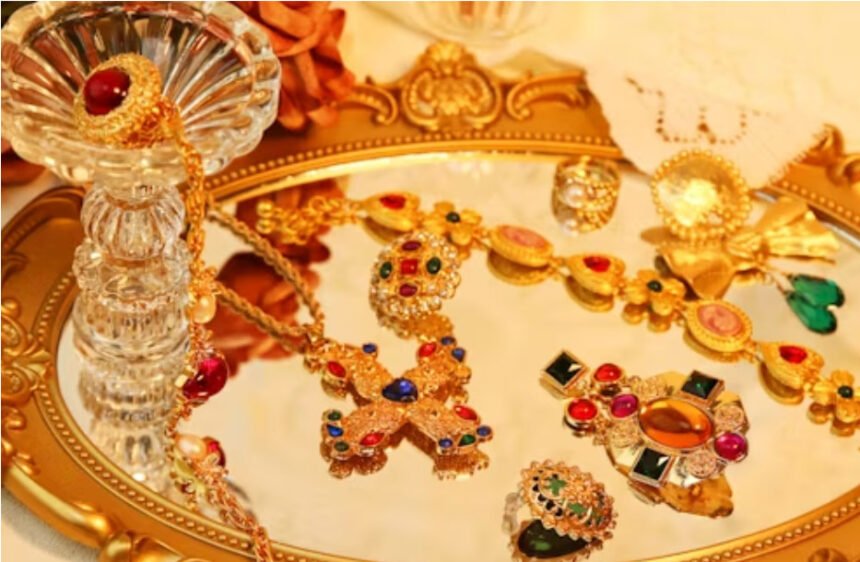
Costume jewelry retailers have active roles in the fashion industry and efficiently design and produce all fashion jewelry in a timely and cost-effective manner. For B2B wholesale distributors and retailers, understanding the processes used in the production of jewelry can assist in building valuable partnerships and improving the efficiency of your supply chain.
The purpose of this article is to highlight the systems, technology and collaboration processes used in the production of costume jewelry from conceptualization to the finished product to be sold retail.
The Costume Jewelry Manufacturer’s Role in the B2B Supply Chain
Costume jewelry wholesale retailers represent a significant portion of the global industry in fashion accessories. They fulfill the production portion of the supply chain, allowing their business customers (brands, distributors, and retailers) to have instant access to large quantities of high-quality jewelry at pace with current market demands.
The role of the production manufacturer in the supply chain business-to-business model does not stop at assembly. For B2B suppliers, their role also includes conceptual design, procurement of materials, design engineering, quality control, and design packaging. Engaging in a business partnership with a production manufacturer allows B2B suppliers the ability to sustain their focus on branding, marketing and jewelry distribution while reducing the challenges associated with managing a complex jewelry production operation.
Manufacturers focusing on scalability and customization allow brands to offer multiple ranges of products including earrings, bracelets, custom jewelry necklaces, and statement rings, designed to meet region-specific and season-specific demands. Such partnerships allow the brand to have each piece designed to match the brand with the right price and quality.
Design and Concept Developing: From Dreams to First Samples
Production does not simply start with the casting of metal and the setting of stones; there are several design processes and concept developments to do first. In the design and concept developing stage, costume jewelry companies partner with B2B clients to bring to life the imagination of the client in the form of design, which is ready for handover and production.
These are the main processes in the stage:
- Trend Research and Market Analysis.
Manufacturers analyze the world’s trends to study the color palettes, materials, and fashion styles that are dominant in the target market, and use that to help the brands with collections development to meet the consumer needs. - Collaboration Design Consultations.
With the aid of design briefs, suppliers work with their clients to polish the ideas into form workable plans through virtual meetings. These ideas are captured in sketch form or in computerized architecture where style, proportions, and materials are demonstrated. - 3D Modeling and CAD Rendering
CAD programs let manufacturers make virtual models that give clients the ability to see the virtual model before any samples are made to see the details like stone settings, clasps, and engravings. - Sample Creation and Approval
After the design is finalized, the sample is made using one of three methods: casting, plating, and 3D printing. This is to ensure that the design is made to the clients compliance of looks, comfort, and function before the design is mass produced.
This stage requires the most time and communication. Manufacturers utilizing digital communication that allows them to participate in the process of visualization and collaboration in real time will have the most success in reducing lag time in the process, allowing the B2B customers to get their products in the market faster than their competitors.
Balancing Quality and Cost in Material Selection and Sourcing
The focus shifts to sourcing raw materials once a design is approved. Material selection greatly affects the quality, durability, and overall cost of the product.
A reliable costume jewelry company has a well-established network of materials suppliers, enabling them to offer a variety of options depending on client preferences, competitors and market positioning. Typical materials are brass, stainless steel, alloy, and zinc with a finish of gold, silver, or rhodium plating.
Sustainability is an increasing priority for every B2B customer. To comply with international environmental and safety standards, manufacturers are selling recycled metals, eco-friendly plating, and hypoallergenic coatings.
At this point, suppliers are evaluating these criteria for potential vision partnerships:
- Material availability and consistency for reliable supply chains
- Cost efficiency that can be achieved through bulk buying or using other materials
- Compliance with international policies (e.g. lead- and nickel-free)
- Design so that the product can be designed as desired
A positive sourcing strategy enables manufacturers to keep prices low while maintaining a healthy quality, a vital equilibrium within B2B jewelry.
Streamlined Production: Efficiency from Technology and Process Management
With sufficient materials in stock, production starts: the automation is paired with artistry. Advanced manufacturing technologies and lean production approaches are utilized in modern costume jewelry companies to control costs and boost consistency, speed, and efficiency.
Production covers several important phases:
- Casting and Molding
Metal parts are shaped with the use of a mold or a wax model. Automated casting equipment achieves both waste minimization and efficiency, while preserving environmental balance through surplus waste.
After polishing is completed, the pieces are plated in their respective metals which are normally gold, silver, and other finishes. The thickness of the plating is then customized according to quality and budget needs.
Techs and technicians assemble the jewelry in its final form. This includes the setting of gemstones, crystals, and other decorative items, and the joining of various parts, including chains and clasps.
Engraving and logo stamping, are the brand’s final logos and last steps on the pieces that have been touched.
Production errors are improved and throughput increases thanks to automation. The works of precision machinery collaborated with artistry allow jewelry makers to craft their pieces thousands of times while still maintaining high quality.
Packaging, labeling, and shipping are the last steps in product creation, which in turn are the first steps in the supply chain. These finalize the production and pre-market phases of fashion jewelry items.
Branding and retailing prerequisites dictate the packaging needs of B2B buyers. Custom packaging is offered by Costume Jewelry Companies which includes branded boxes and protective transit packaging.
After products are packaged, manufacturers arrange for shipping with one of their worldwide logistics partners. Well-structured supply chain management makes delivery on time and saves both parties money on storage.
Orders of a certain size may allow suppliers to provide their B2B partners with warehousing and inventory control services that support just-in-time stock. By seamless routing of logistics, manufacturers prevent their jewelry collections from being stalled because of expensive delays or overstocking.
New Technologies, Sustainability, and the Future of Jewelry Manufacture
The jewelry sector continues to transform, with costume jewelry companies adopting new methods and sustainable practices in the jewelry industry. 3D printing and digital design libraries coupled with AI to anticipate demand for collections substantially change production processes and planning.
Furthermore, the future of B2B jewelry production is sustainable. Jewelry manufacturers are minimizing negative environmental impacts with eco-friendly plating methods, waste reduction programs, and the use of recycled metals.
So, is traceability. B2B buyers look for partners who can provide documentation for their practices in sourcing, manufacturing, and labor, improving reputation and trust within the supply chain.
Continuing to collaborate will be essential for continued success. As custom jewelry necklaces along with other items get more personalized to consumer needs, more integration between manufacturers and B2B brands will be necessary to develop lines with the right mix of innovation, price, and eco-friendly production.
Conclusion
Transporting an idea from the drawing board to the retail rack in the costume jewelry world is complicated, yet potentially harmonious. Costume jewelry companies act as crucial facilitators for B2B brands, accompanying them hand in hand on this journey, from design and materials to finished product and fulfillment.
Communication, technology, and eco-friendly approaches enable manufacturers to match market needs, as they orchestrate the activities of various players involved in the production of each jewelry collection.
B2B buyers will derive the most value from this knowledge as they choose the right blend of innovative and operationally proficient manufacturers. All players involved in the business of new design for each season and/or product line expansion will experience frictionless processes and market success, if they partner with visionary manufacturers. This will be more noticeable as the jewelry market continues to rapidly develop.
For More Information Visit Fourmagazine