



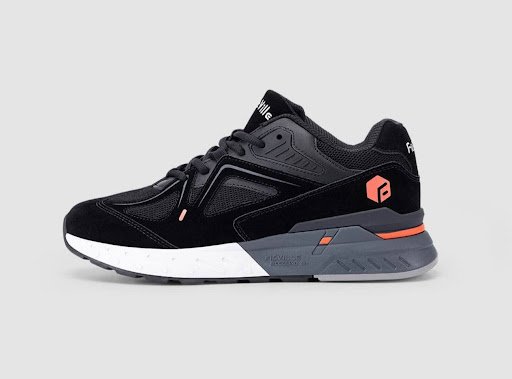
They say that with complete certainty, the majority of individuals. What follows is a day of pinching, burning, numb toes, or the annoyance that creeps up into the arch when they wear a size 10 shoe. The thing that’s unclear is that the length could be accurate. It’s the breadth that’s off.
One quiet deal-breaker is foot breadth. Also, most of us never learned how to measure our feet correctly, so we always think the shoe is the issue rather than our “normal” feet. Actually, it’s possible the shoe is alright. Designed specifically for a distinct kind of foot, that’s all.
If you want to know how to measure your foot width consistently and easily at home, then you should read this article. Then you can use that measurement to make more informed shoe purchases. Becoming a podiatrist is not the intended outcome. That way, your “true size” won’t cause any pain.
Take a measurement of your foot’s length and breadth at home if finding your actual size is painful. Take a measurement of your foot’s width across the ball of your foot while standing, and then compare it to the brand’s width chart. Even when the length is right, many individuals need a larger width, this is particularly true for those who suffer from bunions, high insteps, edema, or broader forefeet. In a good width fit, your heel and midfoot should be snug, but your toes should have room to expand.
Why “true size” is often only half the truth
In common parlance, shoe size refers to the length. That’s all. But volume, breadth, and length all interact to determine comfort.
- Length answers:are your toes making contact with the front?
- Width answers: do your toes have space to sit and spread?
- Volume answers:is your arch feeling compressed or well-supported?
If your shoe causes discomfort despite your toes not making contact with the front, the width and volume are likely the primary culprits.
This is the rationale behind the frequent occurrence of this phenomenon.
Most stores fit you seated or rushed
When seated, your foot does not experience complete pressure. It has a reduced spread.
Your arch exhibits distinct characteristics. Your foot appears more slender than its true form while you walk.
Receiving a quick size assessment may lead you to believe that being told “you’re a 10” encompasses the entire narrative.
Feet change over time
Factors such as age, fluctuations in weight, activity levels, injuries, pregnancy, swelling, and climate can all influence the shape of your feet. A significant number of individuals gradually transition to broader footwear, often unaware of the change until discomfort compels them to take notice.
The same “width letter” does not feel the same everywhere
A “D” width in one brand may have a distinct feel compared to another. A shoe featuring a narrow toe box may feel constrictive, even when the designated width is accurate. The essence lies in the construction, beyond mere labels.
That’s why assessing at home and evaluating fit indicators surpasses relying solely on the numerical value.
Signs your true size is right in length but wrong in width
If you identify with these, you are likely not experiencing a miscalculation in sizing. Your width matching is incorrect.
- Red marks appear at the sides of the forefoot or in the vicinity of the bunion area.
- Your pinky toe appears to be compressed towards the center.
- The ball of your foot appears to be extending beyond the boundary of the sole.
- You frequently adjust your laces for comfort, yet your heel continues to slide out.
- After a walk, you may experience a sensation of numbness or tingling in your feet.
- Calluses form on the outer edge of the forefoot.
- Your shoes provide a reasonable level of comfort in the morning, yet they become quite uncomfortable by the afternoon.
These represent fundamental width and volume indicators.
What you need to measure foot width at home
Keep it simple. You do not need fancy tools.
Two sheets of paper (A4 works)
- A pen or thin marker
- A ruler or measuring tape
- A hard floor (not carpet)
- A wall
Optional:a facilitator, as the process of tracing becomes more manageable when another individual guides the pen.
Execute this at the optimal time of day as well. Your feet tend to expand marginally as the day progresses, influenced by swelling and physical activity. Measuring first thing in the morning may lead to an inaccurate assessment of your actual width.
It is advisable to conduct measurements during the evening hours.
Step-by-step: how to measure foot width properly at home
This method provides the most dependable outcome without the need for specialized equipment.
Step 1: Set up your paper against a wall
Position the paper on a solid surface, ensuring that one edge is aligned perfectly with the wall. A precise 90-degree corner is essential for accurate length measurements.
Step 2: Stand on the paper with full weight
This holds significant value. Seated measurements can be misleading.
Position yourself upright with your heel gently in contact with the wall. Maintain a balanced distribution of your weight. Avoid attempting to “pose” or maintain your arch.
Your foot must function as it does in everyday situations.
Step 3: Trace the outline carefully
Carefully outline your foot using the pen in a vertical position. Avoid positioning it beneath your foot, as this will reduce the outline.
With assistance, the outline will achieve greater precision. Proceed with caution and maintain a vertical position of the pen while undertaking the task independently.
Execute the same action with the opposite foot. It is common for individuals to have one foot that is marginally larger or wider than the other.
Step 4: Find the widest part of the forefoot
The broadest area typically spans the ball of the foot, extending from the base of the big toe joint to the base of the pinky toe joint.
Identify the two most expansive points on the outline.
Step 5: Measure the width in millimetres
Employ a ruler to ascertain the linear distance between the two designated marks.
Refrain from measuring along the curve. Take a direct measurement across.
Document it for every foot.
Step 6: Measure the length too, because width depends on length
Width categories correspond to shoe length sizes. A size 9 “wide” does not possess the same absolute width as a size 12 “wide.”
Determine the distance from the heel to the longest toe along the outline.
Make sure to note that as well.
Step 7: Use the larger foot as your reference
Accommodate the larger foot. Adjustments can always be made to the smaller side using socks, lacing, or insoles. Attempting to compress the larger foot is where discomfort begins.
The missing piece: width is not only about the number
You now possess the measurement. The subsequent phase involves comprehending its implications within the context of footwear.
The reality is this: two individuals may share identical measured widths yet perceive varying levels of tightness due to the distinct shapes of their feet.
Foot shape factors that change how width feels
Bunions expand the width outward, resulting in a sensation of constriction in toe boxes.
- An elevated instep enhances overall volume, resulting in a snug sensation on the upper part of the shoe.
- Flat feet frequently exhibit increased spreading under weight-bearing conditions.
- A broad forefoot combined with a slender heel can lead to simultaneous tightness and heel slippage.
- Swelling causes the width to vary throughout the day.
Your measurement serves as your foundational reference point. Your comfort cues serve as the ultimate authority.
How to translate your measurement into better shoe choices
At home, achieving a flawless conversion of width into a letter requires a brand’s specific chart. However, you can start making more informed decisions right away.
Use your width measurement to avoid narrow toe boxes
For those with a wider forefoot relative to their length, it’s advisable to steer clear of shoes featuring pointed toes or slim designs, regardless of their fashionable appeal.
A shoe may be designated as “wide,” yet it can still narrow excessively at the toes. Seek a design that maintains ample space in the toe section.
Prioritise “secure heel, roomy front”
A suitable width fit should not compel you to compromise by loosening laces to the point where your heel slips.
To achieve additional space in the front, it is essential to consider increasing the width or optimizing the last shape, rather than simply extending the length.
Remember: sizing up in length is not the same as sizing up in width
Numerous individuals address tightness by extending their duration. This introduces a novel challenge.
- Your foot slides forward.
- You grip with your toes to stabilise.
- You get blisters.
- You create pressure under the ball of the foot.
If the length is correct, adjust the width, not the length.
That is exactly why shopping specifically for wide shoes can be a better approach than playing the “half size up” game and hoping it works.
Fit checks you should do the moment you try a shoe on
Even with flawless measurement, the shoe must undergo rigorous real-world evaluations.
The toe spread check
Rise to your feet. Flex your toes.
Your toes ought to have ample space and should not experience any constriction. The big toe must not be compelled to move inward. It is advisable to allow for a slight expansion.
The side pressure check
Walk and observe the ball of your foot.
If you experience side compression or your foot appears to be spilling over the edge of the sole, the width is insufficient.
The heel lock check
Your heel should feel secure, not adrift.
If you find yourself lacing tightly to prevent heel slip, it may indicate that the shoe is not well-suited to your foot shape.
The “10-minute truth”
Engage in a 10-minute indoor stroll.
Hot spots typically emerge rapidly. If you experience a distinct sensation of friction, it is imperative not to overlook it. That friction evolves into a blister over time.
Common myths that keep people in painful shoes
Myth 1: “Shoes just need to be broken in”
A shoe has the capacity to become more pliable. It is unable to alter its core structure sufficiently to accommodate a varying foot width.
If it causes discomfort early on, it typically remains an issue.
Myth 2: “Wide shoes are only for very wide feet”
Not true.
Certain individuals require wider footwear due to conditions such as swelling, bunions, toe alignment issues, or simply the natural shape of their feet. Comfort is not a competition.
Myth 3: “Going up a size will fix tightness”
At times, it conceals the issue for a brief period, yet it frequently leads to slipping, toe gripping, and a lack of stability.
Myth 4: “One foot measurement is enough”
Your feet seldom mirror each other perfectly. Consistently assess both options and select the more substantial one.
What if your foot is wide but your heel is narrow?
This occurs more frequently than many realize.
Should your forefoot be broad while your heel is slender, you might encounter:
- Tightness at the toes and sides.
- Heel slip at the back.
The answer lies in avoiding the selection of narrow shoes. The objective is to identify a design that provides ample space in the forefoot area while enabling customization at the midfoot.
Strategic modifications encompass:
- Heel-lock lacing techniques.
- Slightly thicker socks if the heel is too loose.
- Insoles that improve heel seating.
However, the foundation remains significant. A shoe designed with ample forefoot space is essential. That is why selecting a specialized category such as wide shoes can spare you from countless attempts and frustrations.
A simple home routine to keep width fit consistent
Even if you already possess shoes that feel “adequately comfortable,” a brief regimen can avert the onset of subtle discomfort.
Examine your feet in the evening for any red marks along the sides of the forefoot.
When the marks exhibit consistency, it indicates a width signal.
Alternate your shoes to ensure that swelling patterns do not consistently impact the same pressure points each day.
Select socks that provide ample space for the forefoot without constriction.
Regularly reassess the width every few months if you experience swelling, new pain, or changes in activity.
Comfort evolves with the passage of time. Your footwear selections ought to evolve accordingly.
FAQs
How do I know if I need wide shoes?
If your length seems appropriate but your forefoot experiences pinching, your toes feel constricted, you notice red marks on the sides, or you encounter numbness after walking, it might be necessary to consider a wider width or a more spacious toe box.
What time of day should I measure my feet?
The optimal time is late afternoon or evening, as feet tend to experience slight swelling throughout the day. This provides a more accurate dimension for everyday use.
Should I measure with socks on?
Take measurements without footwear for the most precise outline. When trying on shoes, ensure you wear the socks you intend to use regularly.
Is it normal to have one foot wider?
Indeed. It is quite prevalent. Adjust the larger foot to prevent pressure injuries.
Can I just size up if I cannot find wide widths?
Increasing length frequently results in slipping and instability. If width is a concern, consider exploring options that offer a broader fit or footwear specifically crafted with additional space in the forefoot area.
Final takeaway: “true size” is not a single number
If your actual size causes discomfort, do not conclude that your feet are at fault or that you are being overly particular. It appears that width may be absent.
- Measure your feet while standing.
- Measure both feet.
- Utilize the broadest section spanning the ball of the foot.
- Select footwear according to the natural dynamics of your foot, rather than the appeal of a brand name.
Once you begin to align width accurately, comfort transforms into a satisfying monotony. No pinching allowed. Toes remain fully functional. No regrets at the close of the day. Simply footwear that enables you to move authentically.