



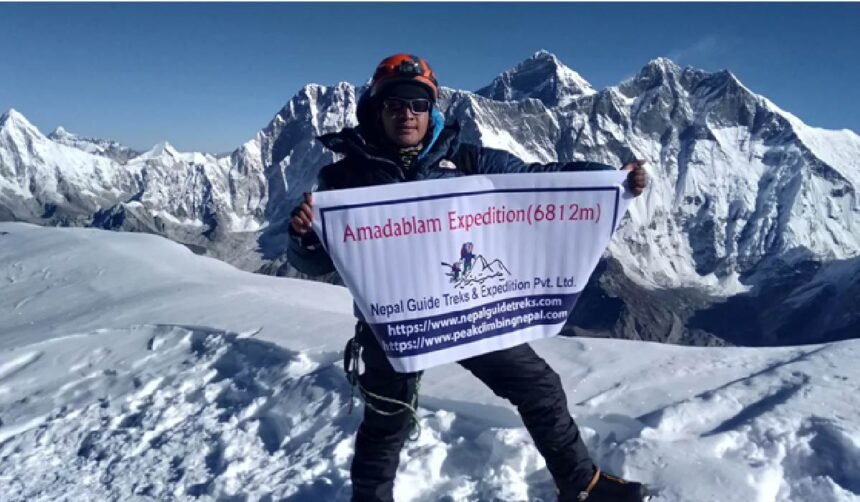
Climbers who are aiming for the Ama Dablam Expedition should be aware of the fact that it is a gradual process and needs ample training. They need to be able to handle the harsh mountain weather and the high altitude. Therefore, the best way to train for the expedition is by completing the remote and challenging treks like the Gokyo Lakes Trek first. This not only improves physical stamina but also helps develop altitude awareness. Similarly, climbers get a better understanding of gradual and slow pacing and setting strategic acclimatization points.
Journey to the Gokyo Lakes is a demanding adventure that comprises varying landscapes. Additionally, it passes through secluded areas that have minimal settlements and infrastructure. The maximum elevation of the journey is 5,357 meters at the top of the Gokyo Ri. Moreover, trekkers spend more than a week above an altitude of 3,500 meters. So, completing this trip requires sustained high-altitude exposure and physical stamina. Moreover, this also improves the navigation skills and understanding of strategic acclimatization.
Ama Dablam is one of the most difficult mountains to summit that is below 7,000 meters. This is because it has several technical sections and requires the climbers to operate various tools. They need to be familiar with using the fixed ropes, ice axes, jumars, snow bars, tape slings, main ropes, etc. Therefore, climbers should never underestimate the need to have strategic rest points while attempting the summit. Despite the altitude being lower than 8,000 meters, the technicality still remains, making the expedition challenging.
Understanding Altitude Strategy In The Himalayas
Before attempting any Himalayan expeditions, it is important to assess the high elevation and its possible risks. To adapt to extreme cold and high altitude, the mountaineers need to ascend gradually. Likewise, they need to follow the “climb high, sleep low” principle; even if they reach a high elevation, they should head to the lower regions for the night.
Another major factor that climbers need to be mindful of is the limitation of the daily altitude gain. Especially above 3,000 meters, trekkers should not aim for more than 300 to 500 meters of elevation gain per day. If not, there can be higher chances of experiencing the symptoms of Acute Mountain Sickness (AMS). With slow pacing and gradual progression our bodies get ample time to make the necessary physiological adjustments.
Climbers should be able to recognize the earliest signs of altitude discomfort. These include nausea, dizziness, headache, loss of appetite, and shortness of breath. They should never dismiss these signs, thinking they cause no major harm. Even though they are not alarming concerns, they are an indication of your body struggling to adapt to the change in the environment.
Therefore, they should stop the ascent immediately and rest until the symptoms completely go away. Likewise, if they get even worse, then they should descend to the nearest lower elevation. Lastly, if the condition is severe, then manage an emergency helicopter evacuation and seek professional medical care.
Gokyo As Natural Acclimatization Route
The journey consists of a gradual progression through several high-altitude landmarks. The trekkers pass through Phakding and head to Namche Bazaar (3,440 meters). After a rest day, here the trails stretch towards Dole (4,040 meters), passing through traditional villages and spiritual monasteries, locally known as gompas. The next day, the journey moves towards Machhemro (4,410 meters) by ascending through the yak pastures and meadows and crossing the small yet beautiful Luja village.
Likewise, the route progresses to the stunning Gokyo Valley, where the six turquoise Gokyo lakes are situated. So, this journey is an ideal example of gradual elevation gain for expeditions of technical mountains like Ama Dablam. Additionally, the careful acclimatization day is set at Namche Bazaar after Phakding and before Machhemro, showing the importance of rest days during high-altitude adventures.
Similarly, climbing to the top of the Gokyo Ri (5,357 meters) and returning to the settlement area. This allows climbers to understand the importance of resting at the lower elevation. Moreover, they can experience a better recovery process for themselves. Lastly, they can also assess their physical strength and daily pacing.
This helps them set an itinerary that is suitable for their fitness level. Exposure to the thin air and low oxygen levels at the higher regions comes in handy when expediting the mountain. Climbers can practice breathing techniques while trekking through the rugged paths that mimic the technical sections of the mountain. Doing so allows for improved oxygen absorption during the summit in extreme low temperatures.
Roles Of Rest Days And Recovery
- Boosts the acclimatization process and reduces the chances of Acute Mountain Sickness (AMS).
- Recovers the tired muscles and helps rejuvenate for the difficult days ahead.
- These pauses are an ideal time to hydrate yourself and consume a nutritious diet. This helps our body to stay energized and healthy to complete the rest of the journey.
- Proper rest days help retain stamina and reduce the chances of slips, falls, or other accidents on the trail.
- Trekkers or climbers may notice the signs of discomfort that could have been easily overlooked had they kept moving forward.
- This break serves as a time period to prepare yourself both physically and mentally to hit the trail again. As your body is energized and your mind is fresh, you can tackle the challenging paths
- While trekking, the acclimatisation hike allows the exploration of the nearby viewpoints. Moreover, explore the local culture and tradition, try the local cuisines, and visit the local heritage sites.