



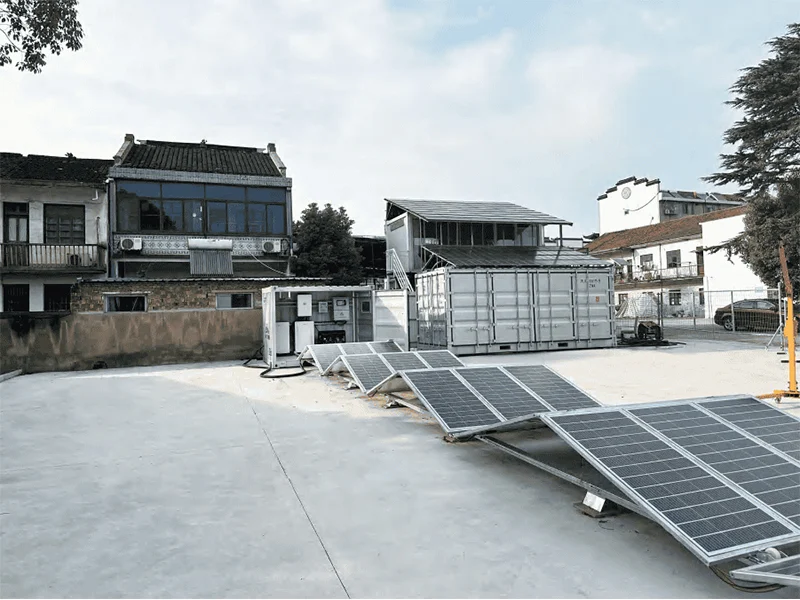
People and companies are searching for sustainable energy solutions because they need dependable energy sources which keep growing in demand. The advanced systems provide three key features which make them suitable for off-grid living and emergency backup and commercial applications.
The solar power container provides an all-in-one power generation system which operates as a compact solution that requires no additional infrastructure for installation. Users can easily produce energy from the system because current systems function as a portable solar power solution which enables users to create energy at any location.
The complete guide teaches you to establish your solar power container system through its step by step process, which includes essential information for achieving maximum efficiency and lasting system performance.
What Is a Solar Power Container?
A solar power container is a fully integrated energy system housed inside a shipping container or modular unit. It includes:
- Solar panels for energy generation
- Battery storage systems for energy retention
- Inverters to convert DC power into usable AC electricity
- Charge controllers to regulate power flow
- Monitoring systems for real-time performance tracking
The design system consolidated all components which eliminated the need for complicated installation procedures. The system serves as the preferred selection for novice users and expert users.
Why Choose a Mobile Solar Solution?
A mobile solar solution brims with benefits, over the traditional systems:
Portability
Being able to mobilize and use it anywhere makes it the perfect machine for doing so in remote locations.
Quick Setup
Installation of the system can be accomplished in hours rather than weeks.
Scalability
This system can be upscaled to operate according to the requirement or need for expanded capabilities.
Energy Independence
Go completely off-grid, with no dependence on utility companies..
Eco-Friendly Power
Solar power is clean, sustainable, and reduces to a significant degree polluting carbon discharges.
Step-by-Step Guide to Setting Up Your Solar Power Container
The steps which you need to follow must be executed with complete precision.
Step 1: Assess Your Energy Needs
Your power needs are the one thing that has to be looked at before setting up your solar power container.
Consider:
- Devices you plan to use
- Their wattage
- Daily usage hours
Example Calculation:
- Lights: 100W × 5 hours = 500Wh
- Refrigerator: 200W × 24 hours = 4800Wh
- Laptop: 60W × 6 hours = 360Wh
Total = 5660Wh/day
This helps you choose the right system size.
Step 2: Choose the Right Container Size
Solar containers come in different sizes:
- 10-foot containers (small-scale use)
- 20-foot containers (medium applications)
- 40-foot containers (large-scale power needs)
Step 3: Select the Ideal Location
The effectiveness of solar technology is mainly localized by the location of the installation site.
Ensure the site location:
- Receives maximum sunlight
- Has minimal shading
- Is stable and level
- Allows proper airflow.
Step 4: Deploy the Solar Panels
Most mobile solar solution systems feature foldable or extendable panels.
Steps include:
- Unfolding or extending the panels
- From full sun to part shade
- According to the sun, the tree should be placed against sunlight, southwestern, or from western quadrants
Step 5: Connect the Battery Storage System
Battery storage allows one to consume energy objects-death discounts us sunlight during the daytime.
Common battery types:
- Lithium-ion
- LiFePO4
These offer:
- High efficiency
- Long lifespan
- Fast charging
Step 6: Configure the Inverter
A transformer can convert solar to electricity for your use.
Make sure:
- It matches your power requirements
- It supports peak loads
- It provides stable output
A properly configured inverter ensures smooth operation.
Step 7: Test the System
Before full use, test the system thoroughly.
Check:
- Power output
- Battery charging
- System stability
- Electrical connections
Testing ensures everything functions correctly.
Step 8: Monitor and Optimize Performance
Modern solar power container systems include smart monitoring tools.
Track:
- Energy production
- Battery levels
- Power consumption
This helps you optimize efficiency and detect issues early.
Applications of Solar Power Containers
A solar power container can be used in various scenarios:
Residential Use
Provides backup power during outages.
Remote Locations
Enables off-grid living.
Construction Sites
Powers tools and machinery.
Emergency Situations
Ensures electricity during disasters.
Agriculture
Supports irrigation and farming equipment.
Benefits of Using a Mobile Solar Solution
A mobile solar solution offers unmatched flexibility and convenience.
Key Benefits:
- Fast deployment
- Reduced installation costs
- Easy relocation
- Scalable energy capacity
- Reliable performance
Maintenance Tips for Long-Term Efficiency
To maintain optimal performance of your system:
- Clean solar panels regularly
- Inspect wiring and connections
- Monitor battery health
- Use performance tracking tools
Cost vs Long-Term Value
For clients believing money is a significant issue, Aran will provide a sound relief, as social trading does not unnecessarily dominate one’s finances.
- Reduced fuel costs
- Energy independence
- Environmental sustainability
A solar power container quickly pays for itself over time.
Future of Mobile Solar Solutions
The future of energy lies in smart, portable systems.
Emerging trends include:
- AI-based energy management
- Advanced battery technologies
- Higher efficiency panels
- Improved portability
These advancements will make mobile solar solutions even more powerful and accessible.
Conclusion
Establishing a solar power container system functions as an independent energy solution which supports sustainable energy practices. The implementation process requires you to follow specific steps which begin with determining your energy requirements and end with achieving system performance improvements to establish dependable power systems that will function well for multiple years.
The mobile solar solution provides flexibility and convenience because it allows users to expand its capabilities across different use cases. The technology provides excellent value because it functions as a backup power solution and off-grid energy system and portable power source.