



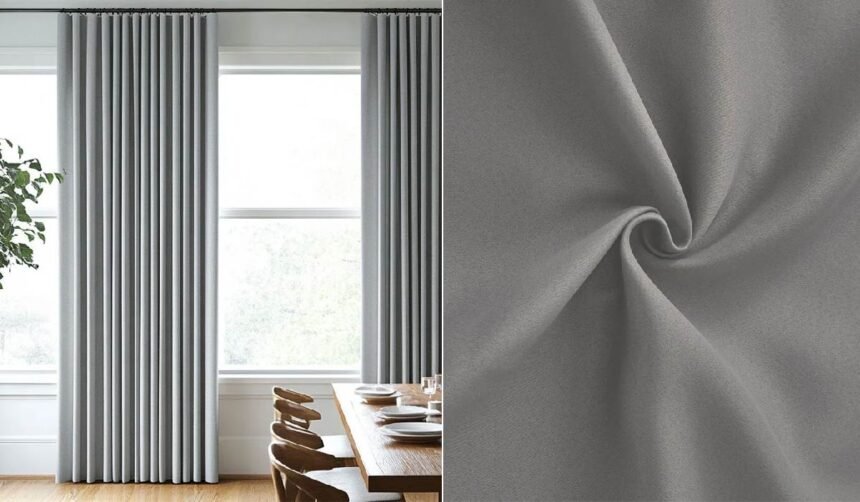
Introduction: The Old Trade-off That No Longer Exists
For years, specifying fire retardant curtains meant accepting a compromise. Safety came at the cost of aesthetics. The fabrics available were limited, the colour palettes were bland, and the textures felt stiff and institutional. Designers would specify the minimum required by regulation and then work around it, treating compliant curtains as a necessary concession rather than an opportunity.
That world no longer exists. The UK contract textile market has undergone a quiet transformation. Today’s fire retardant curtains are woven from fabrics that are indistinguishable from their non-FR counterparts. Rich velvets with a sumptuous pile. Linen-look textures with a relaxed, natural drape. Delicate voiles that filter light with elegance. Bold geometrics and soft florals in colourways that run from muted Scandinavian neutrals to confident jewel tones. The fire safety is built in. The design quality is front and centre.
This shift matters because the demand for compliant curtains is not going away. The Regulatory Reform (Fire Safety) Order 2005 requires BS 5867 certified curtains in virtually every non-domestic building in the UK. Hotels, restaurants, care homes, offices, schools, cinemas, rental properties, and places of worship all fall under the regulation. For interior designers, architects, and specifiers working in any of these sectors, fire retardant curtains are not optional. They are the starting point.
The question is no longer “how do I make compliant curtains look acceptable?” It is “how do I use fire retardant curtains to elevate the design?” This article explores that question. It covers the fabric options, heading styles, and performance features available in the current market, the regulatory context that drives specification, and the practical steps to achieving a result that satisfies both the fire risk assessor and the client’s creative vision.
First, though, a distinction that trips up even experienced specifiers. Fire retardant curtains and fire curtains are entirely different products. Understanding why matters before any specification work begins.
A Crucial Distinction: Fire Retardant Curtains Are Not Fire Curtains
The similarity in naming causes genuine confusion in the contract interiors market, and that confusion can lead to costly specification errors. Let us draw a clear line.
Fire retardant curtains are decorative or functional window treatments made from fabrics that resist catching fire. They hang on tracks or poles, dress windows, and contribute to the interior design of a space. Their fire protection comes from the material itself: either fibres that are inherently non-combustible or fabrics treated with flame retardant chemicals. They are tested under BS 5867 Part 2, the British Standard for curtain and drapery flammability.
Fire curtains are a completely different product category. They are active fire protection systems designed to compartmentalise buildings. A fire curtain is typically a woven glass fibre barrier housed in a concealed steel headbox above an opening. When a fire alarm triggers, the curtain deploys automatically to form a physical barrier that blocks fire and smoke from passing between zones. Fire curtains are tested under BS 8524 and EN 1634-1, carry integrity ratings measured in minutes (such as E60 or EI60), and are installed by specialist fire protection contractors.
| Fire Retardant Curtains | Fire Curtains | |
| Role | Dress windows, resist ignition | Compartmentalise building during fire |
| Type | Passive (always present) | Active (deploy on trigger) |
| Material | FR polyester, velvet, voile, linen-look | Woven glass fibre, specialist composites |
| Standard | BS 5867 Part 2 | BS 8524 / EN 1634-1 |
| Location | Windows, room dividers | Openings, atriums, lift lobbies |
| Design role | Key decorative element | Concealed (invisible until deployed) |
For anyone working in interior design or specification, the takeaway is straightforward. When a project requires compliant window treatments, you need fire retardant curtains. When compartmentation is required at an opening, that is a fire curtain, and it is a building services specification, not an interior design decision. This article deals exclusively with fire retardant curtains.
The New Design Landscape: What Is Available in Fire Retardant Fabrics
The range of BS 5867 certified fabrics available in the UK today is broader, richer, and more design-forward than at any point in the standard’s history. Specifiers are no longer choosing from a shortlist of functional basics. They are selecting from curated collections that rival anything in the residential market.
Velvets
Velvet has become one of the defining textures in contemporary hospitality and commercial design. Fire retardant velvets are now available with the same depth of pile, softness of hand, and richness of colour as their non-FR equivalents. Edmund Bell‘s Sensation range, for example, delivers a knitted velvet pile with a subtle sheen, available in both narrow and wide widths, with full blackout capability and BS 5867 certification. It is specified across hospitality, cruise, education, and workplace projects.
Linen-look and Natural Textures
The trend toward natural, organic textures in commercial interiors has driven demand for FR fabrics that replicate the look and feel of linen, wool, and cotton. These fabrics use inherently fire retardant polyester yarns woven to mimic the slub, weight, and drape of natural fibres. The result is a fabric that satisfies the design brief for warmth and texture while delivering permanent fire compliance. Brands like Prestigious Textiles and Abbotsford Textiles offer extensive ranges in this category.
Sheers and Voiles
Sheer and voile fabrics bring lightness, translucency, and a sense of airiness to commercial interiors. In hotel lobbies, spa areas, restaurant dining rooms, and corporate reception spaces, they diffuse natural light and create visual layers without blocking the view. Fire retardant voiles and sheers meeting BS 5867 are available in a range of weights and finishes, from crisp semi-plains to subtly textured weaves.
Geometrics, Florals, and Patterns
Patterned fire retardant fabrics have expanded dramatically. Geometric designs range from subtle tone-on-tone textures to bold architectural motifs. Florals span from traditional English garden prints to contemporary abstract botanicals. Checks, stripes, and dotted designs are all available with BS 5867 certification. For specifiers creating a scheme with visual interest and character, the pattern library is extensive enough to suit any design direction.
Blackout and Dimout Constructions
Performance and aesthetics converge in blackout and dimout fire retardant fabrics. Blackout options use triple-pass coated linings to block 100% of light, essential in hotel bedrooms and cinema rooms. Dimout fabrics reduce light penetration by 70% to 95%, ideal for conference rooms and healthcare day spaces. Many of these constructions combine fire retardancy with thermal insulation, delivering energy performance alongside safety and light control.
[IMAGE: A curated display of fire retardant fabric swatches showing velvet, linen, sheer, and patterned options | Alt text: Fire retardant curtain fabric swatches in velvet linen sheer and patterned textures | Suggested source: Unsplash/Pexels: curtain fabric swatches luxury textures]
Heading Styles: The Design Detail That Defines the Look
The heading style of a curtain shapes its entire visual character. It determines the drape, the fullness, the silhouette, and how the curtain interacts with its track or pole. Every major heading style can be manufactured in fire retardant fabrics, giving specifiers complete freedom to match the curtain’s profile to the room’s design language.
Wave Curtains
Wave headings have become the signature of contemporary commercial interiors. Using specialist tape and track systems, wave curtains create a uniform, rhythmic ripple effect that looks effortlessly modern. Available in 60mm and 80mm wave sizes, they are popular in hotel lobbies, corporate offices, and high-end restaurants. The clean lines and consistent spacing work particularly well in open-plan environments where multiple windows need visual harmony. Space Commercial Interiors offers wave curtains across their full fire retardant fabric library, with universal tape for flexible hook placement.
Pencil Pleat and Deep Pleat
Classic gathered headings remain a staple of commercial curtain specification. Pencil pleat uses a 3-inch heading tape with three hook positions, suitable for standard windows and contract environments. Deep pleat uses a 6-inch tape with six hook positions, delivering a more dramatic drop that works beautifully in rooms with high ceilings. Both styles arrive flat and are gathered on site, offering flexibility during installation. They are commonly used in care homes, hotels, and education settings.
Pinch Pleat: Double and Triple
Pinch pleat headings create structured, tailored folds that give curtains a more formal, considered appearance. Double pinch pleat is slightly more relaxed; triple pinch pleat is the traditional hotel-grade finish. Both are supplied ready to hang, making them a popular choice for hospitality fit-outs where speed of installation matters as much as presentation.
Eyelet
Eyelet headings thread directly onto a curtain pole through metal rings punched into the fabric, creating bold, even folds with a contemporary feel. They work well in casual dining, boutique hotels, and modern office breakout spaces. Eyelets are available in a range of metal finishes to complement the room’s hardware palette.
Goblet and Cartridge
For premium installations, goblet and cartridge headings offer a sculptural quality. Goblet pleats fan out into a cup shape at the top, creating an elegant, structured silhouette often seen in fine dining restaurants and luxury hotel suites. Cartridge pleats form uniform cylindrical folds. Both are supplied ready to hang and deliver a polished, high-end finish.
| Heading Style | Character | Best For | Delivery |
| Wave (60/80mm) | Modern, minimal, rhythmic | Offices, lobbies, contemporary hotels | Ready to hang |
| Pencil pleat | Classic, gathered, versatile | Care homes, schools, standard rooms | Gathered on site |
| Deep pleat | Dramatic, full drop | High ceilings, premium installs | Gathered on site |
| Double pinch pleat | Tailored, relaxed formal | Boutique hotels, restaurants | Ready to hang |
| Triple pinch pleat | Formal, structured, classic | Luxury hotels, fine dining | Ready to hang |
| Eyelet | Bold, contemporary, even folds | Casual dining, modern offices | Ready to hang |
| Goblet | Sculptural, elegant, premium | Luxury suites, fine dining | Ready to hang |
| Cartridge | Cylindrical, uniform, refined | Boardrooms, premium hospitality | Ready to hang |
The Regulatory Essentials Every Specifier Needs to Know
Design freedom is only meaningful within a compliant framework. Before selecting fabrics and heading styles, specifiers need a clear understanding of what UK fire safety law demands and which standard applies.
The Fire Safety Order
The Regulatory Reform (Fire Safety) Order 2005 is the primary legislation governing fire safety in non-domestic premises across England and Wales. It places a duty on the Responsible Person to assess and manage all fire risks, including soft furnishings. Curtains and blinds are explicitly within scope. The applicable standard for curtain fabrics is BS 5867 Part 2, published by the British Standards Institution.
BS 5867 Part 2: The Three Types
The standard defines three classification levels. Type A is the baseline, generally insufficient for commercial use. Type B is the standard for most commercial environments. It requires the fabric to resist flame spread after 12 wash cycles, with no burning debris falling during the test. Type C is the highest classification, required for healthcare, care homes, and secure facilities. It demands performance after 50 wash cycles at 75°C and self-extinguishing within 2.5 seconds.
| Type | Pre-test Washing | Key Criterion | Applies To |
| B | 12 wash cycles | No flame spread; no burning debris | Hotels, offices, schools, restaurants, retail |
| C | 50 cycles at 75°C | Self-extinguish ≤2.5 seconds | Hospitals, care homes, secure facilities |
The Assembly Rule
Both the face fabric and the lining must be independently certified to the same BS 5867 type. A curtain is rated to its weakest component. A Type C face fabric paired with an uncertified lining results in a non-compliant curtain. This is one of the most frequently overlooked specification details in the contract market. Always confirm certification for every layer of the curtain assembly.
The Consequences of Getting It Wrong
Non-compliance can result in enforcement notices from the fire service, criminal prosecution with unlimited fines, voided insurance claims, CQC action for care providers, and civil liability if occupants are harmed. For specifiers, a clear audit trail showing that compliant products were specified and documented is essential professional protection.
Inherently Fire Retardant vs Treated: The Specification Decision
The choice between inherently fire retardant (IFR) and chemically treated fabrics affects not only compliance but also the long-term quality of the installation. For design-led projects, this is a decision worth understanding thoroughly.
IFR: Built-in Protection, Better Drape
Inherently fire retardant fabrics are woven from yarns that are flame resistant at the molecular level. The fire retardant property is permanent. It does not wash out, wear off, or degrade. From a design perspective, IFR fabrics tend to offer a softer, more natural handle than coated alternatives. They drape better, they hang more gracefully, and they maintain their appearance through years of use and laundering.
IFR is the preferred choice for any installation that needs to look its best over a long lifespan. Hotels, premium restaurants, corporate headquarters, and care homes all benefit from the superior hand-feel and durability of inherently FR fabrics. Manufacturers like Edmund Bell, iLiv, Prestigious Textiles, and Abbotsford Textiles offer extensive IFR ranges in every major fabric category.
Treated: Lower Cost, More Limitations
Treated fabrics are standard textiles coated or dipped in flame retardant chemicals after manufacture. The treatment can stiffen the fabric, altering its drape. It degrades with washing, typically losing effectiveness after around five cycles. This creates a maintenance burden (tracking washes, scheduling re-treatment) and a compliance risk (curtains silently becoming non-compliant between treatments).
Treated fabrics have a lower upfront cost per metre. They may be suitable for short-term installations or events. But for any permanent commercial fit-out where design quality and long-term compliance matter, IFR is the more practical and often more economical choice over time.
| For Specifiers | IFR Fabrics | Treated Fabrics |
| Drape quality | Natural, soft, graceful hang | Can feel stiffer from coating |
| Appearance over time | Consistent (no coating to degrade) | May change as treatment wears |
| FR longevity | Permanent (life of fabric) | ~5 washes before re-treatment |
| Type C achievable? | Yes (standard path) | Rarely post-laundering |
| Total cost (5+ years) | Lower (no re-treatment) | Higher (recurring maintenance) |
| Design range | Extensive (velvets, linens, sheers, patterns) | Wider base materials but fewer certified options |
| Best for | All permanent commercial installations | Short-term events, tight budgets |
Designing with Fire Retardant Curtains: Sector by Sector
Different commercial environments call for different design approaches. The fabric, heading, and performance features should be tailored to both the aesthetic vision and the functional demands of each space.
Hotels and Hospitality
Hotel curtains set the tone for the guest experience. In bedrooms, blackout fire retardant curtains in velvet or linen-look fabrics create a cocoon of comfort and darkness. In lobbies and public areas, sheer voiles layered with heavier drapes add depth and sophistication. Pattern-matched panels across multiple rooms ensure visual consistency, which is critical for brand standards. Wave and pinch pleat headings dominate contemporary hospitality schemes.
Space Commercial Interiors specialises in multi-room hotel projects, delivering pattern-matched, made-to-measure fire retardant curtains from their Yorkshire workroom. Their fabric library includes certified ranges from Edmund Bell, iLiv, Prestigious Textiles, and Abbotsford Textiles, with free sample swatches to evaluate under the room’s actual lighting conditions.
Care Homes and Assisted Living
Care home interiors need to feel warm, domestic, and comforting, the opposite of institutional. Fire retardant fabrics in soft, warm colourways with gentle patterns (small florals, subtle checks, tonal textures) help create a home-like atmosphere. Type C IFR fabrics are the specification standard, able to withstand frequent laundering for infection control. Pencil pleat and deep pleat headings are practical choices that allow easy removal for washing.
Restaurants, Bars, and Entertainment
Dining and entertainment venues use curtains as design statements. Deep-coloured velvets, bold geometrics, and dramatic floor-to-ceiling drops create atmosphere and intimacy. Fire retardant velvet in jewel tones (emerald, sapphire, ruby, midnight) is a popular specification. Goblet or triple pinch pleat headings add a touch of theatre. Type B certification is the standard requirement.
Offices and Corporate Spaces
Corporate interiors demand clean lines and understated sophistication. Wave curtains in neutral tones (greys, soft blues, warm whites) on silent-glide tracks are the contemporary default. Dimout fabrics manage glare in meeting rooms without blocking all natural light. Heavier fabrics can double as acoustic treatment in open-plan environments. Type B compliance is required.
Education
Schools and universities balance budget constraints with the need for durable, compliant products. Plain IFR fabrics in institution colours offer a cost-effective solution. Blackout curtains are essential in lecture theatres and halls of residence. Type B for classrooms; Type B or C for sleeping accommodation.
Holiday Lets and Short-term Rentals
The holiday let market often overlooks curtain compliance. Any property where guests pay to stay requires Type B certified curtains under the Fire Safety Order. Blackout fire retardant curtains in bedrooms and compliant options in living areas are the minimum specification. Made-to-measure ensures a professional finish that enhances the property’s appeal on booking platforms.
[IMAGE: An elegant restaurant interior with deep velvet fire retardant curtains creating an intimate atmosphere | Alt text: Fire retardant velvet curtains in a luxury restaurant creating intimate dining atmosphere | Suggested source: Unsplash/Pexels: restaurant interior velvet curtains luxury]
Beyond Aesthetics: Performance Features That Earn Their Place
Fire retardancy is the regulatory baseline. But the best specifications layer additional performance into the same curtain, maximising the value of every metre of fabric.
Blackout and Dimout
Blackout linings block 100% of light. Dimout fabrics reduce light by 70% to 95%. Both are available with BS 5867 certification. In hotel bedrooms, blackout is expected. In conference rooms and offices, dimout preserves ambient light while eliminating glare. Combining light control with fire safety in a single assembly simplifies specification and reduces the number of products needed.
Thermal Insulation
Thermal linings add a dual-layer fabric that improves energy efficiency. In large commercial buildings with extensive glazing, thermal curtains contribute to more stable internal temperatures, reducing heating costs in winter and cooling costs in summer. For clients with sustainability targets, thermal fire retardant curtains deliver measurable energy performance alongside safety compliance.
Acoustic Absorption
Heavy curtain fabrics, particularly velvets and interlined constructions, absorb sound and reduce reverberation. Open-plan offices, co-working spaces, and multi-function rooms benefit from curtains that serve double duty as acoustic treatment. Specifying a heavier FR velvet or an interlined curtain can address noise issues without dedicated acoustic panels.
Anti-microbial Finishes
In healthcare and care settings, fabrics with integrated anti-microbial properties reduce pathogen transfer between cleaning cycles. These finishes can be combined with IFR properties, creating a single fabric that addresses fire safety and infection control simultaneously. Edmund Bell offers ranges specifically designed for NHS and clinical environments.
The Specifier’s Checklist: From Brief to Installation
A practical workflow for specifying fire retardant curtains that deliver on both design and compliance.
- Confirm the fire risk classification per room. Start with the FRA. Identify Type B or Type C requirements. Flag rooms where occupants sleep or have limited mobility.
- Set the design brief. Define the colour palette, texture direction, and heading style for each space. Identify whether blackout, dimout, thermal, or sheer fabrics are needed.
- Select a specialist contract supplier. Work with a manufacturer that serves the commercial market, offers BS 5867 certified fabrics, and can deliver made-to-measure with fire test certificates. Avoid retail sources.
- Request and evaluate swatches. Review fabric samples under the room’s actual lighting. Check colour accuracy, texture, drape, and weight. Confirm BS 5867 certification is referenced on or with the swatch.
- Verify certification for the full assembly. Confirm that both the face fabric and the lining carry independent BS 5867 certificates at the required Type level. This is a non-negotiable step.
- Provide precise measurements. Use the supplier’s measuring guide. For complex installations (bay windows, curved tracks, high drops), arrange a professional site survey.
- Specify heading, track, and hardware. Match the heading style to the design intent and the track to the fabric weight and fullness. Confirm compatibility.
- Arrange professional installation for complex projects. Wave curtains, multi-room roll-outs, and high-ceiling installations benefit from professional fitting to achieve a clean, consistent result.
- Collect and file fire test certificates on delivery. Store certificates centrally, linked to specific rooms and windows. Make them retrievable for fire service, insurer, or CQC inspection.
- Set a maintenance and review schedule. Include curtain condition in the annual fire risk assessment cycle. Inspect for damage, fading, or wear. Replace non-compliant items promptly.
Quick Decision Table: Specification by Environment
| Environment | BS 5867 | IFR? | Design Direction | Heading Style |
| Hotel bedroom | Type B | Recommended | Velvet/linen blackout | Pinch pleat / wave |
| Hotel lobby | Type B | Recommended | Sheer voile + heavy drape | Wave / goblet |
| Care home | Type C | Essential | Warm tones, soft patterns | Pencil / deep pleat |
| Hospital ward | Type C | Essential | Anti-microbial, washable | Pencil pleat |
| Restaurant / bar | Type B | Optional | Bold velvet, jewel tones | Goblet / triple pinch |
| Corporate office | Type B | Optional | Neutral dimout, clean lines | Wave |
| School classroom | Type B | Recommended | Plain, institution colours | Pencil pleat |
| Cinema / theatre | Type B | Recommended | Heavy blackout velvet | Triple pinch / goblet |
| Holiday let | Type B | Optional | Blackout (bedrooms) | Eyelet / pencil pleat |
Frequently Asked Questions
1. Are fire retardant curtains the same as fire curtains?
No. They are completely different products. Fire retardant curtains are fabric window treatments that resist ignition, tested under BS 5867 Part 2. Fire curtains are active fire protection systems made from glass fibre that deploy automatically to block fire between building compartments, tested under BS 8524 and EN 1634-1. They serve different purposes and are governed by different standards.
2. Do fire retardant curtains look different from normal curtains?
No. Modern fire retardant fabrics are visually and texturally identical to standard furnishing textiles. Velvets, linens, sheers, geometrics, florals, and plains are all available with BS 5867 certification. The fire safety properties are built into the fibre, not visible on the surface.
3. What heading styles can I use with fire retardant fabrics?
All standard heading styles are available, including wave (60mm and 80mm), pencil pleat, deep pleat, double and triple pinch pleat, eyelet, goblet, and cartridge. The heading style is independent of the fabric’s fire performance.
4. What is the difference between BS 5867 Type B and Type C?
Type B tests fabric after 12 wash cycles and requires no flame spread or falling burning debris. Type C tests after 50 cycles at 75°C and adds a requirement to self-extinguish within 2.5 seconds. Type B is the standard for most commercial settings. Type C is required for hospitals, care homes, and secure facilities.
5. Why is inherently fire retardant (IFR) fabric better for design-led projects?
IFR fabrics tend to have a softer, more natural drape than chemically treated alternatives. The fire retardant property is permanent, so the fabric’s appearance and hand-feel remain consistent throughout its lifespan. There is no stiffness from coating and no risk of the treatment degrading and changing the fabric’s character over time.
6. Does the lining need to be fire retardant too?
Yes. BS 5867 applies to the entire curtain assembly. Both the face fabric and the lining must carry independent certification. A curtain defaults to the rating of its weakest component. Always request fire test certificates for every layer.
7. Can fire retardant curtains also provide blackout or thermal performance?
Yes. Many fire retardant fabrics and linings combine fire safety with blackout, dimout, or thermal insulation properties. These can be specified as part of the same curtain assembly, delivering multiple performance benefits without separate products.
8. Where can I source made-to-measure fire retardant curtains?
Specialist contract curtain suppliers serve the commercial market with BS 5867 certified fabrics, made-to-measure manufacturing, and fire test certificates. Space Commercial Interiors, for example, offers a comprehensive range manufactured in their Yorkshire workroom, with fabric from Edmund Bell, iLiv, Prestigious Textiles, and Abbotsford Textiles, plus UK-wide professional installation.
Conclusion: Design Without Compromise
The idea that fire retardant curtains force a compromise between safety and style belongs to a previous generation of products. The UK contract fabric market in 2026 offers a depth of design, texture, colour, and performance that rivals anything available without fire certification. For specifiers, designers, and architects working in commercial interiors, the creative palette has never been wider.
What has not changed is the regulatory imperative. BS 5867 compliance is a legal requirement in every non-domestic building. Both the face fabric and the lining must be certified. The fire retardant properties must be permanent or actively maintained. And the documentation must be available for inspection at any time.
The path to achieving both design ambition and regulatory compliance runs through specialist supply. Space Commercial Interiors brings together the UK’s leading fire retardant fabric collections, a dedicated Yorkshire workroom for made-to-measure production, fire test certificates with every order, and a nationwide installation team. Whether the project is a boutique hotel, a multi-site care home portfolio, or a flagship corporate office, they deliver curtains that look exceptional and perform without question.
Explore the full range of fire retardant curtain fabrics and heading styles at Space Commercial Interiors, or call 01924 677 441 to discuss your next project with their specification team.