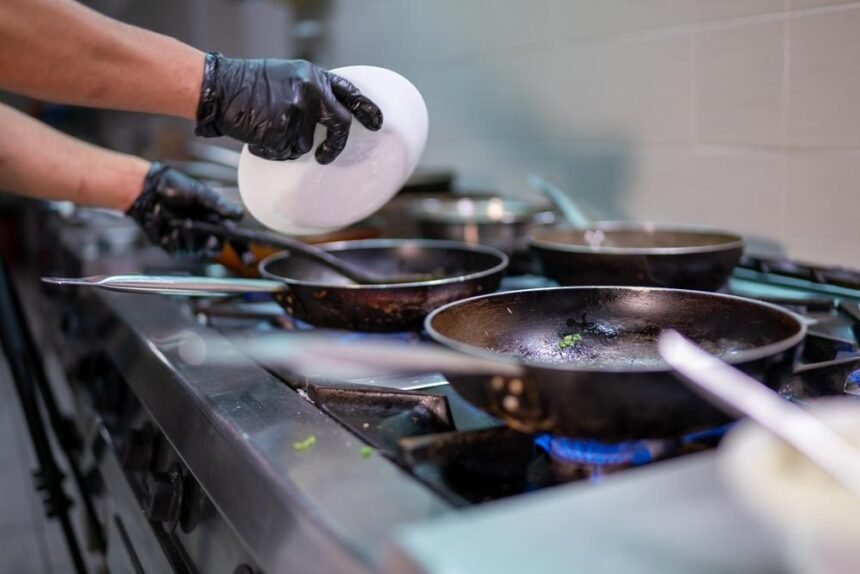
Restaurants and food businesses always prioritise the importance of maintaining the quality taste of every dish. But, have you focused on the safety of your staff working in your commercial kitchen? A busy kitchen is a potential disaster zone for a restaurant. A slight gas leak may cause hazards to your staff and customers.
However, with precautionary steps, the potential risk is preventable. Catering gas safety must be in your checklist when complying with the safety standards.
Legal requirements for gas safety
Catering businesses in the UK should comply with the latest Gas Safety and Use regulations. Although you will not receive a domestic Gas Safety Certificate, your gas appliances need regular inspection. You have to show proof of your yearly gas safety checks for your commercial kitchen. Thus, hire the best experts to meet your legal gas safety rules.
Frequency of your gas safety checks-
You must conduct gas safety checks at least once every year. But, in high-use environments like hotels, more frequent inspections are essential for reducing downtime.
Gas safety issues found in commercial kitchens-
During gas safety assessments, professionals identify issues that could cause serious incidents. Accumulated grease and lack of servicing lead to a higher risk in your food manufacturing unit.
A few common gas safety issues are-
Gas leaks- Damaged pipes and faulty connections can cause fire hazards. Carbon monoxide poisoning is especially the main threat to employees in your restaurant. Make the emergency shut-off valves accessible to your staff.
Improper ventilation- Without ventilation, you may find carbon monoxide gas buildup in your commercial kitchen. It will create a dangerous environment for your kitchen staff.
Equipment not maintained- Equipment that has not been serviced well may develop faults and leaks. Replace the worn parts to maintain safe operations.
The best practices for gas safety in your restaurants
Let us discuss the most effective practices for ensuring gas safety in your food business.
Learn the storage technique
You must store the commercial LPG gas properly to avoid potential risks. Place the cylinder in an upright position to reduce risks. The LPG or liquid petroleum gas is not filled to the top of your cylinder. The vacant space allows the conversion of the liquid to gas.
In case of a horizontally positioned cylinder, the liquid substance may escape easily.
Ventilate the workspace
Ventilation is important for your commercial kitchen to ensure safety. Cylinder leaks may occur for different reasons; however, without ventilation, the gas will accumulate in the enclosed space.
Stop operations during leaks
As LPG gas contains Ethyl Mercaptan, it produces a strong odour. Once you have smelled it, you have to identify leaks in your gas pipeline. Do not continue cooking your food in this situation.
Maintain a hygiene in the area
The kitchen where you have placed the gas stove and the cylinder should be clean. It must not be close to your water supply, as the damp surface may corrode the cylinder. Damage to the stove and cylinder may lead to safety concerns.
Do not heat the cylinder
Direct or indirect heat to the cylinder will cause a serious explosion. Some people pour warm water over it to prevent it from sweating. But, it will naturally cause the cylinder to burst.
Why hire professionals for gas safety inspection?
Professional catering gas engineers are certified experts who ensure the safety of your restaurant with annual inspections. They also provide documentation, allowing you to meet legal compliance. The best experts will help you with different services-
- Annual safety test- Qualified engineers will inspect your catering appliances like fryers and ovens, every year.
- Preventive maintenance- The experts conduct servicing and cleaning to prevent fire hazards. They will clean burners besides checking your flame quality to ensure safety.
- Ventilation testing- The air quality needs to be tested to measure carbon dioxide levels. It helps engineers determine the efficiency of extraction systems in removing harmful fumes.
- Safety device assessment- Professionals verify the safety devices like interlocks and flame failure. Blue flame is a good sign, but an orange flame indicates the presence of CO.
- Repairs and installations- The experts ensure that appliances and pipework have been installed as per regulations. They will also repair leaks during inspection.
Conclusion
Gas safety checks are a regulatory requirement and ensure a smooth operation of a restaurant. It will save your business from explosions and fires. Your physical assets and employees in the premises will be safe with this approach. Regular safety inspections will also help you gain customers’ trust.