



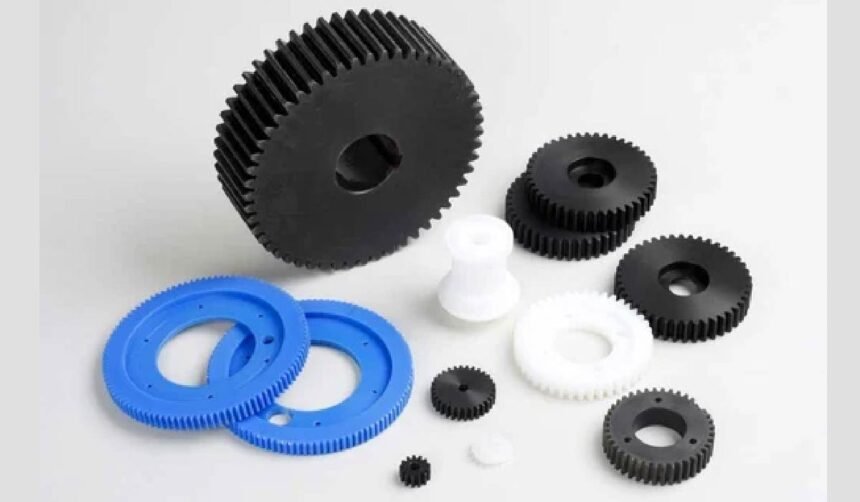
Automotive manufacturers consistently seek durable, lightweight, and cost-efficient materials that can enhance comfort and safety in vehicle interiors. Among the various materials used in component production, nylon stands out for its strength, resilience, and adaptability. Through precise molding methods, engineers can craft intricate designs that meet demanding performance standards for everyday driving conditions.
Nylon injection molding has transformed how seat structures and fittings are produced, replacing heavier metals with reliable nylon plastic parts that maintain performance under pressure. This process allows for complex geometries and high precision, making it ideal for producing structural and aesthetic seat components. The following sections explore how nylon injection molding refines automotive seat systems by addressing performance and comfort.
Structural Reliability through Material Strength
Automotive seats require materials that can endure constant pressure and repetitive stress without deformation. Nylon provides excellent tensile strength and elasticity, which helps maintain form even under continuous mechanical load. Its high impact resistance also protects molded parts from cracking or fatigue during use.
Manufacturers favor it because its structural integrity remains stable across temperature variations common in vehicle cabins. Additionally, the balance between rigidity and flexibility enhances safety by preventing sudden material failure. This combination of toughness and adaptability makes it ideal for seat base frames, side supports, and brackets.
Lightweight Composition Enhancing Fuel Efficiency
Reducing vehicle weight directly contributes to better fuel economy and lower emissions. Nylon’s lightweight nature allows automakers to replace heavy metal parts without compromising structural integrity. This substitution leads to improved performance and reduced manufacturing costs.
The use of molded nylon in seat assemblies also simplifies installation since the material is easier to handle and transport. Lighter components reduce strain on the seat’s mechanical systems, extending their operational lifespan. Through strategic weight reduction, injection molding supports sustainable production goals while maintaining passenger safety standards.
Precision Molding for Complex Seat Designs
Automotive seats consist of various interconnected parts that demand accurate alignment and seamless operation. Injection molding enables manufacturers to produce intricate shapes with minimal post-processing. Nylon’s fluidity during molding ensures detailed features like clips, hinges, and adjustment levers form accurately within a single mold.
Engineers appreciate the dimensional stability it offers after cooling, which minimizes warpage or shrinkage. This precision simplifies assembly lines and improves fit consistency across seat models. Furthermore, consistent tolerances contribute to noise reduction, enhancing passenger comfort during long drives.
Resistance to Heat and Chemical Exposure
Vehicle interiors are frequently subjected to heat fluctuations and exposure to cleaning agents. Nylon’s excellent thermal resistance allows it to retain mechanical strength even under elevated temperatures near seat heaters or ventilation ducts. The polymer’s chemical resistance prevents degradation caused by solvents, lubricants, and interior cleaning solutions.
This property extends component lifespan and preserves the aesthetic quality of visible seat elements. Manufacturers benefit from fewer warranty claims and reduced maintenance issues due to material deterioration. Additionally, the ability to resist corrosion makes it an adequate replacement for metal components exposed to humidity or condensation.
Enhanced Comfort through Flexible Component Design
Passenger comfort depends on the harmony between seat stiffness and cushioning. Nylon’s flexibility allows for optimized ergonomics by enabling controlled bending in seatback frames and support inserts. Engineers can fine-tune material thickness to achieve the right level of support and resilience.
The smooth finish achieved through injection molding eliminates sharp edges, contributing to safer and more comfortable seating experiences. Its acoustic dampening qualities also reduce squeaks and vibrations caused by seat movement. These combined features enhance the driving experience by promoting comfort and stability.
Simplified Production and Assembly Efficiency
Injection molding with nylon integrates multiple design features into a single component, significantly reducing assembly time. For instance, fastening clips and hinges can be molded directly into the seat frame rather than attached separately. This consolidation minimizes labor costs and assembly errors. Furthermore, the uniform cooling rate results in predictable part dimensions, allowing for quick integration on automated lines.
Key production benefits include:
- Reduced material waste and rework
- Shorter production cycles
- Lower tooling maintenance costs
- Higher repeatability for mass production
Environmental Responsibility and End-of-Life Recyclability
Nylon offers recyclability advantages that align with automotive sustainability initiatives. Scrap material from molding processes can be reprocessed into secondary parts without significant quality loss. Recycled material retains sufficient strength for non-structural seat applications, reducing dependency on virgin polymers.
Additionally, its durability minimizes premature part replacement, cutting down waste generation. Manufacturers benefit economically by lowering raw material expenses through closed-loop recycling systems. As environmental standards become stricter, its reusability provides a valuable path toward eco-conscious vehicle manufacturing.
Nylon injection molding continues to reshape how modern automotive seats are engineered, emphasizing strength, comfort, and efficiency. Its exceptional mechanical properties and recyclability make it an essential material in advancing vehicle innovation. Leveraging the design freedom and durability of nylon plastic parts enables automotive manufacturers to create reliable seat systems that maintain consistent performance throughout the vehicle’s lifespan. This balance of engineering precision and practical function secures its place as a cornerstone in automotive seating design.