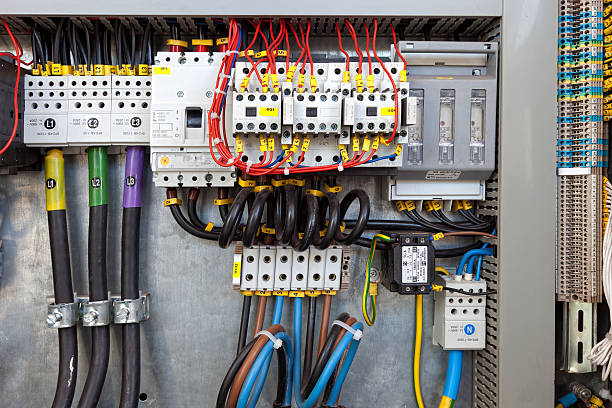
Solid-state relays (SSRs) are a new game changer in industrial automation and the benefits of using solid-state relays over the established electromechanical ones are numerous. Over the past few years, manufacturers of solid state relay have come up with innovations that have transformed the performance of automation systems and highly boosted the reliability, effectiveness, and durability of automation systems in different industries. The usage of the solid-state relays is shaping industry control system handling whether in the car manufacturing plant or the HVAC system.
In this paper, we shall discuss how solid state relays are transforming industrial automation, the benefits of solid state relays over the traditional systems and how micro switch suppliers led the industrial revolution.
The Rise of Solid-State Relays in Industrial Automation
The solid-state relays have also become popular in industrial automation as it offers faster and more reliable switching than the mechanical relays. Its operation is similar to that of a traditional electromechanical relay; it is not subject to mechanical wear and, unlike electromechanical relays, its operation is not limited to physical opening and closing of a circuit. The technology allows the SSRs to be quick to respond, offer a longer life cycle and are less susceptible to maintenance.
The manufacturing companies of solid state relay are still in the process of generating more energy efficient and multi-purpose relays. The emerging demand for automation systems which can be operated with greater precision and efficiency is directly related to the increased use of SSRs. Solid-state relays are a better substitute to normal relays when it comes to industries in need of simplifying procedures and minimizing their operational expenses.
Advantages of Solid-State Relays Over Traditional Electromechanical Relays
The high level of benefits that solid-state relays have over the traditional electromechanical relays is one of the major reasons that there is the increased popularity of solid-state relays in the field of industrial automation. SSRs do away with mechanical elements that may become worn with time like contacts and springs. The Santa Barbara Foundation SSRs are also easier to maintain and more durable because of the absence of moving parts and so they are less likely to break down due to friction.
Also, solid-state is faster in operation compared to mechanical related relays and therefore reduces the response time of the system and improves overall system performance. They also produce less heat and this implies that chances of over heats and system breakdown are low. Since SSRs are small and able to handle higher frequencies they find themselves particularly useful in automation applications where very high speeds of switching are required, especially in high-reliability applications.
In addition, the solid-state relay consumes less energy because they do not consume bulky energy that is required in case of mechanical relay activation. The reduced energy consumption renders SSRs as an environmental friendly and economical alternative method of industrial automation applications.
How Solid State Relays Improve Safety and Reliability in Industrial Automation
Industrial environments demand a high level of safety, as the breakdown of essential elements can cause major losses in terms of excessive downtime and even unacceptable working conditions. There are main advantages present in solid-state relays on safety and reliability of industrial automation.
There are also fewer chances of mechanical breakdown as SSRs have no moving parts and, as such, mechanical failures are prevalent in traditional relays as contacts are subject to wear and tear. This enhanced dependency will mean a reduction in relapses and chances of accident occurrences due to defective relay systems. Also, the solid-state relays are used in a silent manner, eliminating the chances of noise interruptions in delicate locations.
In addition, SSRs are constructed in such a way that they endure harsh environmental conditions, such as high temperatures and humidity, low atmospheric pressure, and vibration. This is why they can be well-to-do in handling industrial situations where the normal relays could make mistakes due to the harsh environments. Increased reliability of solid state relays translates to less system breakdowns, more productive systems and a safer working environment at the end of the day.
The Role of Micro Switch Manufacturers in SSR Innovation
While solid state relay manufacturers play a key role in the development of SSRs, micro switch manufacturers also contribute significantly to advancing this technology. In automation, micro switches are often combined with SSRs because of the difficulty of switching extremely finely.
In this way, manufacturers can increase the overall conditions of the functioning of solid-state relays by adding better design and functioning of micro switches. As an example micro switches can be used to sense the position of moving parts or check the status of equipment to provide as an input whether the SSR should switch on or off. Such cooperation of the micro switches and SSRs allow more precise and effective regulation of the automation systems.
A lot of effort is being put in place by micro switch manufacturing companies to ensure they come up with reliable, sensitive, and those capable of working under a variety of environmental conditions. They have taken major contributions to the development of solid-state relays that work best in various industrial applications.
Conclusion
Industrial automation is no doubt transforming the solid-state relays completely because it offers a more efficient, instant and reliable alternative to the time-tested electromechanical relays use. The improvement of the capabilities and functionality of the solid state relays is taken up by its manufacturers who are jostling to provide better designed and more solid relays, whereas micro switch manufacturers further add innovation to the design of this switch since solidity and precision is added to this switch by the micro switch manufacturers.
With the ongoing incorporation of automation technologies by industries, solid-state relays will take a more significant part in the improvement of system performance, improvement of the safety and costs of maintenance. With the collaboration of solid-state relay and micro switch manufactures, the future of industrial automation is here and the efficiency of the processes that are run in industries are becoming efficient and more reliable than before.