



As environmental and land management challenges grow increasingly complex, industries and landowners are turning to innovative solutions to meet demands for sustainability, safety, and efficiency. Among the rising technologies in this space, forestry mulching stands out as a highly effective method for land clearing, vegetation control, and ecosystem restoration.
This technique not only simplifies the process of clearing overgrown landscapes but also reduces environmental damage, preserves soil integrity, and lowers long-term maintenance costs. It’s a practice that has gained momentum across agricultural, commercial, conservation, and private sectors for its ability to offer practical outcomes without the drawbacks of traditional land-clearing methods.
This article takes a deep dive into what forestry mulching entails, how it works, its benefits and limitations, and why it’s becoming an essential part of sustainable land and vegetation management.
What Is Forestry Mulching?
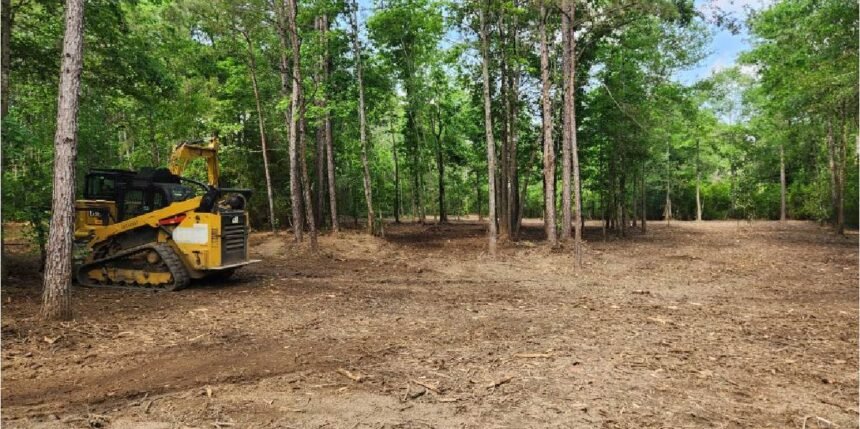
Forestry mulching is a land-clearing method that uses specialized machinery to grind, cut, and shred trees, brush, and vegetation into nutrient-rich mulch. Unlike traditional clearing techniques that involve bulldozers, chainsaws, and burning, this method leaves behind a layer of organic material that acts as ground cover and erosion protection.
The process uses a single machine—typically a tracked carrier or skid steer with a rotating drum or disc mulcher attachment—that clears and processes vegetation in one step. This makes it more efficient and environmentally friendly, as there’s no need for hauling, burning, or excavation.
Mulched material is spread evenly across the cleared area, providing several ecological benefits, including:
- Soil moisture retention
- Erosion control
- Nutrient recycling
- Weed suppression
- Immediate ground stabilization
Whether used for creating trails, firebreaks, wildlife habitat restoration, or right-of-way clearing, forestry mulching is quickly becoming a preferred method for environmentally conscious land improvement.
Advantages Over Traditional Land Clearing Methods
When compared with bulldozing, burning, or chemical applications, forestry mulching offers a number of key advantages that appeal to developers, conservationists, and private landowners alike.
1. Minimal Soil Disturbance
Traditional land clearing often involves uprooting trees and vegetation, which disrupts topsoil and root systems. This can lead to erosion, poor regrowth conditions, and increased sediment runoff. Mulching, on the other hand, grinds vegetation at ground level, preserving root structures and minimizing soil displacement.
2. Eco-Friendly Disposal
With traditional clearing, debris must often be burned, hauled away, or buried—processes that contribute to pollution, greenhouse gas emissions, and resource consumption. Mulching converts biomass into ground cover, removing the need for disposal and improving soil health over time.
3. Improved Land Aesthetics
Forestry mulching creates a clean, park-like finish that appeals to landowners and developers. The mulched layer looks neat, is low maintenance, and suppresses regrowth of unwanted species.
4. Cost Efficiency
While the upfront costs of mulching machinery can be higher than some traditional tools, the elimination of multiple steps—such as hauling, grading, or burning—translates to lower overall project costs. For many landowners, it’s a cost-effective investment with long-term returns.
Applications Across Industries
Forestry mulching isn’t limited to one field—it serves a wide array of sectors with unique needs and environmental constraints.
1. Agriculture and Ranching
Farmers use mulching to convert overgrown land into productive fields or pastures. By clearing invasive shrubs and trees without disturbing the soil, it preserves the land’s agricultural potential.
2. Real Estate and Development
Developers need land that’s ready for surveying, planning, and building. Forestry mulching can quickly prepare lots for construction while meeting environmental guidelines and reducing erosion risks.
3. Utilities and Infrastructure
Utility companies use mulching to maintain access roads, clear powerline corridors, and manage vegetation around pipelines and water channels—without the mess or hazard of traditional clearing.
4. Wildfire Prevention
One of the most important uses of forestry mulching is in reducing wildfire risks. By clearing underbrush, dead trees, and fuel loads from forest floors, mulching helps create firebreaks and defensible zones that slow or stop fire spread. This essential preparation is often integrated with advanced technologies, such as drone-deployed monitoring and automated ground units, which together form comprehensive wildfire defense systems designed for early detection and rapid response.
5. Conservation and Land Restoration
Environmental organizations use mulching in reforestation, wetland restoration, and habitat recovery efforts. It is particularly useful for removing invasive species while preserving native flora and fauna.
How Forestry Mulching Works
The machinery behind forestry mulching is as important as the technique itself. The most common equipment types include:
- Skid steers: Versatile and maneuverable, ideal for small to mid-size jobs.
- Tracked carriers: Offer better stability and power, suitable for rugged or uneven terrain.
- Excavator attachments: Used for steep slopes or hard-to-reach areas.
These machines are equipped with mulching heads or drum mulchers that contain sharp teeth—often made from carbide or steel—which shred vegetation into mulch. Depending on the application, operators may adjust speed, pressure, or cutting height to achieve specific outcomes.
Key considerations during operation include:
- Vegetation density
- Soil type and moisture
- Slope and terrain grade
- Environmental sensitivity
- Desired land use after clearing
Limitations and Considerations
Although forestry mulching has numerous advantages, it is not without limitations. Understanding these can help users apply the method appropriately and avoid unwanted outcomes.
1. Equipment Cost and Availability
Purchasing a high-performance mulcher can be expensive, and hiring contractors may not be feasible for small budgets. Additionally, access to trained operators and reliable machinery may be limited in certain areas.
2. Limited Root Removal
While mulching cuts trees and shrubs to ground level, it doesn’t remove root systems. For projects that require deep excavation or complete land conversion, additional steps may be necessary.
3. Slow for Dense Forests
In heavily wooded areas with large trees, mulching may not be the most efficient option. It’s better suited to brush, small trees, and medium-density vegetation. In such cases, a hybrid approach—using chainsaws or dozers alongside mulchers—may be needed.
4. Fire Hazard in Dry Conditions
While mulching helps prevent wildfires in general, the mulch layer itself can pose a risk if not managed properly. In arid regions, thick dry mulch can become flammable and must be monitored closely.
Sustainable Land Management Through Mulching
What makes forestry mulching particularly attractive in today’s environmental landscape is its alignment with sustainable land management principles. It doesn’t just clear land—it restores balance between human activity and ecological integrity.
In an age where land degradation, biodiversity loss, and soil erosion are critical threats, mulching offers a way forward. By returning organic material to the soil, suppressing invasive species, and reducing the need for chemicals or fire, this method supports regenerative practices across landscapes.
can also be integrated with other sustainable tools, such as:
- Controlled grazing
- Cover cropping
- Natural reseeding
- Biochar application
- Native species replanting
This holistic approach ensures that short-term productivity doesn’t come at the expense of long-term health.
Conclusion: The Future of Efficient Land Clearing
Forestry mulching in Oldham County represents a smart evolution in land management. Its ability to combine environmental care with practical results makes it a preferred method across industries and scales. Whether you’re a farmer reclaiming pastureland, a conservationist restoring habitat, or a developer preparing land for future use, this approach offers a path that’s both effective and responsible.
By investing in tools and practices that reduce waste, preserve ecosystems, and deliver clean results, landowners and contractors are making a choice that reflects the priorities of a sustainable future. The next generation of land management is not just about clearing space—it’s about creating value while protecting the resources that support life.
For projects where efficiency and environmental responsibility matter, forestry mulching is more than just a solution—it’s a strategy for sustainable success.