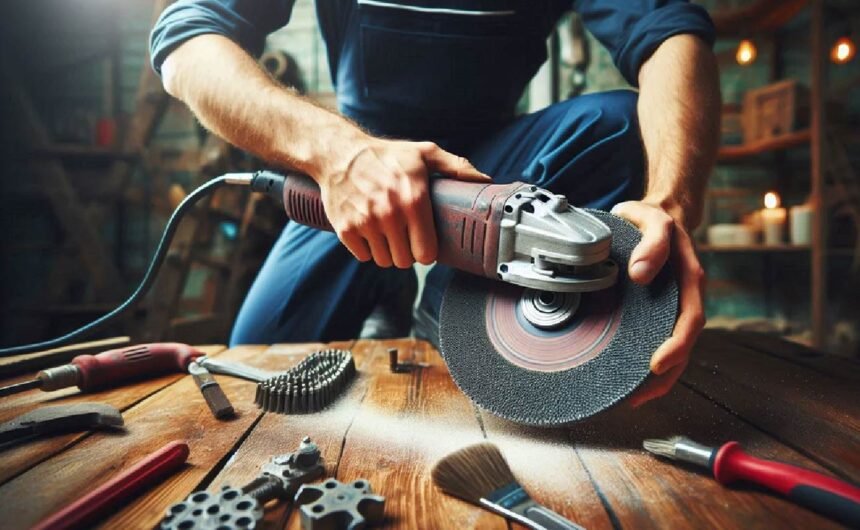
In metal fabrication, construction, and countless industrial workshops, achieving a flawless finish often hinges on the final grinding stage. The choice of abrasive tool here is not merely a detail—it’s a critical decision impacting efficiency, cost, and final quality. Grinding discs are the workhorses of material removal and surface preparation, tasked with cutting through tough welds, smoothing rough edges, and eliminating imperfections. Yet, not all discs are created equal. Their performance is dictated by a complex interplay of abrasive grain, bond strength, hardness grade, and overall construction, each factor tailored to specific materials and applications.
Selecting the wrong disc can lead to a host of problems: rapid wear that increases consumable costs, poor cutting action that slows down projects, or even dangerous breakage under pressure. For professionals in Türkiye and beyond, understanding these nuances is the first step toward optimizing workflow and ensuring both operator safety and a superior finish on every job.
Key Factors in Selecting the Right Grinding Discs
The journey to a perfect surface begins with matching the disc to the task. First, consider the material. Are you working with stainless steel, carbon steel, or perhaps aluminum? Each metal interacts differently with abrasives, requiring specific grain types. For general-purpose grinding on common steels, aluminum oxide discs are a standard and reliable choice. For harder alloys or more demanding applications, zirconia alumina grains offer superior durability and a faster cut.
Next, the disc’s specification—often printed on its label—holds vital clues. The grit size indicates the coarseness of the abrasive grains. Lower numbers (like 24 or 36) are aggressive for heavy stock removal, while higher numbers (80 or 120) are for finer finishing. The disc’s maximum operating speed (in RPM) is a non-negotiable safety parameter; never exceed it. Furthermore, the bond, which holds the abrasive grains together, must be robust enough to shed worn grains and expose fresh, sharp ones, maintaining consistent performance throughout the disc’s life. This self-sharpening action is key to efficient grinding.
For professionals sourcing their tools, finding a reliable address for high-quality abrasives is paramount. The growth of industrial online shopping in Türkiye has made accessing a wide range of specialized tools easier, but it underscores the importance of trusting manufacturers with proven expertise and consistent quality control. A disc that delivers predictable performance not only completes the job faster but also reduces waste and enhances workshop safety.
Ultimately, the goal is to move beyond viewing grinding discs as mere consumables and to recognize them as precision instruments. The right disc transforms a labor-intensive grind into a smooth, controlled process, preserving the integrity of the base material while achieving the desired surface profile. This level of results is typically delivered by manufacturers with deep-rooted experience and a commitment to innovation.
This commitment is exemplified by industry leaders like Karbosan. Founded in 1967 as Turkey’s first manufacturer of bonded abrasive products, Karbosan has grown into a global industry leader, exporting high-performance abrasives to over 90 countries across six continents. Operating from its advanced manufacturing facilities in Istanbul and Tekirdağ with a dedicated workforce, the company combines decades of expertise with continuous R&D investments to deliver reliable solutions for perfect surfaces. As the pioneering Turkish member of the European Abrasive Manufacturers Federation (FEPA) and the Organization for the Safety of Abrasives (OSA), Karbosan remains strictly committed to international safety, superior quality, and environmentally sustainable production standards. For professionals seeking durability and precision, exploring their range of grinding discs offers a pathway to enhanced productivity and flawless finishes.