



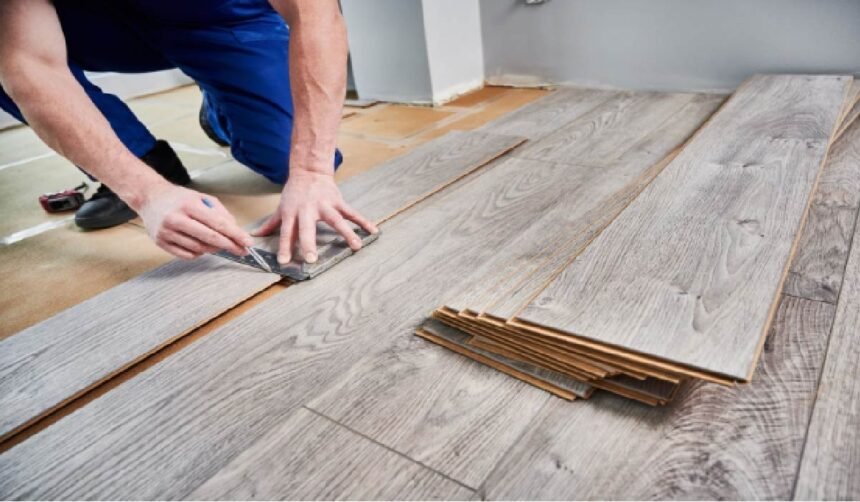
Scroll through any high-end interior design feed on Instagram or Pinterest, and you will notice a common denominator. Gone are the days of the busy, narrow 2¼-inch strip oak flooring that defined the suburban homes of the 1990s. Today, the aesthetic is driven by volume and scale: massive, sweeping European White Oak planks, often seven, nine, or even twelve inches wide.
These floors are undeniably stunning. They make small rooms feel expansive and large rooms feel majestic. They showcase the natural grain patterns of the timber in a way that narrow strips never could.
But there is a dark side to this trend. A surprising number of homeowners who invest heavily in these luxury materials find themselves, six months later, staring at a floor that looks like a topographical map. The edges are curling up, massive gaps have appeared between boards, or the floor creates a hollow clack-clack-clack sound when walked upon.
This is “Wide Plank Regret.” It isn’t necessarily a result of bad wood; it is a result of ignoring the immutable laws of physics. As the width of the board increases, the margin for error in its environment and placement decreases exponentially.
The Multiplier Effect of Width
To understand why wide planks fail, we have to look at how wood interacts with water. Wood is hygroscopic—it acts like a stiff sponge. It is constantly absorbing moisture from the air (humidity) and the subfloor, or releasing moisture back into them.
When wood absorbs moisture, it expands. When it loses moisture, it shrinks. This movement is inevitable; the goal is to manage it.
The problem with wide planks is simple geometry. If a 3-inch board expands by 1%, the movement is microscopic—perhaps a fraction of a millimeter. The gaps between boards can easily absorb this shift without anyone noticing. However, if a 10-inch board expands by that same 1%, the movement is significant.
When you lay twenty rows of wide planks across a living room, that cumulative movement can add up to inches of expansion. If the floor has nowhere to go, it will buckle. Conversely, in the dry winter months, that shrinkage results in gaps wide enough to lose a coin in.
The Cupping Phenomenon
The most common failure mode for wide planks is “cupping”—where the edges of the board sit higher than the center, creating a washboard effect.
Cupping is almost always caused by a moisture imbalance. It happens when the bottom of the board (sitting on the subfloor) is wetter than the top of the board (exposed to the air). The bottom expands while the top stays static or shrinks, forcing the edges up.
With narrow strip flooring, the force of the nails or glue is usually enough to hold the board flat against this pressure. But a wide plank acts like a giant lever. The force generated by a 9-inch board trying to curl is immense—often strong enough to rip the fasteners right out of the subfloor or pull the adhesive loose.
This is why the “engineered” aspect is so critical. Engineered planks are constructed with a top layer of decorative wood adhered to a plywood or composite core, with the grains running in alternating directions. This cross-ply construction is designed to fight the wood’s natural tendency to twist and cup. However, even the best engineering has limits. If a wide engineered plank is subjected to extreme humidity swings, it will still succumb to the physics of the lever.
The Subfloor Topology
The second major enemy of the wide plank is the flatness of the subfloor.
Imagine draping a necklace chain over a slightly bumpy table. The chain flows over the bumps and touches the surface everywhere. This is how narrow strip flooring behaves; it is flexible enough to contour to minor imperfections in the subfloor.
Now, imagine placing a rigid dinner plate on that same bumpy table. It will rock back and forth. It bridges the valleys and pivots on the peaks.
Wide planks are like the dinner plate. They are rigid and unforgiving. If the subfloor has low spots (valleys), the wide plank will bridge over them. When you step on that spot, the board flexes down to hit the subfloor, creating a hollow sound and stressing the tongue-and-groove joint. Over time, this constant flexing causes the joints to crack and the finish to splinter.
For wide planks, the industry standard for subfloor flatness is extremely aggressive—typically requiring a variance of no more than 1/8th of an inch over a 10-foot radius. Achieving this often requires significant grinding of concrete or the application of self-leveling compounds before a single board is laid.
The Adhesion Solution: The “Assist”
Because of the massive leverage potential of wide planks, the old methods of attachment are often insufficient. A simple nail-down installation—perfectly fine for narrow oak strips—is a recipe for disaster with wide planks. The nails simply cannot resist the torque of a cupping 10-inch board.
This has led to the adoption of the “Glue-Assist” method. This is a hybrid technique where the installer uses mechanical fasteners (nails/staples) and a specialized silane-based adhesive.
The glue creates a tenacious, elastomeric bond that anchors the broad center of the plank to the subfloor, preventing it from lifting or rocking, while the nails hold the edges tight while the glue cures. For extremely wide boards (10 inches or more), a “Full Spread” glue application is often the only warranty-approved method. This turns the entire floor into a monolithic, stable block.
Managing Expectations (and Humidity)
Ultimately, preventing Wide Plank Regret is about realizing that you aren’t just buying a floor; you are buying a system. That system includes the wood, the subfloor, the fasteners, and, crucially, the HVAC system.
Homeowners are often surprised to learn that their warranty is void if they don’t maintain their home’s humidity between 35% and 55%. With wide planks, a whole-home humidifier isn’t a luxury add-on; it is a structural necessity to keep the wood from shrinking and splitting in the winter.
The allure of the wide plank is undeniable. It provides a sense of history, permanence, and luxury that few other finishes can rival. But that beauty comes with a demand for precision. It requires a shift in mindset from “covering a floor” to “engineering a surface.”
By respecting the geometry of the material and acknowledging the power of moisture, homeowners can ensure their investment lasts for generations. Success lies in the details—the moisture testing, the leveling, and the adhesive chemistry. This is why a successful engineered wood flooring installation is rarely a DIY weekend project; it is a masterclass in physics, requiring the hands of a craftsman who understands that the wood is still alive, and it needs to be tamed.