



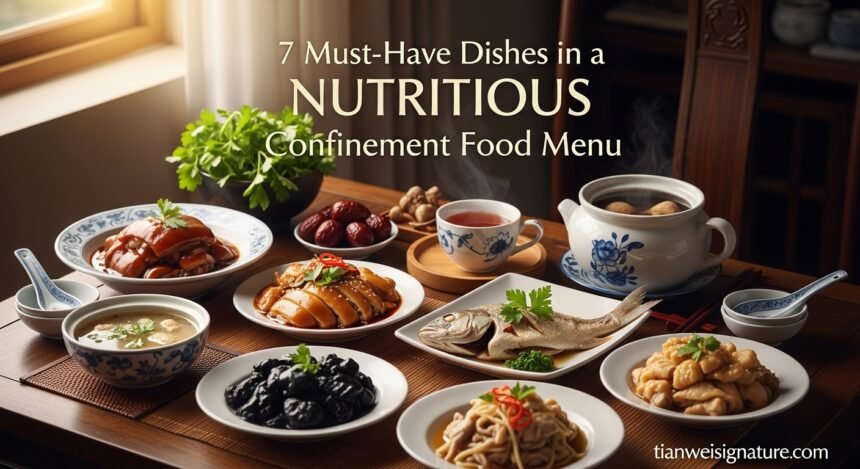
The postpartum period is a crucial time for new mothers in Singapore, and a well-planned confinement food menu can make all the difference in recovery. Traditional Chinese confinement practices emphasise specific foods that help replenish blood, boost energy, and promote healing after childbirth.
While modern families may adapt these traditions, the core principles remain valuable and enduring. A proper Chinese confinement food menu provides the nutritional foundation new mothers need during this special time. Let’s explore the 7 dishes that should be part of every nutritious confinement meal menu.
What Makes a Good Confinement Food Menu?
A well-designed confinement food menu Singapore focuses on warming ingredients that help dispel “wind” and promote recovery. These meals typically include herbs and foods known for their healing properties in traditional Chinese medicine.
The best confinement menus strike a balance between nutritional needs and taste preferences, ensuring that new mothers actually enjoy their meals while reaping the benefits. Whether you’re preparing meals at home or opting for confinement meal delivery, these seven dishes should form the foundation of your postpartum nutrition plan. For busy families, working with a trusted meal provider can take the stress out of daily preparation while ensuring every dish supports recovery and wellness. If you’d like personalized guidance or want to explore tailored meal plans, Contact Us to learn more about options that suit your needs.
The 7 Dishes for Your Confinement Journey
1. Pork Trotter with Black Vinegar
This classic dish is a cornerstone of traditional confinement food. The black vinegar helps purify the blood, while the pork trotter provides collagen that aids in tissue repair and regeneration.
Rich in flavour and nutrients, this dish is typically prepared with ginger and eggs to enhance its warming properties. Many new mothers find it especially beneficial during the second and third weeks of confinement when the body focuses on rebuilding strength.
2. Sesame Oil Chicken
Sesame oil chicken is beloved for its warming properties and delicious taste. The sesame oil helps improve blood circulation, while the chicken provides easily digestible protein.
For best results, use free-range chicken and high-quality sesame oil. This dish can be prepared in advance and reheated, making it convenient for busy new mothers who need nourishing meals without extensive preparation time.
3. Red Dates Tea
This warming beverage is more than just a drink; it’s an essential part of any confinement food menu. Red dates help replenish blood, while longan fruits are known to calm the mind and improve sleep quality.
Most confinement meal services provide this tea with every meal. It’s typically consumed warm throughout the day to maintain body heat and support the body’s natural healing processes during the postpartum period.
4. Ginger Steamed Fish
Fish is an excellent source of protein and omega-3 fatty acids, which are crucial for postpartum recovery. When steamed with ginger, this dish becomes even more beneficial as ginger helps dispel “wind” and reduce inflammation.
For optimal nutrition, choose fish like threadfin or salmon, which are rich in nutrients that support brain health and reduce the risk of postpartum depression. This dish is light yet nourishing, making it perfect for the early days of confinement.
5. Black Chicken Soup
Black chicken is prized in traditional Chinese medicine for its superior nutritional properties compared to regular chicken. When prepared with herbs like goji berries and Chinese yams, this soup becomes a powerhouse of nutrients.
This dish is particularly beneficial for rebuilding blood and energy levels. Many confinement food menus feature different variations of this soup throughout the 28 days confinement period, with herbs adjusted according to the recovery stage.
6. Herbal Soups
Various herbal soups form the backbone of any proper confinement meal menu. These soups evolve throughout the confinement period, catering to different recovery needs at each stage.
Common herbs used include:
- Dang Gui (Angelica Sinensis) for blood replenishment
- Red dates for energy and warmth
- Chinese yams for digestive health
- Goji berries for overall wellness
7. Rice Wine Chicken
Rice wine chicken combines the warming properties of rice wine with the nutritional benefits of chicken. This dish is traditionally believed to help “warm” the body and improve blood circulation.
For those concerned about the alcohol content, the dish can be prepared with the wine cooked off, or substitute it with non-alcoholic alternatives while still maintaining the traditional flavours and benefits that make it a confinement staple.
First Week Considerations
The first week of confinement requires special attention. Traditional practices recommend avoiding chicken and eggs initially, especially for mothers who’ve had cesarean deliveries. Instead, focus on gentle foods that promote healing without overtaxing the digestive system.
Sheng Hua Soup is particularly important during this initial period. This herbal preparation helps cleanse the uterus and promote proper blood flow. Many confinement food delivery services include this soup in their first-week menus to support the critical early recovery phase.
Making Traditional Dishes Work for You
While traditional confinement dishes have stood the test of time, modern mothers often need to adapt them to suit their preferences and lifestyles. Simple modifications can make these dishes more palatable while preserving their nutritional benefits.
Consider these adjustments when planning your confinement food menu:
- Reduce the ginger if you find it too strong
- Adjust salt levels to your taste preferences
- Include more vegetables for added fibre and nutrients
- Prepare larger batches that can be frozen for convenience
Frequently Asked Questions
How long should I follow a confinement food menu?
Traditional confinement lasts 28 days, though some families extend it to 42 days. The most critical period is the first two weeks when your body needs the most support for initial recovery.
Can I customize my confinement dishes if I don’t like certain ingredients?
Absolutely. While traditional recipes have specific benefits, most can be modified to suit your tastes while maintaining their core nutritional value. Many confinement meal delivery services offer customisation options.
How do I know if my confinement meals are nutritionally complete?
A balanced confinement food menu should include proteins, healthy fats, complex carbohydrates, and a variety of herbs and spices. If you’re preparing meals yourself, consider consulting with a nutritionist or TCM practitioner to ensure you’re meeting all your nutritional needs.
Should I prepare my own confinement meals or use a delivery service?
This depends on your support system and personal preferences. While preparing your own meals allows for complete control over ingredients, confinement meals delivery services offer convenience and expertise, which can be invaluable when you’re adjusting to life with a newborn.
Final Thoughts
A well-planned confinement food menu is an investment in your postpartum recovery. These seven essential dishes provide the nutritional foundation new mothers need during this special time. By combining traditional wisdom with modern conveniences, you can create a confinement experience that nourishes both body and spirit.
Whether you choose to prepare these dishes yourself or opt for professional confinement meal delivery, focusing on these key foods will help ensure a smoother, more comfortable recovery as you embark on your new journey into motherhood.