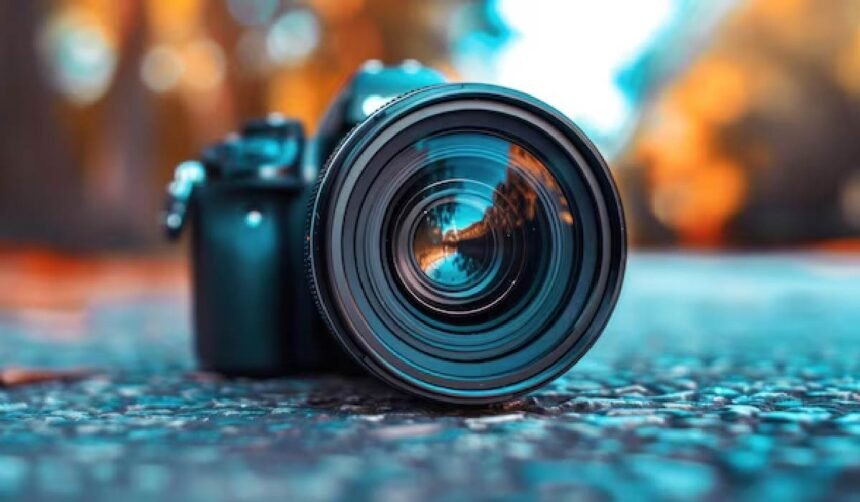
While most people see a simple piece of glass when they look at a camera filter, that piece of glass – and the technology behind it – is much more complicated than it appears. A camera filter represents months of engineering-induced frustrations, iterations, prototype failures, and an inordinate amount of testing. What starts as a bright idea in someone’s head ends up becoming something purchasable for photographers – but the process is much more complicated than one would ever imagine.
These days, the development of advanced optical filters has become a highly sophisticated process involving material science, precision manufacturing, and quality assurance typically reserved for aerospace or medical device manufacturing. What’s more, stakes are high: if a filter is designed incorrectly, it can ruin a multi-thousand dollar camera or unfixable shots in the field.
Where Ideas Come From and How They Get Started
Typically, filter development commences as the result of a specific problem that existing products can no longer accommodate. Perhaps there’s an interesting new camera system that requires something niche, or a new industry standard emerges, or a new coating technology allows something that could never happen before to actually come into play.
Engineers must determine what an optical filter must do in terms of optical performance. This includes what wavelengths must be altered; how much light must pass through or be stopped; and what generalizable and specific physical parameters exist based on the camera system with which the lens will work. For niche applications, these standards become exceedingly specific.
Market research and field studies are crucial during this early onset phase. Manufacturers must understand not only what people say they want but also what they critically need in the field – but often these two findings do not align. Successful filter development means finding a logical middle ground to ensure customer expectations do not go unmet for reasons related to physics.
Furthermore, reality checks about money and manufacturability enter the conversation in this beginning design phase. Engineers need to determine if the desired optical performance is practical at a price point that’s justifiable in addition to whether facilities can accommodate such precision manufacturing.
Making the First Real Versions
After the basic information is drawn from all parties involved, it’s time for basic design development to begin. This will move to prototyping – a phase in which much of what looked good on paper comes crashing down to become a reality of problematic prototypes. The first prototype always has something wrong with it.
Material selection occurs during this phase, which becomes critical for proper functionality. Glass-type selections, coating materials, and substrate bases can all affect performance in ways that engineers may not have anticipated absent building and testing something. Engineers often make versions out of various prototype attempts via different combinations to see their pros and cons.
In more niche applications, manufacturers have to provide entirely new solutions. Professional Insta360 X5 ND Filter Supplier products, for example, require curved hemispherical approaches that create manufacturing complexities not involved with flat filters. Custom applications emerge from this phase that push the envelope for innovations across industries.
This prototyping phase inevitably involves iterations of try, fail, fix, repeat. Each version reveals to engineers something different based on material performance in real life that may change their minds about their next attempt.
Testing Everything Until It Breaks
Testing procedures for advanced filters increase in sophistication. Optical testing measures all light wavelengths – not just what humans see – and filters must have equidistant properties regardless of angle and consistent performance across temperatures and humidity.
Durability testing can be abusive. Filters are exposed to conditions far worse than anything they would ever encounter in real life – from temperature cycling to UV blasting, humidity chambers, and physical stressors performed over the course of weeks replicating years of wear-and-tear.
Color accuracy has come a long way since everything is digital. Filters must maintain absolute neutrality across differing lighting and camera situations – from color casts that humans cannot see but are detrimental in professional video or color-sensitive photography.
Quality assurance testing ensures that every product manufactured after prototypes works to meet standard expectations – the prototype quality assurance process becomes a consistent sampling of any given production run in addition to sampling populations through various stages of the manufacturing process to determine if something off emerges before it negatively impacts what a customer would actually buy.
Scaling Up Production Without Losing Quality
Transitioning from prototypes that work well to those manufactured on a larger scale causes bigger headaches during advanced filter development. Processes that work well with a batch of two dozen prototypes need modifications to sustainably scale up and produce thousands at an economical cost.
One common issue is with coating application. The vacuum chambers, temperature management and material deposition rates must be sustained consistently throughout an entire job run – even the slightest aberration sends the optical performance down the drain.
Quality assurance systems must manage defects without slowing production – this typically means automated manufacturing processes without human intervention to quickly assess product performance relative to needed quality assessment accuracy.
Supply relations are make-or-break during this transition. Raw materials must meet stringent specifications under developing components where suppliers need to verify and validate they can provide consistent quality for reliable timelines to meet production commitments.
Learning from Real-World Use
Advanced optical filters don’t stop being developed once they enter commerce. Professional users often find performance issues yet to be encountered. Shooting conditions stress filters in ways nearly impossible to replicate in lab settings.
Manufacturers gather field information from customer outreach and dealerships or professional user groups that contain likeminded individuals. This information travels back to development for product improvement or future generations based on revised designs.
Similarly, integrated advancements in diverging fields push historical developments along – new coatings, glass formulations or improved manufacturing equipment creates opportunities from learned successes or failures from other fields that can either enhance performance or lower costs for improved functions without sacrificing customer requirements.
Long – term field studies explore time between failures – understanding when products work and fail helps engineers determine what is durable enough for future products.
The Money Side of Filter Development
The financial requirement for advanced developments is staggering – from development costs hitting into the hundreds of thousands before first commercial units are sold to establishing loss-recovery provisions projecting sufficient sales volume over a product’s life cycle.
Manufacturers have critical decisions along each stage to determine which products they can justify based on marketplace potential and whether they’re worth making considering the expected cost acquisition.
Development costs are unfortunately not justified among all novel things that could happen due to interesting scientific advances – patents additionally come into play; manufacturers must ensure against infringements on existing patents while avoiding learning curves they discover on their own along development against appealing ideas worth patenting once other companies figure them out too.
The niche nature of advanced optical filter usage means that any given customer base is limited compared with something mass-produced; therefore, a balance must be struck between optimal performance and purchase power practicality while also justifying sustainable income.
Understanding how all of this comes together helps clarify why advanced optical filter glass costs so much – and why there’s such a gulf between quality/professional versus consumer-grade options; the level of investment across engineering, testing, and quality control equals ultimate investment for optical greatness rendering microscopic differences making huge impacts when any foot is put down behind each meticulously honed piece of glass.