



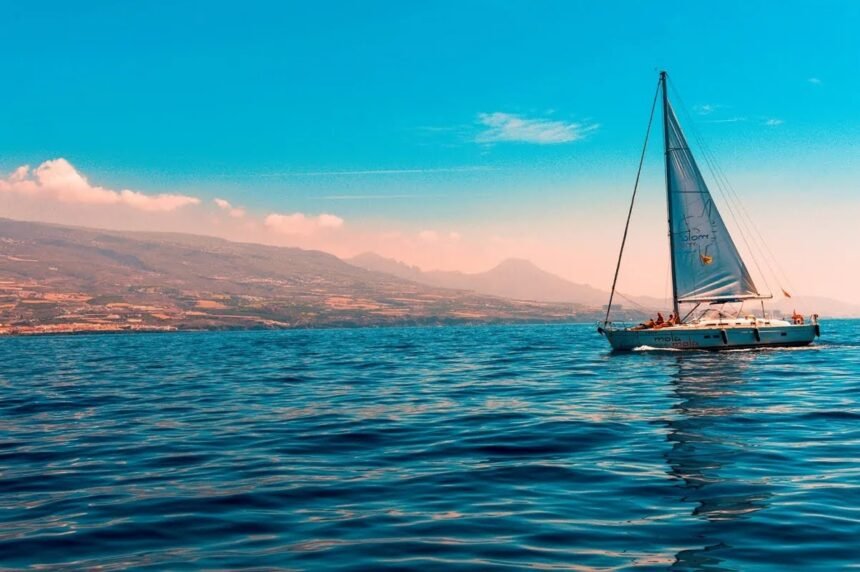
As we move further into the mid-2020s, sailing holidays are no longer a niche pursuit for the wealthy or adventurous few — they’re fast becoming one of the most sought-after holiday styles. A convergence of economic, social, cultural, and technological factors is fueling this shift. Here’s a breakdown of what’s pushing sailing holidays into the spotlight, and why 2026 looks set to be a banner year.
Affordability & Value vs Traditional Holidays
One of the most compelling arguments for sailing holidays is their surprisingly strong value for money, especially for groups. For a group of eight people, chartering a boat can be between 18% and 34% cheaper than staying in comparable hotels or resorts in popular Mediterranean destinations.
This price advantage, combined with the ability to share cabins, cooking, and other resources, makes sailing a highly cost-effective option. As the price of hotel stays continues to climb — especially in high-season coastal hotspots — the relative affordability of sailing becomes more pronounced. Indeed, industry projections suggest the supply of hireable boats is growing faster than the supply of new hotel rooms, which could further strengthen sailing’s price competitiveness through to 2030 and beyond.
For many holiday-makers — families, groups of friends, or multi-generation groups — sailing suddenly becomes not just a luxury indulgence, but a viable, even economical, alternative.
Flexibility, Freedom & Personalised Itineraries
At its heart, a sailing holiday offers a level of freedom and flexibility that few other holiday types can match. Unlike a hotel-based holiday where your itinerary is often tied to a location, sailing lets you chart your own course: choose where to stop, when to sail, how long to stay, which coves or islands to visit.
This flexibility also means you can tailor the pace and style of your holiday. Want lazy mornings and long evenings anchored in a quiet bay? Or perhaps energetic days filled with swimming, exploring, and sailing under full sails? Sailing lets you decide. The ability to personalise the voyage — food, activities, pace — is increasingly valued in an age where many travellers seek experiences over cookie-cutter approaches of package holidays.
For holiday-makers tired of crowded resorts, fixed itineraries, or rushed sightseeing, the autonomy of a sailing holiday is a powerful draw.
Rise of Experiential & Wellness-Focused Travel
Modern travellers, especially younger generations and those jaded by conventional tourism, increasingly value experiences, authenticity, and meaningful connection with nature over sheer luxury or convenience. Sailing holidays tick many of those boxes.
For many, being out at sea — waking to a new horizon every morning, dropping anchor in secluded coves, swimming in pristine waters — offers a deeply immersive and grounding experience. It’s not just a holiday; it’s an experience. And as demand for this kind of “experiential travel” grows, so does demand for sailing charters.
Moreover, sailing holidays increasingly blend adventure with comfort and wellness. Modern charter yachts — especially catamarans and newer builds — offer amenities that rival traditional resort stays: spacious decks, comfortable cabins, social areas, even water toys or gear for exploring.
This mix of adventure, relaxation, and flexibility — everything from adrenaline-fuelled sailing to quiet nights under the stars — speaks to travellers’ evolving interests: they want holidays that feed their souls, not just their tan.
Changing Demographics & Growing Market Supply
Another key driver is shifting demographics. Recent studies show the average age of cruise and sailing travellers is getting younger. As younger travellers — millennials and Gen Z — increasingly prioritize experiences, freedom, and flexibility over traditional holidays, sailing becomes more attractive. It’s also drawing first-time charterers and younger groups who want to travel together: friends, families, or mixed groups pooling resources to share a boat.
On the supply side, there’s been a notable expansion in charter offerings. More boats, more varied vessel types, and more accessible booking platforms mean that sailing is no longer just for seasoned sailors or high-end luxury clients.
Additionally, the popularity of certain vessel types is shifting. Catamaran charters are becoming increasingly common because they offer more space and comfort — making them ideal for families or groups wanting a relaxed, resort-like experience while still enjoying the freedom of the sea.
All this expanding supply — along with competition among charter providers — tends to moderate prices and push sailing holidays into reach for a broader range of travellers.
Sustainability & Eco-Conscious Choices
Travel preferences have changed globally, with many people now making environmental impact a key factor in holiday planning. The sailing industry seems to be responding. Many modern charters now offer eco-friendly or “green” sailing options — including yachts with hybrid or solar-powered systems, sustainable materials, and practices designed to reduce ecological footprint.
This aligns well with a growing segment of travel-conscious consumers who prefer sustainable and low-impact holidays. Instead of massive cruise ships or heavily touristed resorts, a sailing holiday can offer a more environmentally respectful way to explore the coast — at least relative to many other holiday types. For people who care about nature or want to minimize their environmental impact, that makes sailing even more appealing.
Demand for Privacy, Seclusion, and Authenticity
In recent years, many travellers have grown tired of crowded resorts, mass tourism, and the associated drawbacks — overfilled beaches, noisy neighbours, lack of authenticity. Sailing offers a powerful antidote: privacy, seclusion, and a chance to explore less-touristed places, often accessible only by boat.
Whether you choose a fully private bareboat charter (where you handle everything yourself), a crewed yacht for luxury and ease, or even a shared “cabin charter” with other travellers — the sense of having space, control, and flexibility remains.
Moreover, the ability to combine relaxation, adventure, mobility, and solitude — all in one holiday — is increasingly rare in traditional tourism models. For many, that makes sailing feel like the ultimate escape.
Market Momentum & The Growing Charter Infrastructure
From an industry perspective, the ecosystem behind sailing holidays is maturing quickly. Charter companies are investing in new vessels, making booking easier, offering more varied and customisable routes — and leveraging technology to simplify the entire process.
Combined with rising demand, this makes the charter sector dynamic and responsive. What was once a niche luxury is becoming more mainstream, with options for a wider range of budgets and tastes.
Why 2026, Specifically?
Given all the above — affordability, supply growth, shifting traveller preferences, sustainability, and the momentum behind charter services — 2026 seems poised to be a strong year for sailing holidays. Here’s why:
- The pool of available boats continues to grow, making sailing more accessible.
- Younger travellers, new charterers, and groups are increasingly open to sailing as a mainstream holiday alternative — not just for the wealthy or experienced sailors.
- The broader travel market is shifting toward “experiential”, “authentic”, “flexible” and “sustainable” holidays — exactly what sailing offers.
- With technology and booking platforms making charters easier to find and book, sailing is no longer about insider knowledge: even first-timers can plan a trip with relative ease.
In short, the convergence of economic logic, cultural shifts in how people want to holiday, and a maturing charter market are aligning — making 2026 a breakout year for sailing holidays.
What This Means for Holiday-Makers
If you enjoy the sea — and especially if you already have a sailing interest — the rise of sailing holidays offers a great opportunity. Compared to the traditional hotel-and-sand holiday model, sailing gives you:
- More value when travelling with friends/family (cost-effective sharing);
- More freedom to choose where to go, when, and how fast;
- A mix of adventure, relaxation, and nature connection;
- More privacy and fewer crowds;
- A chance to explore hidden, less-touristed spots;
- A sustainable travel option;
- A personalised holiday that blends comfort, authenticity, and flexibility.
Given all that, 2026 could be the perfect time to plan your next sailing adventure. Especially for someone who already enjoys sailing or is drawn to the sea — the timing might be ideal.