


There is a specific, collective sigh that can be heard across the state of Maine every year around November. It happens the first time you look out the window at 4:15 PM and realize it is already pitch black. The “Long Dark” has arrived.
For the next four months, our relationship with our homes changes. We retreat indoors. The bedroom, specifically, transforms from a place we simply visit to sleep into a bunker of hibernation. But for many, this retreat brings with it a creeping sense of lethargy and gloom, often exacerbated by Seasonal Affective Disorder (SAD).
While we often turn to Vitamin D supplements and light therapy lamps to combat the winter blues, we rarely look at the massive objects taking up the most space in our sanctuary. Could it be that your dresser, your headboard, and the very layout of your room are contributing to the gloom?
Design psychology suggests the answer is yes. The way we arrange and select our furnishings plays a pivotal role in how our brains process light and warmth—two things that are in short supply during a New England winter.
The Physics of Light and Layout
The primary enemy in winter is shadow. When natural light is scarce, you must aggressively conserve and amplify it.
In many bedrooms, the furniture layout inadvertently “eats” the light. High-profile chests or armoires placed near windows can create long, dark shadows that cut across the room as the sun traverses its low winter arc. A dark, heavy headboard placed on a window wall can create a contrast so stark that it makes the window feel smaller and the outdoors feel more hostile.
The solution is “Light Mapping.” Stand in your room at noon on a December day. Where does the light fall? That patch of floor is sacred ground.
To fight the gloom, consider lowering the horizon line of your furniture. Low-profile platform beds and mid-century style dressers allow light to pass over them rather than being blocked by them. Furthermore, the strategic placement of mirrors—perhaps attached to a vanity or resting atop a bureau—can act as a light amplifier, bouncing those precious few hours of sun into the darker corners of the room.
The Psychology of “Visual Heat”
When the wind chill hits ten below zero, our brains crave “visual heat.” This is why the sleek, chrome-and-glass minimalism that looks so chic in a Miami penthouse often feels sterile and depressing in a Maine farmhouse.
We evolved to find comfort in organic warmth. This is where material selection becomes a mental health tool. Solid wood furniture—cherry, walnut, oak—absorbs and radiates a visual warmth that metal and plastic cannot. The grain patterns in wood are examples of “fractal fluency,” complex patterns that our brains find inherently soothing because they mimic the outdoors.
Replacing a cold, metal bed frame with an upholstered headboard or a warm timber sleigh bed does more than just change the look; it changes the tactile experience of the room. It softens the acoustics and eliminates the “chill” of touching cold surfaces, reinforcing the feeling of the bedroom as a protective cocoon.
Flow and the Feeling of Stagnation
Winter can make us feel stuck. If your bedroom is crowded with furniture that impedes movement, that feeling of physical stagnation can quickly morph into psychological stagnation.
This is particularly true in older New England homes, which often suffer from the “no closet” syndrome. When we compensate for a lack of closets by overcrowding the room with extra dressers, clothing racks, and bins, we increase visual noise. This clutter raises cortisol levels, making true relaxation impossible.
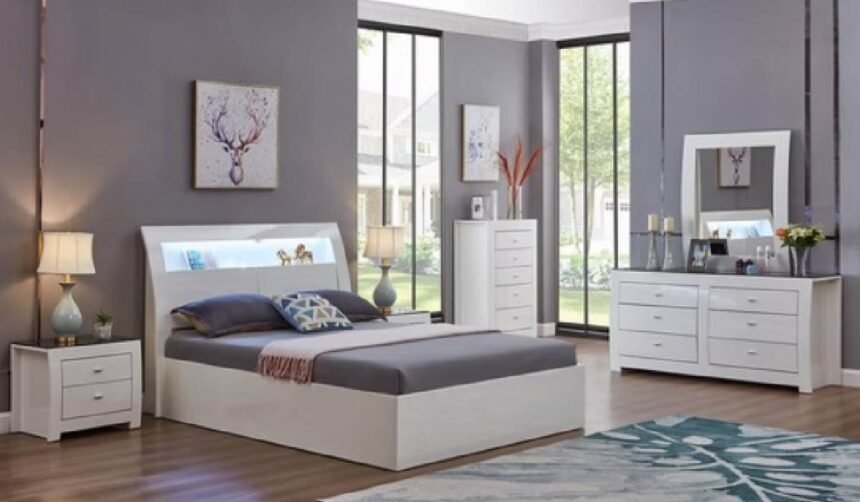
Combating this requires “stealth storage.” This is where the furniture must work harder. A storage bed with deep drawers in the base allows you to eliminate a dresser entirely, opening up floor space. An armoire with mirrored doors serves a triple function: closet, light bouncer, and aesthetic anchor. By clearing the floor, you clear the mind, preventing the “trapped” feeling that often accompanies the winter months.
Conclusion
We cannot change the tilt of the Earth. The sun is going to set early, and the snow is going to fall. But we are not helpless observers of the season.
By being intentional about our surroundings—by choosing materials that warm us, layouts that capture light, and pieces that reduce clutter—we can turn the bedroom from a dark cave into a luminous sanctuary. We can build a space that doesn’t just house us during the winter, but actually helps us survive it.
If you find yourself dreading the dark evenings, take a look around your room. It might be time to rethink your environment. Whether it’s swapping a light-blocking highboy for a low dresser or investing in a warm, cherry wood bed frame, finding the right bedroom furniture in Scarborough, ME is about more than just decor; it’s about designing a space that keeps the light on, even when the sun goes down.