



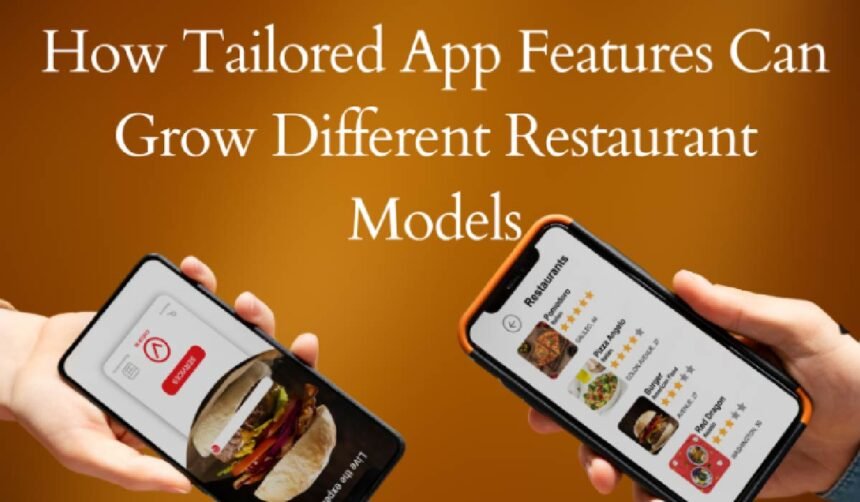
Restaurants no longer compete only on food quality or location. Today, the real battleground sits on customers’ phones. Diners expect convenience, speed, personalization, and consistency every time they interact with a brand. An app is no longer a nice add-on. It has become a core growth engine.
Here’s the thing. Not every restaurant operates the same way, and not every app should behave the same way either. A fine-dining restaurant, a cloud kitchen, a café chain, and a food truck all have very different operational realities. When apps ignore these differences, they fail to deliver real business impact.
What this really means is that tailored app features are not optional. They are essential. Let’s break down how custom app features can drive growth across different restaurant models and why a one-size-fits-all approach rarely works.
Why Customization Matters in Restaurant Apps
Generic restaurant apps often focus on basic ordering and payments. While those features are important, they barely scratch the surface of what a well-designed app can achieve.
Restaurants have different goals. Some want faster table turnover. Others want a higher average order value. Some focus on loyalty, while others prioritize operational efficiency. Tailored features allow apps to directly support these goals.
This is why many brands choose to work with a restaurant app development company that understands the restaurant ecosystem and can align app functionality with specific business models instead of forcing every restaurant into the same mold.
Customization ensures that technology adapts to the restaurant, not the other way around.
Personalization as a Growth Lever
Across all restaurant models, personalization plays a powerful role in growth by turning generic interactions into meaningful experiences. When apps adapt to customer preferences, ordering habits, and timing, they increase engagement, boost repeat visits, and strengthen long-term brand loyalty naturally.
Apps can use data to:
- Recommend dishes based on preferences
- Trigger offers based on ordering patterns
- Adjust communication timing for higher engagement
- Identify loyal customers and reward them effectively
Personalization doesn’t need to feel intrusive. When done right, it feels helpful and intuitive.
This is where experienced teams from a best software development company in Dallas often add value by combining data insights with thoughtful UX design to create features that feel natural rather than forced.
Operational Benefits That Drive Profitability
Tailored app features don’t just improve customer experience. They also streamline internal operations by automating order flows, reducing manual errors, improving staff coordination, and optimizing inventory management. This together lowers costs, improves efficiency, and directly contributes to higher and more predictable profit margins.
Examples include:
- Automated order routing to kitchens
- Inventory alerts to prevent stockouts
- Staff scheduling based on demand forecasts
- Reduced manual errors and rework
When operations improve, costs drop. When costs drop, margins improve. Apps quietly support profitability behind the scenes while customers enjoy a smoother experience.
Data and Analytics: Turning Insights into Action
Restaurant apps generate valuable data, but only if it’s used effectively. When analyzed properly, this data reveals customer preferences, peak ordering times, menu performance, and promotional impact. It helps restaurants make informed decisions, improve operations, personalize experiences, and drive consistent growth across channels.
Custom analytics features allow restaurant owners to:
- Track peak ordering times
- Identify best-selling and underperforming items
- Measure campaign effectiveness
- Forecast demand more accurately
Different restaurant models need different metrics. Tailored dashboards ensure decision-makers see what actually matters to their business.
Scalability and Future-Proofing
A restaurant app should not just solve today’s problems. It should be built for future growth, allowing new features, locations, and service models to be added without disruption. All while staying adaptable to changing customer behavior, technology shifts, and evolving market demands.
Tailored architecture allows restaurants to:
- Add new features without rebuilding the app
- Expand into new locations or brands easily
- Integrate emerging technologies like AI recommendations
- Adapt quickly to market changes
Scalability ensures that success doesn’t create new limitations.
Quick-Service Restaurants (QSRs): Speed and Volume First
Quick-service restaurants thrive on speed, accuracy, and volume. Their apps must reduce friction at every step.
Key app features that drive growth for QSRs include:
- One-tap reordering based on past purchases
- Real-time order status updates
- Self-service kiosks synced with mobile apps
- Time-based promotions during off-peak hours
For QSRs, seconds matter. A well-optimized app reduces queue times, increases order frequency, and improves operational flow. Push notifications can trigger impulse purchases during lunch or evening rushes, directly impacting daily revenue.
The app becomes a digital extension of the counter, handling volume without increasing staff load.
Casual Dining Restaurants: Experience and Engagement
Casual dining sits between speed and experience. Customers expect comfort, flexibility, and value. Apps in this segment should enhance the dining journey before, during, and after the visit.
Effective features include:
- Table reservations with wait-time predictions
- Digital menus with dietary filters and recommendations
- Split billing and group payment options
- Loyalty rewards tied to dine-in visits
Apps can also collect feedback immediately after meals, helping restaurants identify service gaps while the experience is still fresh. In this model, the app is not just about ordering. It’s about building relationships and encouraging repeat visits.
Fine Dining Restaurants: Exclusivity and Precision
Fine dining restaurants operate on reputation, ambiance, and personalized service. Their apps should reflect that premium positioning.
Instead of heavy discounts or aggressive promotions, fine dining apps focus on:
- Reservation management with preference tracking
- Personalized dining experiences based on past visits
- Event bookings for wine tastings or chef specials
- Discreet communication channels for VIP guests
Here, the app acts as a concierge rather than a sales tool. Subtle personalization enhances customer loyalty without undermining exclusivity. Growth comes from repeat patrons and word-of-mouth, supported quietly by technology.
Cloud Kitchens and Delivery-Only Brands: Efficiency at Scale
Cloud kitchens rely entirely on digital channels. Their success depends on efficiency, accuracy, and scalability.
Critical app features for this model include:
- Multi-brand management under a single backend
- Dynamic menu updates based on ingredient availability
- Smart delivery routing and time estimation
- Data-driven pricing and promotion controls
Apps help cloud kitchens optimize operations in real time. Menus can change instantly. Offers can be targeted based on location or order history. Performance metrics guide decisions without guesswork. In this model, the app is the restaurant.
Café Chains and Franchises: Consistency Across Locations
Café chains and franchises face a unique challenge. They must maintain brand consistency while supporting multiple locations with different demand patterns.
Tailored app features that support growth include:
- Location-based menus and pricing
- Centralized loyalty programs across outlets
- Inventory synchronization with POS systems
- Franchise-level analytics dashboards
Apps ensure customers receive the same experience regardless of location while allowing operators to adapt locally. This balance between standardization and flexibility is critical for scaling without losing brand identity.
Food Trucks and Pop-Ups: Mobility and Discovery
Food trucks and pop-up restaurants rely heavily on visibility and timing. Their apps must help customers find them easily and act quickly.
Useful app features include:
- Real-time location tracking
- Limited-time menu notifications
- Pre-ordering for faster pickup
- Social media integration for event updates
For mobile food businesses, apps turn unpredictability into opportunity. Customers feel connected and informed, increasing turnout and repeat engagement.
Conclusion
Tailored app features give restaurants the flexibility to grow in ways that match their unique operating models. From speed-focused QSRs to experience-driven fine dining and delivery-first cloud kitchens, customization ensures technology supports real business needs instead of creating friction.
The right features improve customer engagement, streamline operations, and unlock data-driven decisions that fuel long-term profitability. Generic apps may offer a starting point, but they rarely sustain growth.
Restaurants that invest in thoughtfully designed, adaptable app features position themselves to scale confidently, respond to changing customer expectations, and stay competitive in an industry where convenience, personalization, and efficiency now define success.