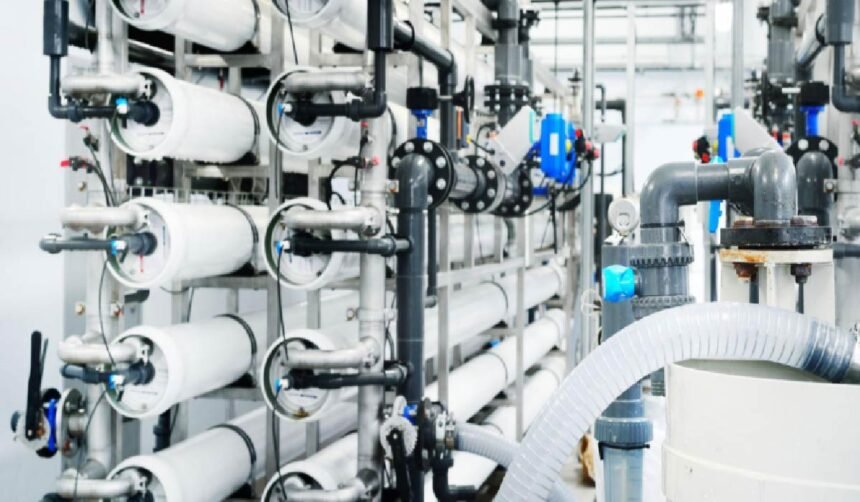
A high-efficiency reverse osmosis system can be a smart investment for facilities that need reliable water quality while keeping operating costs under control.
For many businesses, water is not just a utility. It affects production, equipment life, product quality, cleaning results, and daily operations. Before making a purchase, it helps to understand what makes a system “high-efficiency” and whether the savings and performance benefits match your actual water demand.
What Makes Reverse Osmosis More Efficient?
Reverse osmosis works by pushing water through a membrane that removes dissolved minerals, salts, and other unwanted contaminants. A standard system can waste a fair amount of water during this process, depending on the equipment’s design and condition.
A high-efficiency reverse osmosis system is designed to recover more usable water and send less water to drain. It may also use better controls, pumps, membranes, and monitoring tools to reduce waste and improve consistency.
That level of efficiency becomes especially important for facilities that rely on high volumes of water daily.
Look At Your Water Usage First
The first question is simple: how much purified water does your facility actually need?
A smaller operation may not recover enough savings to justify a larger or more advanced system. A facility with steady daily demand, however, may see a stronger return over time.
A high-efficiency system may be worth considering if your business:
- Uses large volumes of water daily
- Pays high water or sewer costs
- Needs consistent water quality
- Has equipment been affected by scale or mineral buildup
- Wants to reduce water waste
- Plans to expand production or operations
The more water your facility uses, the more important recovery rate and long-term efficiency become.
Consider The Cost Beyond Purchase Price
It is easy to compare systems by upfront cost, but that does not show the full picture. A lower-cost system may use more water, require more maintenance, or need replacement parts more often.
A higher-efficiency system may cost more upfront, but it can reduce expenses over time through reduced water waste, improved membrane performance, and fewer interruptions.
When comparing options, look at:
- Equipment cost
- Installation cost
- Water and sewer savings
- Energy use
- Filter and membrane replacement
- Maintenance needs
- Downtime risks
A practical decision should be based on total operating cost, not only the initial quote.
Think About Water Quality Requirements
Not every facility needs the same level of water treatment. Food and beverage operations, manufacturing plants, healthcare facilities, laboratories, and commercial buildings may all have different requirements.
Some businesses need purified water to protect equipment. Others need it to support product quality or meet process standards. In these cases, commercial water purification systems should be sized and designed around the actual use case, not just general capacity.
Testing your source water is also important. Hardness, total dissolved solids, chlorine, iron, and other factors can affect system design and maintenance needs.
When The Investment Makes Sense
A high-efficiency system is usually worth the investment when water costs, wastewater fees, production needs, or quality concerns are significant enough to create long-term value.
It may also make sense when an older system is wasting too much water, causing frequent service problems, or no longer meeting demand. In those cases, upgrading can improve both cost control and daily reliability.
The best approach is to compare your current water usage, treatment goals, and operating costs against the expected performance of the new system. That gives you a clearer view of whether the investment is truly practical for your facility.