



Choose for Your Normal Week, Not One Great Outfit
You find a silver bracelet you like, picture it on your wrist, then hesitate. Would you actually wear it to lunch or to work? Or would it sit in a drawer until you had somewhere special to go?
That’s a useful question before buying your first men’s silver bracelet. A close-up photo can make you want a piece without helping you decide where it fits into your day.
Start with three outfits you already wear regularly. Maybe that’s jeans and a T-shirt, a button-down with chinos, and a sweater on weekends. Picture the bracelet with each one. If it only works with an outfit you’d need to buy, keep looking.
You don’t have to choose the plainest design just because you’re new to jewelry. A heavier chain might feel right; a slim one might feel too subtle. The aim is to find something you want to put on during an ordinary week, even when there’s no particular reason to dress up.
Let What You Already Wear Narrow the Choice
Your watch is a useful starting point. If you chose it for a clean dial and a thin case, you may prefer a bracelet with simple links and little decoration. If you regularly wear a large dive watch, a substantial silver chain probably won’t feel like such a jump. Neither is a rule, but both give you something more useful than a model’s outfit to work from.
Look at the details you already enjoy wearing. Plain shirts, neat shoes, and a simple leather belt might point you toward a bracelet with a consistent link pattern. Boots, textured knits, and heavier accessories could give you a reason to consider deeper detailing or a more prominent clasp.
But plain clothes don’t automatically call for plain jewelry. A detailed bracelet can work well with a white T-shirt and jeans. Ask yourself how much attention you want it to get. Would you enjoy someone noticing it, or would you rather it stay a small part of the outfit? That answer helps when choosing a silver bracelet for men who are comfortable with very different levels of attention.
For a gift, pay more attention to what he wears repeatedly than what you think would suit him. Does he reach for the same understated watch every morning? Has he ever pointed out a piece of jewelry he liked? Those are stronger clues than his age or occupation.
Use these observations to narrow your search to two or three designs. You don’t need to settle on one yet. You just need a shortlist that makes sense for the person who will wear it.
Decide How Much Bracelet You Want to Notice
“Will this look too big on me?” is hard to answer from a close-up product photo. A bracelet can fill the whole screen and still be quite modest on your wrist. Start with the measurements, then look at how the links are built.
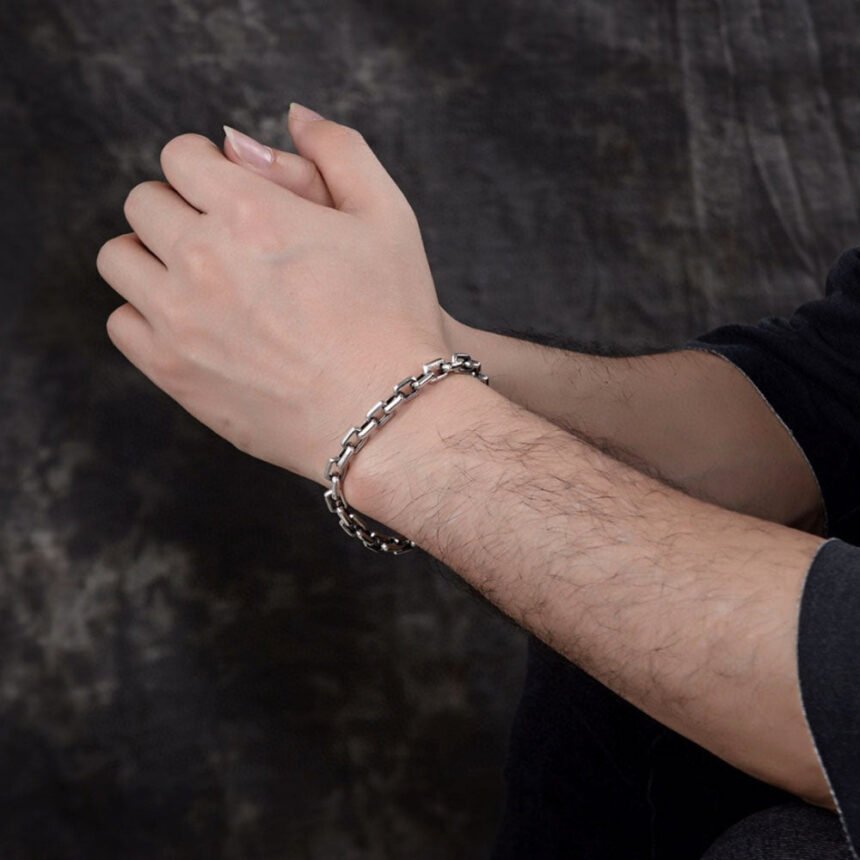
Width tells you only part of the story. A flat curb chain and a rounded, tightly woven chain might both measure 6 mm across, but the rounded one can sit higher and look heavier. Open links leave more skin visible. Closely packed links create a more continuous band of silver. Deep patterns and darkened recesses can also make a design more noticeable.
Comparing different silver bracelet widths and link shapes can help you separate the designs you like from the amount of bracelet you actually want to wear. In sterling silver, a simple shape can still have plenty of presence.
For a rough width check, cut a strip of paper to the listed measurement and wrap it around your wrist. It won’t show the bracelet’s weight, thickness, or movement, but it can help you decide whether a particular width feels too narrow or too broad. Then look for on-wrist photos, ideally with the wearer’s wrist measurement provided. A side view helps you judge how far the bracelet stands above the skin.
Don’t automatically choose the smallest option because it’s your first bracelet. If you keep coming back to a more substantial design, buying something tiny may leave you disappointed. Equally, there’s no reason to choose a thick chain just because it’s described as masculine.
Picture each option during something ordinary—having coffee, meeting a friend, sitting at your desk. Which would you enjoy seeing on your wrist without repeatedly wondering if it was too much?
Get the Fit Right for an Ordinary Day
A bracelet that slides onto your hand every time you lower your arm can become annoying quickly. So can one that presses into your wrist when you bend it. Even if you like the design, you probably won’t reach for it often if you’re constantly adjusting it.
Measure your wrist with a flexible tape where you expect the bracelet to sit. Keep the tape against your skin without pulling it tight. If you use string, choose something that doesn’t stretch, mark the overlap, and measure it against a ruler.
That measurement is your starting point, not the bracelet length to order. Follow the sizing guidance for the specific design. Thick links take up space inside the bracelet, so a chunky chain may need more added length than a slim one. Check whether the seller’s size options describe the bracelet’s full length or the wrist size it is intended to fit. If that’s unclear, ask before ordering.
Once you try it on, move your hand and bend your wrist. Some movement is normal, but the bracelet shouldn’t squeeze or travel so far down that it gets in your way. Then try it during the things you actually do:
- Rest your hand on a keyboard. Does the clasp press against the desk?
- Button your usual shirt cuff. Does the bracelet catch or bunch underneath it?
- Put on your watch. Do the two pieces keep knocking together?
Try fastening it yourself, too. A clasp that looks neat in a photograph may be awkward for you to handle one-handed.
If you’re buying a men’s silver bracelet as a gift, don’t estimate wrist size from someone’s height or build. Measure a bracelet he already finds comfortable if possible, while allowing for differences in construction. Otherwise, confirm his wrist measurement and check the exchange terms before choosing a size. Getting that detail right matters more than preserving every part of the surprise.
Check What You’re Buying—and What You’ll Need to Maintain
Before comparing prices, check what “silver” means in each listing. Sometimes it describes the color. A bracelet made from stainless steel or silver-plated brass can look similar in a photo, but it isn’t the same material as sterling silver.
Sterling silver contains 92.5% silver, with the remainder made up of other metals. Look for a clear material description rather than relying on the product title. A “925” stamp is useful, but it doesn’t prove authenticity by itself. If a listing says only “silver finish” or “silver tone,” don’t assume you’re getting sterling silver.
Once the material is clear, decide what you’re comfortable spending on a first bracelet. Extra weight means more metal, but it doesn’t automatically mean a better choice for you. There’s little value in paying for a thick chain if you already suspect you’ll find it bulky. The same goes for elaborate decoration that you admire but wouldn’t usually wear.
Think about upkeep, too. Sterling silver can tarnish, so expect occasional cleaning. If you choose a design with intentionally darkened details, follow its care instructions; aggressive polishing can change the finish you liked. You’ll also need to take the bracelet off for some activities, such as lifting weights or working with tools, where it could be crushed, scratched, or caught.
Before ordering, make sure you can find the material, dimensions, sizing guidance, and return conditions. Check whether trying it on affects return eligibility. You can do plenty of preparation online, but the first few minutes on your wrist may still tell you something the photos couldn’t.
Pick the One You’d Put On Tomorrow
If you’ve narrowed it down to two bracelets, picture getting dressed tomorrow morning. Which one would you put on without changing the rest of your outfit? That’s usually a more useful test than deciding which looks more impressive in a product photo.
Run through three questions: Does it work with your usual clothes? Are you comfortable with its size and how much attention it draws? Can you wear it through your normal routine without it getting in the way?
A first bracelet may feel unfamiliar. You might notice it whenever you reach for your phone or catch your reflection. Give yourself a little time to get used to that, but don’t confuse unfamiliarity with a poor fit. Pinching, catching, or constantly wanting to hide it under your sleeve deserves another look.
You don’t need to plan a jewelry collection. Choose one bracelet you like enough to put on again the next day.