



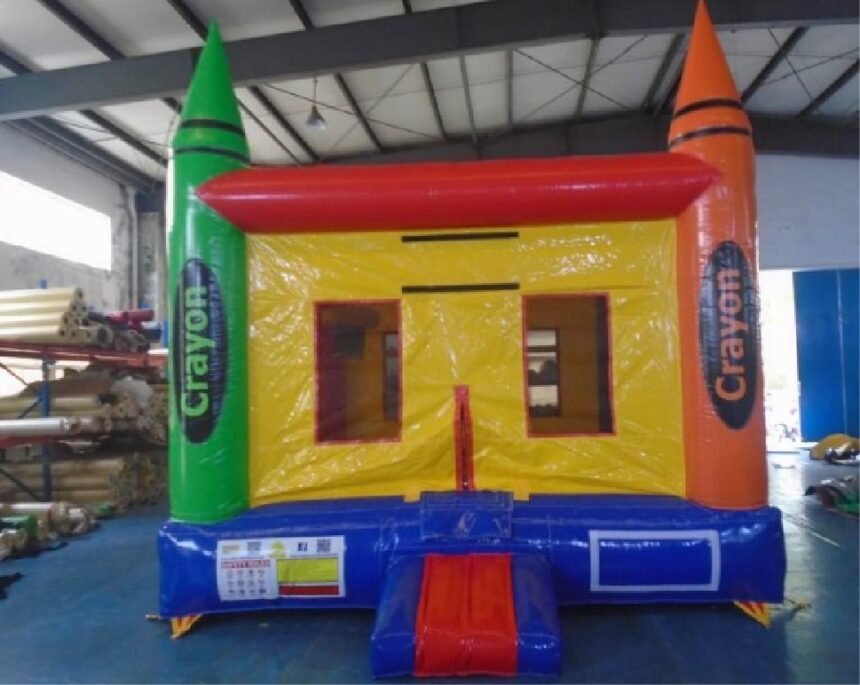
For entrepreneurs in the party rental and event industry, inventory is the most significant capital expenditure. When browsing the global market for new equipment, the price disparity for bounce houses can be staggering. On one end of the spectrum, local distributors offer premium-priced units; on the other, factory-direct options seem almost too affordable.
This leads to a critical industry debate: Is safety being compromised for price? To answer this, we must look beyond the price tag and examine the specific engineering standards, material science, and long-term durability that define professional-grade equipment.
Understanding the “Commercial Grade” Benchmark
Safety in the inflatable industry is not a subjective marketing term—it is a set of rigorous engineering standards. A common pitfall for new business owners is purchasing a “cheap” bounce house that is actually a residential-grade toy being marketed for commercial use.
To ensure the safety of children and the legal protection of your business, professional-grade inflatables must meet these non-negotiable standards:
- Material Density (The 0.55mm Rule): Standard commercial equipment requires 0.55mm (18oz) PVC Tarpaulin. This material is not just thicker; it is specifically engineered to be lead-free, flame-retardant, and UV-resistant. It can withstand the high-pressure environment of constant jumping without stretching or losing its structural integrity.
- Structural Reinforcement: High-stress areas—specifically the entrance, the slide climbs, and the connection points between the pillars and the base—must utilize quadruple stitching. Professional manufacturers add reinforced webbing to these seams to prevent “blowouts” during peak usage.
- Safety Netting and Finger Protection: Small-mesh, “finger-safe” netting is essential. It allows for high visibility for supervising parents while preventing children from climbing the walls or getting their fingers caught in the mesh.
- Emergency Features: Every commercial unit should be equipped with high-quality deflation zippers and integrated non-return flaps on all air tubes to ensure children can exit safely in the event of a power failure.
By strictly adhering to these technical metrics, commercial bounce houses provide years of reliable service while keeping liability risks at an absolute minimum.
The East Inflatables Advantage: Engineering for “Active Safety”
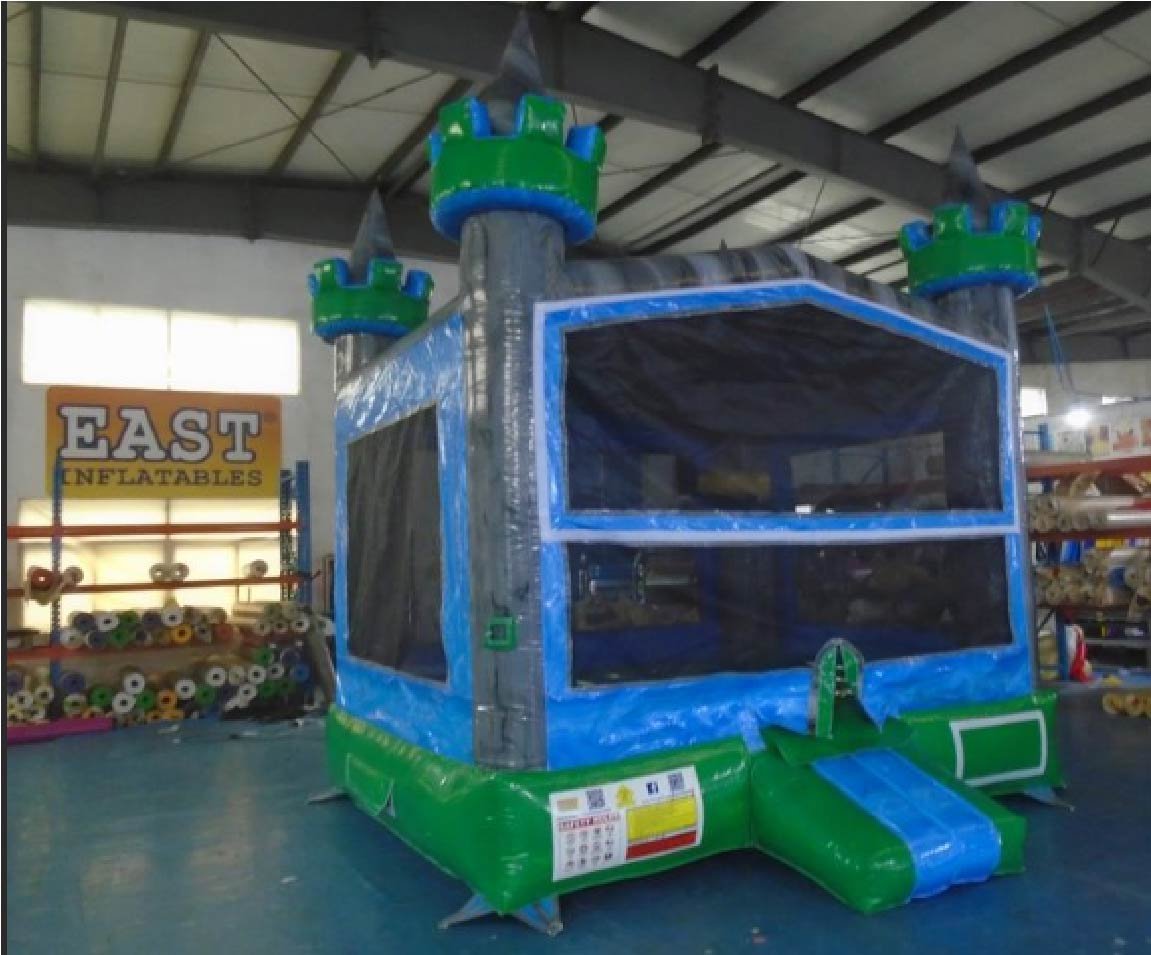
The reality of the modern market is that high-end safety doesn’t always require a middleman’s markup. This is where the direct-to-factory model proves its value. Manufacturers like East Inflatables have built their global reputation by controlling the entire production process—from the raw PVC sourcing to the final safety testing.
Instead of cutting corners on materials to lower prices, they optimize the supply chain. By selling directly to rental businesses, they can afford to include premium features—like heavy-duty D-rings made of stainless steel that can resist wind speeds up to 25mph—as standard equipment.
Furthermore, every unit produced meets or exceeds international safety certifications, including EN14960 for Europe and ASTM for the United States. When you purchase from East Inflatables, you are investing in equipment that has been “violence-tested” for the rigorous demands of the weekend rental market.

The Economics of Quality: Why “Cheap” Often Costs More
In the rental business, the initial purchase price is only one part of the financial equation. Smart operators look at the Total Cost of Ownership (TCO). Choosing a high-end, certified manufacturer provides a “hidden discount” through longevity and reduced maintenance.
Consider this ROI comparison:
- The “Budget” Gamble: A $1,000 unit made from inferior materials may look good on day one, but after three months of sun exposure and heavy use, the seams begin to fray and the colors fade. If you have to replace the unit after one season, your annual cost is $1,000.
- The Quality Investment: A $1,500 commercial-grade unit from a reputable source is built to last five seasons or more with proper care. Your amortized annual cost drops to just $300.
Beyond the direct costs, consider the value of your brand’s reputation. One safety incident or a mid-party deflation due to a seam failure can lead to negative reviews that haunt your business for years. High-quality equipment allows you to charge premium rental rates and build a loyal client base that knows their children are safe in your “jumpers.”
Maintenance Tips to Maximize Your Investment
Regardless of the manufacturer, even the best bounce house requires proper care to maintain its safety standards. To ensure your commercial investment lasts, follow these industry best practices:
- Dry Storage: Never pack a bounce house away while it is damp. Mildew can weaken PVC fibers over time.
- Routine Inspections: Check your anchor points and zippers before every rental.
- Cleaning Protocols: Use non-toxic, vinyl-safe cleaners to maintain the aesthetic appeal and hygiene of the unit.
Conclusion: Making the Smart Choice
Is a cheap bounce house safe? If the “savings” come from thin materials, lack of certification, and poor stitching, the answer is a resounding no. However, if the price is low because you have optimized your sourcing strategy—buying direct from a world-class manufacturer that adheres to the 0.55mm PVC and quadruple-stitching standard—you have found the ultimate balance of safety and profit.
Don’t settle for a choice between your budget and your customers’ safety. By focusing on engineering transparency and manufacturer reputation, you can build a successful, safe, and highly profitable rental fleet.