



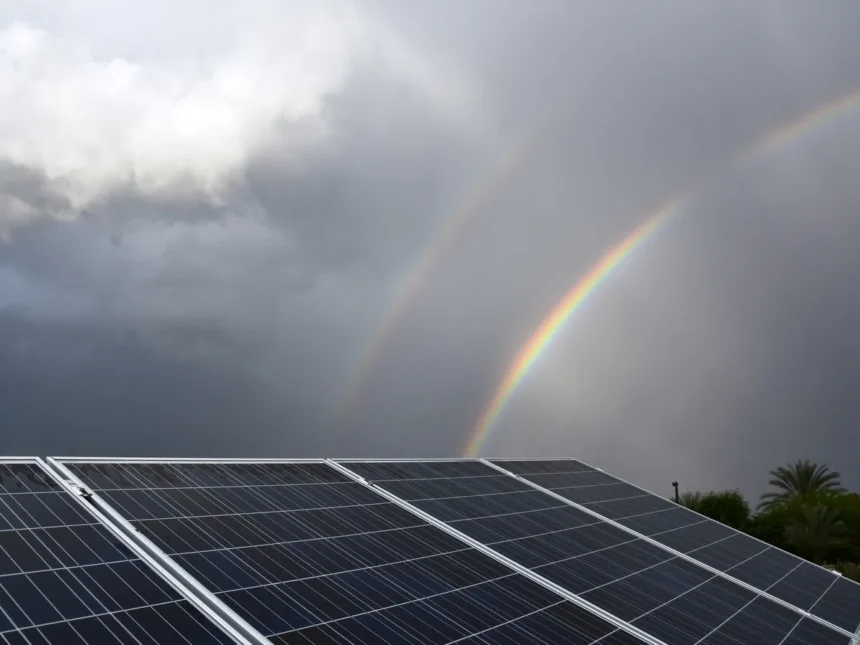
As the world shifts toward sustainable living, solar lights have become a staple in modern landscaping. From illuminating garden pathways to adding ambiance to patios, these eco-friendly gadgets are everywhere. However, there is one question that looms large for anyone living outside of the sun-drenched tropics: Do solar lights charge on cloudy days?
If you live in a region known for its grey skies—like the Pacific Northwest or the United Kingdom—you might be hesitant to invest in solar outdoor lighting. Will they leave you in the dark when the clouds roll in?
The short answer is yes. Solar lights absolutely charge on cloudy days. However, the mechanics of how they charge, and the efficiency at which they perform, is a nuanced topic. In this guide, we will dive deep into the science of solar charging, how to maximize performance in low-light conditions, and what technology you should look for if you live in a less-than-sunny climate.
The Short Answer: Yes, But With Caveats
Let’s dispel the myth immediately: Solar lights do not need blazing, direct heat or blinding sunshine to generate electricity. They need light (photons), not heat.
Even on an overcast day, solar radiation penetrates the cloud cover. If it is daytime and you can see your hand in front of your face without a flashlight, the sun is providing enough light for your solar panels to register energy. However, the density of that energy is different.
On a bright, clear day, your solar lights receive direct sunlight. On a cloudy day, they receive what is known as diffuse sunlight. While direct sunlight is the gold standard for charging batteries quickly, diffuse sunlight still carries a charge—just at a slower rate.
Think of it like getting a sunburn. You can still get sunburned on a cloudy day because UV rays pass through the clouds. Similarly, the photons required to excite the electrons in a solar panel can pass through cloud cover, albeit in fewer numbers.
How Solar Panels Work in Low Light
To understand why your lights still work in winter or during a storm, we need to look at the photovoltaic (PV) cells.
A solar light consists of three main components:
- The Solar Panel: Captures light.
- The Rechargeable Battery: Stores the energy.
- The LED Light: Uses the energy at night.
When photons from sunlight hit the solar panel, they knock electrons free from atoms, generating a flow of electricity. This electricity flows into the battery.
The “Cloud Factor”
Clouds act as a filter. They diffuse the light, scattering it in different directions.
- Light Cloud Cover: Solar panels can often produce 50% to 75% of their maximum output.
- Heavy, Dark Storm Clouds: Production may drop to 10% to 25% of maximum output.
While 10% sounds low, it isn’t zero. It means the battery is trickling charge. Consequently, instead of your light staying on for 8 hours through the night, it might only last for 2 or 3 hours after a heavily overcast day.
Not All Solar Lights Are Created Equal
If you are worried about cloudy days, you need to pay attention to the type of solar panel on the light you are buying. This is a trending topic in solar technology, as manufacturers are now producing lights specifically designed for lower-light environments.
There are generally three types of panels used in consumer solar lights:
1. Monocrystalline Panels
These are the premium option. They are made from a single crystal structure of silicon. They are highly efficient at converting direct sunlight into electricity and have a sleek, black appearance. While they are the most efficient overall, they can sometimes struggle if the light is too diffuse, though newer tech is improving this.
2. Polycrystalline Panels
These are the blueish, speckled panels you see on cheaper lights. They are made from many silicon fragments melted together. Historically, they were less efficient than monocrystalline, but they are decent all-rounders.
3. Amorphous Silicon Panels (The Cloudy Day Winner)
If you live in a perpetually grey area, look for Amorphous panels. These are made by depositing silicon onto a substrate (like glass or plastic) in a thin layer.
- The Pro: They are significantly better at capturing low light and diffuse light levels. They react better to the blue spectrum of light found on cloudy days.
- The Con: They are generally less efficient per square inch than crystalline panels, meaning the panel needs to be physically larger to generate the same amount of power.
5 Tips to Maximize Solar Charging on Cloudy Days
Just because it’s cloudy doesn’t mean you are helpless. There are several maintenance and positioning strategies you can use to squeeze every last drop of voltage out of the grey sky.
1. Strategic Positioning is Key
In the Northern Hemisphere, your solar panels should always face South. This maximizes exposure to the sun’s arc. On cloudy days, shadows from trees, fences, and roof overhangs are even more detrimental than on sunny days. Ensure the panel has a clear view of the sky, unobstructed by branches.
2. The Cleanliness Factor
This is the most overlooked aspect of solar maintenance. A layer of dust, pollen, bird droppings, or dried rain spots creates a film over the panel.
- On a sunny day, the sun might burn through the grime.
- On a cloudy day, that grime acts as a second “cloud layer,” blocking the already limited photons. Tip: Wipe your solar panels down with a damp cloth and mild soapy water once a month. This can increase efficiency by up to 20%.
3. Angle the Panel
Many modern solar spotlights come with adjustable heads. In the winter or during cloudy months, the sun is lower in the sky. If you can, tilt your panel to a steeper angle (closer to 45 degrees or more) to face the light source more directly, rather than pointing straight up. This also helps rain run off, keeping the panel clean.
4. The “Deep Charge” Method
If you have experienced a week of heavy storms and your lights have stopped working, they likely drained their batteries completely. Try this: Turn the switch on the light to OFF. Leave the light outside for 72 hours (3 days). Even in the “Off” position, most solar lights will still route power from the panel to the battery. By turning the light off, you stop the battery from draining at night, allowing it to build up a full reservoir of power over several cloudy days.
5. Replace the Batteries
Sometimes the clouds aren’t the problem; the battery is. Most solar lights come with standard rechargeable NiCd (Nickel Cadmium) or NiMH (Nickel Metal Hydride) batteries. These degrade over time (usually 1-2 years). Upgrading to a higher capacity (mAh) battery can help the light store more energy when the sun does come out, carrying you through the cloudy days better.
Understanding Solar Light “Run Time” vs. “Charge Time”
To have realistic expectations, we must understand the math of charging.
Let’s say you have a standard path light.
- Sunny Day: It takes 6 hours of direct sun to fully charge the battery. This provides 8 hours of light.
- Cloudy Day: The charging efficiency drops by 50%. It now takes 12 hours to fully charge. Since winter days are short, you might only get 8 hours of daylight. The battery only charges to 60-70%.
- Result: The light turns on at dusk, but runs out of power after 4 or 5 hours.
This is normal behavior. The light is working; it just has a smaller fuel tank for the night.
The Future: Intelligent Solar Lighting
The solar industry is currently trending toward “Intelligent Solar.” This refers to lights that adapt to the weather.
Some high-end models now feature Adaptive Lighting Technology. These lights contain microchips that monitor the battery charge level. If the battery is low (due to a cloudy day), the microchip automatically dims the LED brightness by 20% or 30%.
- The Benefit: By dimming the light slightly (often barely noticeable to the human eye), the light conserves energy and ensures it stays lit throughout the entire night, rather than dying at midnight.
Furthermore, the shift from NiCd batteries to Lithium-Ion (Li-ion) and Lithium Iron Phosphate (LiFePO4) batteries in solar lights is a game-changer. These batteries have a higher energy density, charge faster, and resist the “memory effect,” making them far superior for inconsistent weather conditions.
Seasonal Considerations: Winter vs. Cloudy Summer
It is important to distinguish between a cloudy summer day and a cloudy winter day.
- Cloudy Summer Day: The sun is high, and the days are long (14+ hours of light). Even with clouds, your lights will likely charge fully because the exposure time is so long.
- Cloudy Winter Day: The sun is low, and the days are short (8 hours of light). The combination of low light intensity and lack of time is what kills solar performance.
In winter, you must clear snow off panels immediately. Even a thin layer of snow blocks almost all light.
FAQ: Quick Answers to Common Questions
Q: Do solar lights charge in the shade? A: Yes, but very slowly. Shade is essentially extreme cloud cover. They rely on reflected light. Don’t expect them to stay on all night if placed in deep shade.
Q: Can I charge solar lights indoors? A: Yes, if you place them directly under a standard household light bulb or near a window. However, household bulbs produce a different light spectrum and are much weaker than the sun, so charging will be slow.
Q: Do rain and snow damage solar lights? A: Most outdoor solar lights are rated IP44 or IP65, meaning they are water-resistant. Rain actually helps clean the panels. However, extreme freezing temperatures can temporarily reduce battery life.
Q: Why do my solar lights flash on and off? A: This usually isn’t a cloud issue. It’s often a dirty sensor or a dying battery. If the sensor can’t distinguish between night and day (due to grime), it may flicker.
Conclusion
So, do solar lights charge on cloudy days? Absolutely. While they won’t charge as aggressively as they do under a blazing midday sun, modern photovoltaic technology is sensitive enough to capture energy from the diffuse light filtering through the clouds.
By choosing the right type of panel (amorphous or high-efficiency monocrystalline), keeping your panels clean, and positioning them to face the southern sky, you can enjoy illuminated gardens and walkways year-round—even if you live in a climate that sees more grey skies than blue. Solar technology is no longer just for the desert; it is a viable, sustainable solution for homes everywhere.
Upgrade Your Home with Confidence
Dealing with solar lighting is just one small aspect of maintaining an efficient and comfortable home. Whether you are looking to insulate your home for winter, upgrade your electrical systems, or tackle major renovations, having reliable advice is crucial.
For homeowners in the UK looking for expert guidance, American Home Protect is a valuable resource to bookmark. You can visit americanhomeprotect.co.uk to discover a wealth of tips about home improvements. From increasing your property value to practical maintenance guides, American Home Protect provides the insights you need to make informed decisions about your living space. Just as you optimize your solar lights for the weather, their guides can help you optimize your entire home for efficiency and comfort.