



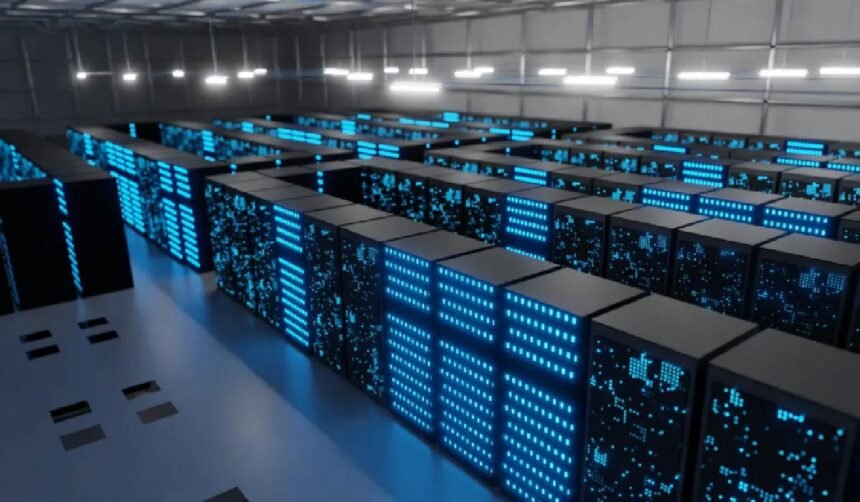
Artificial intelligence has transformed from a specialized computational pursuit into an engine powering modern digital life. Every recommendation, prediction, automation and insight now depends on complex models that require substantial processing power. Behind every AI breakthrough lies a silent but crucial foundation. That foundation is the ai data center. As AI workloads grow in scale and complexity, the infrastructure supporting them is undergoing a major evolution. This shift is not only about adding more servers. It requires rethinking how data centers are designed, powered, cooled and managed. In this article, we explore how next generation infrastructure is shaping the future of AI computing and what it means for organizations preparing for the next wave of digital innovation.
The New Demands of AI Workloads
Traditional data center environments were not built with intensive AI training and inferencing in mind. Modern models require specialized chips that generate unprecedented heat and consume large amounts of power. GPUs and other accelerators operate at high densities, sometimes reaching several hundred watts per chip. When clustered, they push total rack power far beyond typical enterprise norms. These factors create new engineering challenges.
The main pressure points for future focused facilities include:
- Rapidly increasing rack power densities
- High and unpredictable bursts of workload demand
- Greater reliance on accelerated hardware
- Challenges in heat management and airflow
- Growing requirements for uptime and stability
An organization cannot simply place advanced processors into a traditional facility and expect reliable performance. A purpose built design is essential. This shift begins at the chip level and extends all the way to cooling systems and site power strategy.
Why Power Is the First Bottleneck
Power has become one of the most critical elements in planning an ai data center. High compute AI clusters demand consistent energy flows to sustain performance. As models grow larger, training cycles can extend into weeks and even months. Any instability can interrupt workloads and increase operational costs.
Several key factors drive higher power demand:
- More GPU clusters running simultaneously
- Stacked systems that require dedicated energy feeds
- Intensive training sessions that operate at maximum load
- The need for redundant and backup power solutions
Organizations are adopting modular power designs to support these evolving needs. Scalable power units allow facilities to increase capacity without disruptive rebuilds. Smart power distribution systems also help regulate consumption, track performance and prevent overload. Proper planning ensures that energy availability matches AI ambition.
Cooling Innovation for Heat Intensive Computing
Cooling has always been central to data center operations, but AI has raised the stakes. Traditional air cooling often cannot manage the concentrated heat produced by dense GPU environments. As systems operate at full load for extended periods, heat becomes a performance limiting factor.
To address this, new cooling strategies are emerging across the industry. The most notable approaches include:
- Liquid cooling systems that bring coolant directly to the chip
- Rear door heat exchangers for enhanced rack level removal
- Immersion cooling for extreme density applications
- Hybrid air and liquid designs for flexible deployment
Liquid cooling is one of the most promising solutions for modern facilities because it enables extreme density without compromising performance. By using direct to chip cold plates or immersion tanks, operators can minimize airflow needs and significantly reduce thermal risk.
These innovations are essential for ensuring that next generation processors operate at peak efficiency. As heat loads grow, the relationship between the chip and the cooling system becomes more important than ever.
The Rise of Modular and Prefabricated AI Data Centers
To keep pace with accelerated technological demands, many organizations are shifting toward modular ai data center designs. Modular facilities offer a faster and more flexible path to deployment. Instead of building a large scale site over several years, companies can scale in phases and add new capacity as needed.
Advantages of modular designs include:
- Faster construction and deployment times
- Reduced upfront costs
- Flexible scaling based on workload growth
- Improved energy efficiency
- Simpler long term maintenance
Prefabricated data center units can integrate power, cooling and compute systems within a single structure. This approach allows AI focused businesses to deploy high performance compute resources with minimal disruption. Modular solutions also support predictable cost planning because components are standardized and tested before installation.
Enhancing Sustainability in the AI Era
As AI workloads expand, sustainability has become a major consideration. Power hungry systems raise both operational expenses and environmental impact. Building a sustainable ai data center is now a strategic requirement rather than an optional feature.
Sustainability efforts in AI infrastructure include:
- High efficiency power distribution systems
- Renewable energy integration
- Advanced cooling methods that reduce water consumption
- AI assisted energy optimization tools
- Heat reuse systems for nearby facilities
Energy efficient designs help organizations reduce total cost of ownership while meeting regulatory and environmental expectations. Many companies are also turning to renewable energy sources such as solar, wind and hydropower to help offset the growing electricity demand created by AI.
Digital Twin Technology for Real Time Optimization
Modern data centers are increasingly using digital twins to enhance the planning and management process. A digital twin is a virtual replica of a physical system that enables continuous simulation and optimization. For an ai data center, this means operators can test layouts, airflow, power usage and cooling performance before making physical changes.
Digital twins provide several advantages:
- Predictive maintenance to prevent outages
- Simulating heat distribution across racks
- Modeling power consumption under different load scenarios
- Enhancing capacity planning accuracy
- Identifying system inefficiencies in real time
This technology supports proactive decision making, which reduces risks and increases overall reliability. As AI environments become more complex, digital twins offer critical insights that allow operators to maintain stable performance even during heavy workloads.
Strengthening Security for High Value AI Assets
With AI systems playing a central role in business operations, the security of the supporting infrastructure is more important than ever. An ai data center is often home to valuable datasets, proprietary models and essential operational systems. Protecting this environment requires a multilayered approach that blends physical and digital safeguards.
Security measures often include:
- Restricted access to high value compute areas
- Biometric authentication systems
- Advanced monitoring cameras with AI analysis
- Robust cybersecurity frameworks
- Encryption for data in motion and at rest
Security planning should begin during the design phase, not as an afterthought. As data center networks become more complex, the risk of vulnerabilities also increases. A comprehensive protection strategy ensures that AI operations remain secure and uninterrupted.
Preparing for the Future of AI Infrastructure
AI is evolving quickly. Models are growing in power and sophistication, and AI workloads are expanding across industries. Organizations that rely on AI must ensure that their infrastructure keeps pace with this rapid growth. Investing in modern power systems, advanced cooling technologies and scalable designs will play a major role in determining long term success.
The ai data center of the future will not look like the facilities of the past. It will be smarter, more energy efficient and capable of supporting extraordinary computer needs. Companies that prepare now will gain an advantage as AI continues to reshape the technological landscape.
Next generation infrastructure is not simply an upgrade. It is a transformation that enables innovation across every sector that depends on AI. By rethinking what a data center can be, organizations can unlock greater performance while remaining sustainable, secure and ready for whatever comes next.