



Anyone who has managed long production cycles knows how one weak thread can throw off an entire batch.
It is surprising how something so small can decide whether a part moves forward or stops the line. Therefore, it is important to choose the right tapping method in high-volume production.
Here, in this article, we’ll discuss why you need form taps in your workshop.
Material plasticity: the foundation of reliable thread formation
Thread strength in high-output machining starts with how your material behaves under pressure. Some alloys flow cleanly when pushed, while some resist until the exact moment they yield, and that moment needs to be predictable.
When a tool reshapes the material rather than cutting it away, the internal structure of the thread becomes denser. This creates a stronger hold and better resistance under load, which is why forming taps dominate many high-volume setups.
Their method relies on controlled deformation, and the more consistent the flow of the material, the more dependable the thread.
Thread geometry compression and its direct impact on the tools’ lifespan
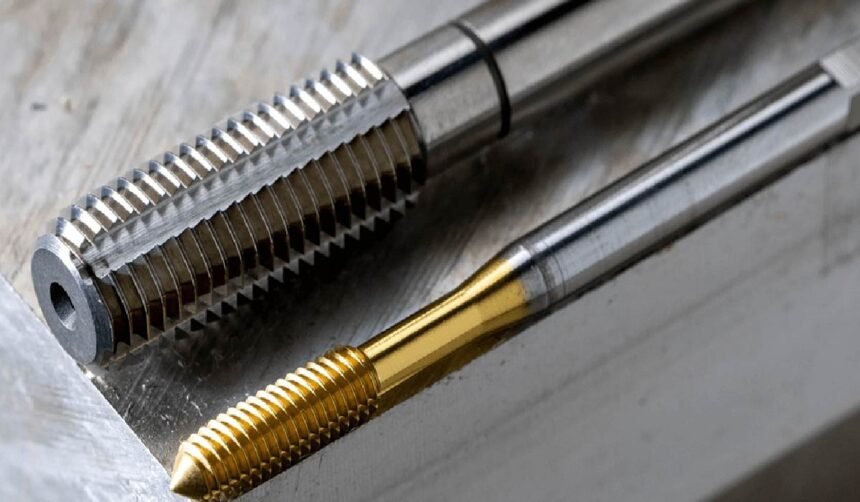
When a thread is formed instead of cut, the geometry is born from compression. What this does is create a smooth surface with no chips, no cut marks, and no sharp edges, weakening the root. The tool’s lobes push material outward and upward, which means the final thread has higher contact density. This adds value in applications where fasteners face repetitive stress or vibration.
A well-designed form tap creates threads supporting more load without deforming. Hence, strong joint integrity starts with choosing the proper lobe shape. Even small changes in the tap’s profile will shift torque requirements, surface quality, and overall strength. You feel this difference when a joint stays tight long after a similar cut-threaded part starts to loosen.
Tool hardness and surface treatments
High-volume environments expose taps to constant friction. Every cycle adds heat, and over time, this heat builds into galling, chipped edges, and unpredictable torque swings. Taps to survive these conditions should be built from high-hardness substrates paired with stable coatings. Treatments such as advanced nitrides and PVD layers work as a thermal and friction buffer, giving the tap a controlled interaction with the material.
You want coatings that resist micro-welding. You also want surface finishes that prevent torque spikes, because sudden changes in torque pull your tool off track and wear it unevenly.
Chip-free forming and its effect on cycle time and wear patterns
One major advantage of forming taps is that they create no chips. Removing chips from the equation changes everything in a production cell. There is no need to manage chip evacuation. There is no risk of chips lodging inside blind holes. Coolant flow becomes easier to control since it is not also responsible for flushing debris. Even tool wear follows a smoother pattern because the tap experiences clean contact instead of cutting interruptions.
This becomes obvious in long production runs. The spindle runs cleaner, and the coolant stays clearer for more hours. Machines handle stable loads. It may sound like a small benefit at first, but once you scale production into thousands of parts, chip-free forming becomes a core efficiency factor.
Tolerance stability across millions of cycles
The true test of any tapping tool is whether it can hold dimensions long after the first hundred cycles. Forming taps with advanced geometries maintains their accuracy because the tool isn’t losing material the way a cutting tap does. The edges aren’t chipping away. Instead, the geometry remains intact far longer. This keeps the threads within spec even as hours stack into days.
Procurement decisions should account for this stability. A tap that costs slightly more upfront but holds tolerance longer will reduce changeovers. It will cut downtime and provide predictable output through each shift. Thread quality does not drift when the tap geometry is engineered for slow, even wear.
Optimizing tap selection for specific alloys
Different materials need different forming strategies. For example, Aluminum flows easily, so a tap with polished surfaces and moderate hardness runs fast without issues. Stainless steel, on the other hand, responds differently. It grabs the tool, builds heat, and strains at the point of deformation. This calls for coatings that cut friction and higher tool hardness to withstand the pressure. Nickel alloys present their own challenges and need carefully designed lobe profiles to offset their strength.
Conclusion
The journey of strong threads starts long before a fastener ever touches the part. They come from understanding how material flows, how geometry compresses, how coatings stabilize friction, and how machines guide the process.
When production scales, these details decide whether you move smoothly or lose time to rework and tool changes. Choosing from taps built for predictable strength is a production strategy with long-term payoff.