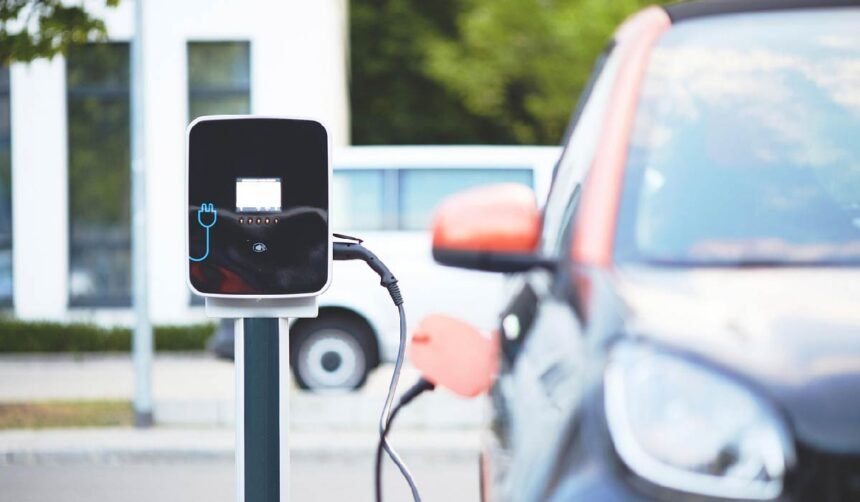
The transition to electric mobility is no longer a distant ambition for the UK; it is happening right now on our motorways, in our cities, and across business parks. For years, the primary hesitation for potential electric vehicle (EV) drivers was range anxiety—the fear of running out of power before reaching a destination. Today, that conversation has shifted. With battery ranges extending well beyond 200 miles for most new models, the focus is now on charging speed and availability.
Fast-charging technology is the catalyst accelerating this shift. It is reshaping how we drive, how businesses operate fleets, and how we plan our towns and cities. This article explores the mechanics of this technology, the rise of the dedicated electric vehicle charging hub, and the critical upgrades required for our national electrical infrastructure to support a fully electric future.
The Need for Speed in EV Charging
Electric vehicle adoption in the UK has surged, driven by government policy, environmental awareness, and an increasing variety of vehicle models. However, for mass adoption to truly take hold, the experience of refuelling an EV needs to rival the convenience of filling a petrol or diesel tank.
Speed is the critical factor. Early adopters were often content to charge overnight at home, but those without driveways, or drivers travelling long distances, require a different solution. The ability to add significant range in the time it takes to grab a coffee is transforming the viability of EVs for everyone, from high-mileage commercial drivers to families on holiday.
What Is Fast-Charging Technology?
Not all chargers are created equal. Understanding the terminology is essential for navigating the modern charging landscape.
Rapid and Ultra-Rapid Charging
Standard home chargers typically operate at 7kW, taking several hours to fully charge a car. Fast EV charging generally refers to units ranging from 7kW to 22kW, often found in car parks. However, the real game-changers are rapid (50kW to 100kW) and ultra-rapid chargers (100kW to 350kW+).
Ultra-rapid chargers can deliver enough energy to add 100 miles of range in as little as 10 to 15 minutes, provided the vehicle can accept that rate of charge. This drastic reduction in dwell time makes en-route charging feasible and efficient, mirroring the “splash and dash” convenience of traditional fuel stations.
The Rise of the Electric Vehicle Charging Hub
We are moving away from the era of the lonely, single charger tucked away in a dark corner of a service station. The industry is shifting towards the electric vehicle charging hub model.
A charging hub is a dedicated location featuring multiple high-powered chargers, often covered and well-lit, with amenities nearby. Unlike single-point chargers, hubs offer reliability through redundancy. If one unit is out of service or in use, there are others available.
For fleet operators and commercial transport managers, these hubs are vital. They allow for predictable scheduling and minimise downtime for delivery vans and taxis. For urban planners and property developers, integrating a hub into a retail park or commercial development attracts high-value footfall, as drivers look for places to spend time—and money—while they top up.
Impact on EV Adoption and Consumer Confidence
The deployment of widespread fast-charging networks directly tackles the psychological barriers to EV ownership.
Reducing Range Anxiety
Knowing that a reliable, high-speed charge is available on major routes significantly reduces range anxiety. It reassures drivers that they can undertake long journeys across the UK without complex logistical planning.
Supporting Mass Market Uptake
As the second-hand EV market grows, more drivers are entering the space who do not have access to off-street parking. For these drivers, public infrastructure is their primary energy source. Reliable, fast charging effectively replaces the domestic wall box, making EV ownership accessible to flat dwellers and those with on-street parking.
The Role of Electrical Infrastructure
While the chargers themselves grab the headlines, the invisible backbone of this revolution is the electrical infrastructure. Installing a bank of 150kW ultra-rapid chargers places a massive, sudden demand on the local grid—equivalent to powering a small housing estate or a large supermarket.
Grid Capacity Challenges
The UK’s grid is robust, but it was not originally designed for the high-intensity, sporadic loads that fast charging requires. Substations in rural or semi-rural areas, often prime locations for motorway service stations, may lack the headroom to support multiple rapid chargers.
Upgrading this infrastructure is complex and costly. It often involves reinforcing connections to the high-voltage network or building new primary substations. This is where strategic planning becomes crucial for local authorities and Distribution Network Operators (DNOs).
Smart Energy Management
To mitigate these demands, operators are turning to smart grid capacity and energy management systems. These systems can throttle charging speeds during peak grid demand or balance the load across multiple vehicles at a hub, ensuring the grid remains stable without tripping the local supply.
Integration with Renewable Energy and Storage
A sustainable transport network must be powered by sustainable energy. This is where battery storage and on-site generation come into play.
Many modern charging hubs are being designed with solar canopies and large-scale battery energy storage systems (BESS). These batteries can charge up from the grid overnight when electricity is cheap and green, or from on-site solar panels during the day. When a driver plugs in during peak hours, the hub can draw power from the battery rather than pulling directly from the constrained grid.
This approach reduces the strain on the national electrical infrastructure and helps decarbonise the energy supplied to the vehicles, closing the loop on green mobility.
Challenges and Considerations
Despite the clear trajectory, hurdles remain.
Cost and Investment
The capital expenditure for ultra-rapid chargers and the necessary groundworks is significant. The business case relies on high utilisation rates, which can be chicken-and-egg scenario in regions where EV uptake is still lower.
Planning and Permissions
Securing planning permission and grid connections can be a slow process. Delays in getting power to a site often mean that chargers are installed but sit dormant for months, frustrating drivers and stalling the expansion of EV infrastructure UK wide.
Equitable Access
There is a risk of a “charging divide,” where fast-charging infrastructure is concentrated in affluent areas or along major motorways, leaving rural and remote communities underserved. Ensuring equitable access is vital for a truly national transition.
The Future of Fast-Charging in the UK
The technology is not standing still. We are already seeing the emergence of chargers capable of delivering 350kW and higher, preparing the ground for the next generation of heavy goods vehicles (HGVs) and electric lorries.
As battery technology improves, vehicles will be able to accept these higher charge rates for longer periods, flattening the charging curve and further reducing dwell times. We can expect the electric vehicle charging hub to become as ubiquitous as the petrol station, but with a cleaner, quieter, and more digitally integrated user experience.