



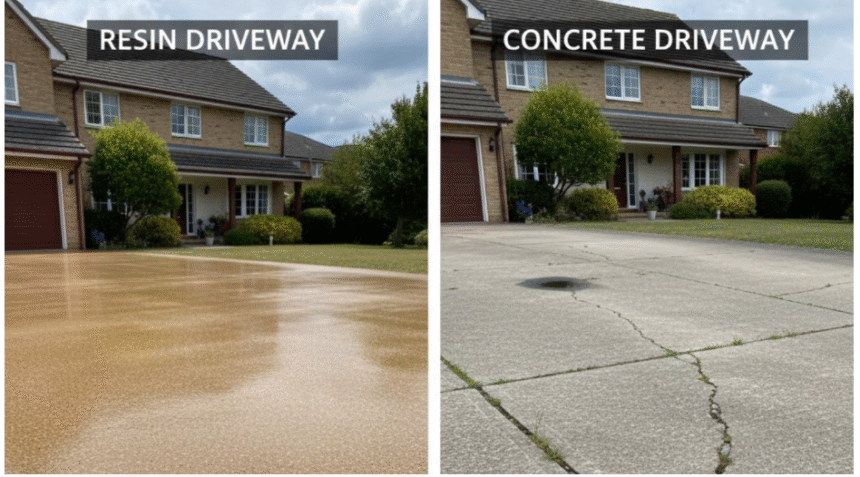
Choosing between resin and concrete for your driveway is one of the most significant decisions you’ll make for your property.
The cost difference can be substantial, and understanding the full financial picture is essential before you commit. This article breaks down the Resin vs Concrete Cost Breakdown in detail, helping you evaluate installation prices, long-term maintenance expenses, and overall value for money.
You’ll discover which option fits your budget, how lifespan affects total costs, and what hidden expenses you might encounter. Make an informed choice that balances your immediate spending power with future savings.
Cost Comparison: Resin vs Concrete Driveways
Understanding the financial commitment for each driveway type helps you plan effectively. Resin driveways in the UK typically cost around £120 per square metre, combining £70 for materials and £50 for installation. This means a medium-sized 50m² driveway would set you back approximately £6,000.
Concrete driveways offer a more economical upfront option. Standard flat concrete costs between £65 and £95 per square metre, making it noticeably cheaper than resin. A comparable 50m² concrete driveway might cost between £3,250 and £4,750. However, patterned or pressed concrete increases the price to £90-£150 per square metre, bringing it closer to resin costs.
The price gap narrows when you consider decorative finishes. Plain concrete might save you money initially, but it lacks the aesthetic flexibility that makes resin attractive. If you opt for imprinted concrete to match resin’s visual appeal, you’re looking at similar price points.
Material Cost Breakdown
Resin materials include polyurethane resin and natural aggregates mixed together. The quality of these components directly impacts your final bill. UV-stable resin costs almost twice as much as non-UV-stable options but prevents discolouration over time.
Concrete materials consist of cement, sand, gravel, and water. The standard mix is relatively inexpensive, but specialized finishes require additional materials and expertise. Reinforcement with wire mesh or steel rebar adds £100-£600 to your concrete driveway project.
Installation Labour Charges
Labour rates vary significantly across the UK. Resin installation generally costs £30-£50 per hour, with professionals laying approximately 20 metres per hour due to curing time constraints. The entire process takes 2-4 days, depending on size.
Concrete installation labour ranges from £75 to £90 per square metre. London-based contractors command premium rates around £90 per hour, while northern England tradespeople typically charge £75 per hour. A standard concrete driveway takes 1-5 days to complete.
Groundwork and Preparation Expenses
Both driveway types require proper groundwork, but the extent varies. Excavation depth for resin depends on aggregate size – larger stones need three times their diameter in depth. This increases labour time and costs substantially.
Concrete driveways demand solid foundations to prevent cracking and sinking. Sub-base preparation is crucial for long-term strength. Excavation and foundation work add £500-£1,500 to your project, depending on existing ground conditions.
If your property lacks proper drainage or requires a new sub-base, expect additional charges. These preparatory costs often catch homeowners off guard. A professional assessment of your site before starting helps avoid budget overruns.
Drop Kerb Requirements
Installing a drop kerb requires council permission. Application fees range from £70-£100, while the actual installation starts at £300. This one-time expense applies regardless of which driveway material you choose. Multiple kerbs or extensive pavement work increases costs further.
Long-Term Maintenance Costs
Maintenance expenses significantly impact total ownership costs. Resin driveways require minimal upkeep – regular sweeping and occasional jet washing suffice. They naturally resist weeds and don’t need frequent sealing. Over 20 years, maintenance costs remain relatively low, typically under £500.
Concrete driveways need more attention. Sealing every 2-3 years protects against stains and moisture damage, costing £30-£50 per square metre each time. For a 50m² driveway, that’s £1,500-£2,500 every seal. Crack repairs, stain removal, and general upkeep add to ongoing expenses.
Surface spalling – where concrete surfaces chip and flake – commonly affects older concrete driveways. Repairs can be extensive and costly. Freeze-thaw damage in harsh winters compounds these issues, particularly in northern UK regions.
Cleaning and Preservation
Resin surfaces clean easily with standard garden hoses. Stubborn stains disappear with gentle pressure washing on low settings. Avoid harsh chemicals or abrasive brushes that might damage the surface. Annual cleaning costs are negligible if you handle it yourself.
Concrete requires more intensive cleaning. Oil stains need special treatment with sawdust or commercial cleaners. Mildew growth necessitates bleach solutions. Professional cleaning services charge £200-£400 annually for thorough maintenance, though many homeowners manage this themselves.
Lifespan and Replacement Considerations
Durability directly affects your cost-per-year investment. Resin coated driveways in Hertfordshire typically last 15-25 years when properly installed and maintained. This impressive lifespan stems from resin’s flexibility and resistance to cracking. High-quality UV-stable resin extends longevity even further.
Concrete driveways generally last 20-30 years, with some reaching 50 years under ideal conditions. However, average UK weather conditions – particularly freeze-thaw cycles – often limit lifespan to the lower end of this range. Climate plays a significant role in concrete performance.
Calculating cost-per-year provides a valuable perspective. A £6,000 resin driveway lasting 20 years costs £300 annually. A £4,000 concrete driveway lasting 25 years costs £160 yearly. However, add maintenance expenses, and the gap narrows considerably.
Replacement Timing
Resin bound driveways show wear gradually through fading and surface degradation. Replacement becomes necessary when permeability decreases or aesthetic appeal diminishes significantly. The surface remains functional longer than it stays pristine.
Concrete replacement typically stems from structural issues rather than aesthetics. Major cracking, sinking, or extensive surface damage signals replacement time. Removing old concrete costs £500-£1,500, adding to total replacement expenses.
Drainage and Compliance Costs
Drainage represents a critical cost factor often overlooked. Resin bound surfaces are fully permeable, meeting Sustainable Urban Drainage Systems regulations without additional work. Water filters through to the ground naturally, preventing puddles and flooding issues.
Concrete is impermeable, requiring separate drainage solutions. Installing soakaways adds £200-£1,000+ to your project. Some properties need planning permission for concrete driveways due to drainage concerns. This regulatory compliance creates unexpected delays and expenses.
SUDS compliance increasingly matters in UK developments. Properties without proper drainage face potential fines or mandatory retrofitting costs. Resin’s inherent permeability provides built-in compliance, while concrete requires engineered solutions.
Environmental Considerations
Permeable surfaces reduce strain on municipal drainage systems during heavy rainfall. This environmental benefit may translate to future cost savings through reduced flood risk and lower insurance premiums. Some councils offer incentives for permeable driveways.
Concrete’s impermeability channels water to street drains, potentially contributing to local flooding. The environmental impact matters less financially now but may influence future property regulations and resale value.
Additional Cost Factors
Several variables affect final pricing beyond basic installation. Driveway size and shape influence per-metre costs – larger areas often secure better rates through economies of scale. Complex shapes with curves or intricate patterns increase labour time and material waste.
Decorative edging enhances appearance but adds expense. Resin requires stable edges like brick borders or walls. If none exists, creating proper edging costs £500-£1,500 extra. Concrete needs similar boundary treatments for a professional finish.
Pattern-imprinted concrete offers design flexibility comparable to resin. However, this decorative option costs £3,840-£6,720 for a 24m² driveway, versus £2,290-£3,130 for plain concrete. The aesthetic upgrade narrows the price advantage concrete typically enjoys.
Geographic Location Impact
Regional price variations significantly affect budgets. London and Southeast England command premium rates across both materials. Northern England, Scotland, and Wales typically offer 15-25% lower costs. Rural locations sometimes incur additional travel charges.
Local competition influences pricing, too. Areas with multiple qualified installers see competitive rates. Remote locations with fewer contractors face limited choice and higher prices. Get multiple quotes regardless of location to ensure fair pricing.
Frequently Asked Questions
Which is more cost-effective long-term: resin or concrete?
Resin typically proves more cost-effective long-term despite higher upfront costs. Lower maintenance requirements, longer functional lifespan, and minimal repair needs offset the initial price difference. Concrete’s regular sealing requirements and potential crack repairs accumulate significant expenses over 20-30 years.
Do resin driveways require planning permission?
Resin driveways usually don’t require planning permission because they’re SUDS compliant. Their permeable nature allows natural drainage without additional planning approval. However, always check with your local council, especially if your property has specific restrictions or listed building status.
How much does concrete driveway sealing cost?
Concrete sealing costs £30-£50 per square metre every 2-3 years. For a typical 50m² driveway, expect to pay £1,500-£2,500 per sealing session. Over a 25-year lifespan requiring 8-10 sealing treatments, total sealing costs reach £12,000-£25,000.
Can I install resin over existing concrete?
Yes, resin can be laid over existing concrete if the surface is structurally sound and level. This overlay approach saves excavation costs while upgrading appearance and drainage. The existing concrete must be clean, crack-free, and stable for successful installation.
Your Driveway Investment
Both resin and concrete driveways represent significant property investments with distinct cost profiles. Resin offers superior drainage, lower maintenance, and excellent aesthetics at a higher upfront cost.
Concrete provides economical initial installation but requires ongoing maintenance investment. Your choice depends on budget flexibility, long-term planning, and aesthetic priorities. Consider total ownership costs rather than just installation prices when making your decision.
How HVAC, Plumbing & Electrical Companies Are Dominating Streets with Vehicle Signage