



Introduction
Imagine standing at the edge of a misty rainforest, hearing the flutter of wings, the chirp of unseen creatures, and the soft crunch of leaves beneath your feet. Each sound, each movement is a whisper of nature’s most incredible secret—change. Over time, living organisms adapt, divide, and transform into new forms suited to their unique environments. This transformative journey is known as speciering, a term that may sound obscure but holds immense significance in understanding the evolution of life, the behavior of chemicals, and even the structure of digital systems.
In the biological sense, speciering refers to the process through which new species emerge from a common ancestor. In chemistry and environmental science, it’s the identification and quantification of different chemical species within a system. Though often overshadowed by more mainstream scientific terms, speciering is the very foundation of how diversity, adaptation, and complexity arise across natural and technological landscapes. In this comprehensive article, we’ll explore the full spectrum of speciering across biology, chemistry, environmental science, and technology, using real-world examples, scientific tools, and future-forward perspectives.
What Is Speciering?
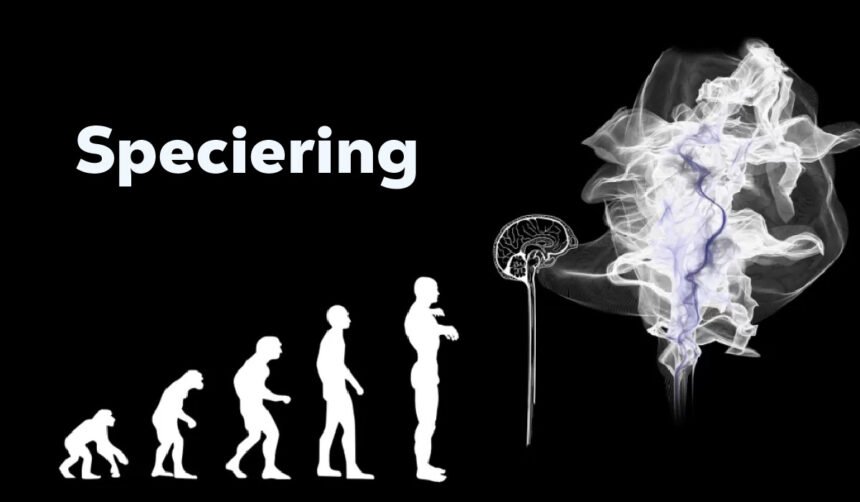
Speciering is the process by which different species or chemical forms are identified, categorized, and evolve from common origins—shaping biodiversity, environmental balance, and scientific discovery. The word itself originates from the root “species,” indicating distinct types or forms. In evolutionary biology, speciering describes the mechanism through which one species branches into two or more, driven by environmental pressures, genetic changes, and reproductive barriers. In the realm of chemistry, specie ring refers to the identification and analysis of different chemical species—such as ions, molecules, or complexes—within a mixture.
For instance, a single metal like mercury can exist in multiple forms (elemental, organic, or inorganic), each with drastically different properties and implications. While speciation often focuses solely on biology, speciering offers a broader and more dynamic concept that spans disciplines. It encapsulates not only the formation of life but also how matter, energy, and information are structured and behave across different systems.
Speciering in Evolutionary Biology
Biological speciering is one of the most vital processes that explain the immense variety of life on Earth. As organisms reproduce over generations, small genetic variations accumulate. Under the influence of environmental pressures, some of these variations become advantageous, leading certain populations to adapt differently. Eventually, these populations may become so distinct that they can no longer interbreed, thus forming new species
. This process is central to the concept of biodiversity. Reproductive isolation is a crucial element in biological speciering, as it prevents the gene flow between diverging populations. Genetic drift—random fluctuations in gene frequencies—can also amplify differences over time. Charles Darwin’s observations of finches on the Galápagos Islands were among the first to highlight speciering in action. With modern advancements in DNA sequencing and genomics, scientists can now trace the molecular pathways that underlie the divergence of species, reinforcing Darwin’s ideas with concrete genetic evidence. Today, specie ring is recognized as the driver of life’s rich tapestry, where every species tells a story of survival, separation, and adaptation.
Mechanisms of Speciering
There are several mechanisms by which speciering unfolds in biological systems. The most well-known is geographic isolation, where physical barriers such as mountains, rivers, or oceans prevent populations from interbreeding. Over time, these isolated groups evolve independently. Natural selection further sharpens these differences by favoring traits that improve survival in each specific environment. Genetic mutations, though random, introduce new traits that may become dominant if they offer advantages.
Behavioral isolation—such as differences in mating rituals or vocalizations—can also contribute to speciering, as can temporal isolation, where species reproduce at different times. Even without physical separation, populations can diverge through sympatric speciation, where subgroups exploit different ecological niches within the same environment. As these forces act together, they create new species with unique traits and roles in the ecosystem. This combination of mutation, selection, and isolation underpins the dynamic nature of biological evolution.
Types of Speciation Explained
Speciering can occur through different types of speciation, each with distinct characteristics. Allopatric speciation is the most straightforward and occurs when populations are physically separated, such as when a river divides a population of frogs. Over time, these two groups accumulate genetic differences and eventually become separate species. Sympatric speciation is more complex and takes place within the same geographical area. It often involves behavioral shifts or genetic changes that create reproductive barriers.
For example, some insects may begin to feed on a new type of plant, leading to mating within this subgroup and eventual divergence. Parapatric speciation happens when populations are adjacent but not entirely separated. Here, environmental gradients or differences in mating preferences across borders can lead to the formation of new species. Each type of speciation offers insights into how nature uses isolation, selection, and adaptation to generate biodiversity. Real-world illustrations, such as fish in isolated lakes or birds with distinct songs, make these processes more tangible.
Real-World Examples of Biological Speciering
The most iconic example of speciering is Darwin’s finches. Found on the Galápagos Islands, these birds evolved distinct beak shapes adapted to different food sources. Their divergence into multiple species from a common ancestor remains a classic study in adaptive radiation. Another compelling case is African cichlid fish in the Great Lakes. Despite originating from a single ancestral species, they have diversified into hundreds of colorful and behaviorally unique species due to varied habitats and mating signals. Apple maggot flies demonstrate behavioral speciation by switching host plants—from hawthorn to apples—leading to reproductive isolation.
In cities, urban birds like blackbirds are evolving to cope with noise, pollution, and artificial light, differentiating them from their rural counterparts. Finally, the polar bear and brown bear provide an example of climatic speciering, having split due to differing survival needs in icy vs. forested environments. These examples show how speciering is not just a theoretical idea but a visible and ongoing process in our world.
Speciering in Chemistry and Environmental Science
Outside biology, speciering plays an equally vital role in chemistry and environmental sciences. In chemistry, it involves identifying the different forms an element can take within a substance. For example, arsenic can appear as arsenite (As III) or arsenate (As V), each with different levels of toxicity and mobility. Similarly, mercury exists in elemental, methylated, or ionic forms, impacting its behavior in the environment and its health risks.
This form-specific analysis—known as chemical speciation—is crucial in fields like geochemistry, pharmacology, and toxicology. In environmental science, speciering helps determine pollution risks and guides remediation strategies. For instance, understanding how lead or cadmium changes form in soil or water affects how it’s managed. Specie ring also supports monitoring of acid rain, soil nutrient depletion, and aquatic ecosystem health. Without such insights, we cannot accurately assess ecological risks or craft effective environmental policies.
Tools and Techniques Used for Speciering
Studying speciering—whether in biology or chemistry—requires a wide array of advanced tools. In the chemical realm, chromatography techniques like HPLC (High-Performance Liquid Chromatography) and GC (Gas Chromatography) are used to separate compounds. Spectroscopy methods such as UV-Vis, IR (Infrared), and NMR (Nuclear Magnetic Resonance) provide molecular insights.
Mass spectrometry, particularly ICP-MS (Inductively Coupled Plasma Mass Spectrometry), is essential for detecting trace elements and their isotopic variants. In biological contexts, researchers use DNA sequencing, molecular markers, and phylogenetic trees to trace evolutionary divergence. Increasingly, machine learning and AI are being integrated to analyze large datasets, predict evolutionary outcomes, and model environmental interactions. These technologies allow for a deeper and more precise understanding of speciering, enhancing both scientific inquiry and applied research across disciplines.
Speciering in Technology and AI
While traditionally grounded in natural sciences, speciering also finds relevance in technology and artificial intelligence. In machine learning, specie ring can refer to the classification and clustering of data types, where different categories emerge from a shared dataset. In hardware design, it involves identifying and organizing components or modules that serve distinct functions. Software systems, especially in large-scale environments like the Internet of Things (IoT), require digital specie ring to maintain order and functionality.
Furthermore, AI model development often involves speciering neural architectures—branching versions of models are fine-tuned for specific tasks (e.g., image recognition vs. text analysis). These technological parallels underscore how the concept of specie ring extends beyond biology and chemistry, offering a framework for organization, innovation, and efficiency in the digital age.
How Human Activities Influence Speciering
Human influence on speciering is profound and multi-layered. Habitat destruction and urbanization isolate populations, creating conditions for speciation—but they also threaten extinction. Pollution alters chemical speciation, sometimes increasing the toxicity of substances in soil or water. Climate change disrupts natural habitats, forcing species to adapt, migrate, or perish, thereby accelerating or stalling specie ring processes. In agriculture, selective breeding and genetic modification result in artificial speciering. However, this manipulation can reduce genetic diversity and increase vulnerability. Ethical concerns also emerge—should we intervene in natural evolution, and how far is too far? Understanding the dual role humans play—as both accelerators and disruptors—emphasizes the need for responsible science, sustainable development, and conservation efforts that respect nature’s complexity.
Why Speciering Matters for Biodiversity and Sustainability
Speciering is foundational to biodiversity and ecosystem resilience. Each new species adds to the ecological mosaic, performing unique roles—from pollination to predation to nutrient cycling. This diversification enhances system stability, making ecosystems more adaptable to change. In agriculture, understanding plant and soil specie ring helps optimize crop yield and sustainability. In medicine, specie ring of pathogens aids vaccine development and disease management. In climate science, identifying chemical species in the atmosphere helps model global warming. Speciering is not just an academic concept—it is a practical tool for solving real-world problems. As we face unprecedented environmental and societal challenges, embracing specie ring as a guiding principle will be essential for survival, adaptation, and innovation.
Controversies and Challenges in Speciering
Despite its significance, speciering is fraught with challenges and debates. What qualifies as a species? Some scientists follow genetic definitions, others behavioral or ecological. Hybridization blurs boundaries, complicating classification. In chemistry, measuring trace forms accurately requires costly equipment and expert interpretation. There’s also the issue of punctuated equilibrium vs. gradualism—do species emerge suddenly or slowly over time? The answers are rarely simple. Furthermore, taxonomic disputes in biology and uncertainty in chemical modeling highlight the limitations of current methodologies. Addressing these issues requires interdisciplinary collaboration, improved technologies, and open scientific discourse to refine our understanding of speciering.
The Future of Speciering Research
The future of speciering is exciting and deeply integrative. In biology, genomics and proteomics are unlocking new layers of evolutionary detail. AI and big data analytics are revolutionizing species classification and environmental modeling. Citizen science platforms allow the public to contribute to biodiversity mapping, enhancing global databases. In conservation, genomic rescue is helping save endangered species by enhancing their genetic diversity. In chemistry, portable devices are making chemical speciation more accessible in the field. The convergence of biology, chemistry, technology, and data science ensures that specie ring will continue to evolve as a key pillar of scientific advancement.
Conclusion
Speciering is much more than a scientific term—it is the story of life itself. From birds evolving on isolated islands to ions behaving differently in polluted rivers, the process of differentiation and adaptation underpins the vast complexity of our world. Understanding specie ring allows us to grasp how organisms evolve, how ecosystems function, how chemicals react, and how technology organizes information. It’s a bridge between the natural and digital worlds, between history and innovation. As we move forward, studying and respecting this intricate process will not only deepen our scientific knowledge but also inspire solutions for a more resilient and sustainable planet. In the end, speciering reminds us that change is not just inevitable—it is essential for growth.
FAQs About Speciering
1. What is Speciering?
Speciering is the process through which new species or chemical forms develop and are identified within a system. In biology, it means the formation of new species from a common ancestor, while in chemistry, it refers to analyzing different forms of elements or compounds, such as ions or molecules, in a given environment.
2. What is the difference between Speciering and Speciation?
The main difference is that speciation focuses only on how new biological species evolve, while speciering has a broader meaning. Speciering covers not only biological evolution but also chemical and environmental analysis, where different species of matter or elements are identified and studied.
3. Why is Speciering important in science?
Speciering is important because it helps scientists understand how life evolves, how ecosystems maintain balance, and how chemicals behave in nature. It supports biodiversity studies, environmental protection, pollution control, and even the development of medicines and sustainable technologies.
4. How is Speciering studied or analyzed?
Speciering is studied using advanced tools and methods such as chromatography, spectroscopy, mass spectrometry, and DNA sequencing. These techniques help scientists identify and separate different species of organisms, elements, or molecules for deeper research and environmental monitoring.
5. Can Speciering happen because of human activities?
Yes, human activities like urbanization, pollution, deforestation, and climate change can influence speciering. They can either accelerate the creation of new species or cause extinction by destroying natural habitats. Understanding these effects helps scientists protect biodiversity and maintain ecological balance.
Also, Visit Our Site For More Four Magazine