



The Classroom of 2025
Education has always been a battleground for technological adaptation. From calculators to Google, every tool has faced scrutiny. Today, the ai content detector stands at the center of a pedagogical revolution. As students leverage generative AI to brainstorm and draft, universities are deploying the ai content detector not as a weapon of punishment, but as a compass for academic integrity.
Understanding the Probability Score
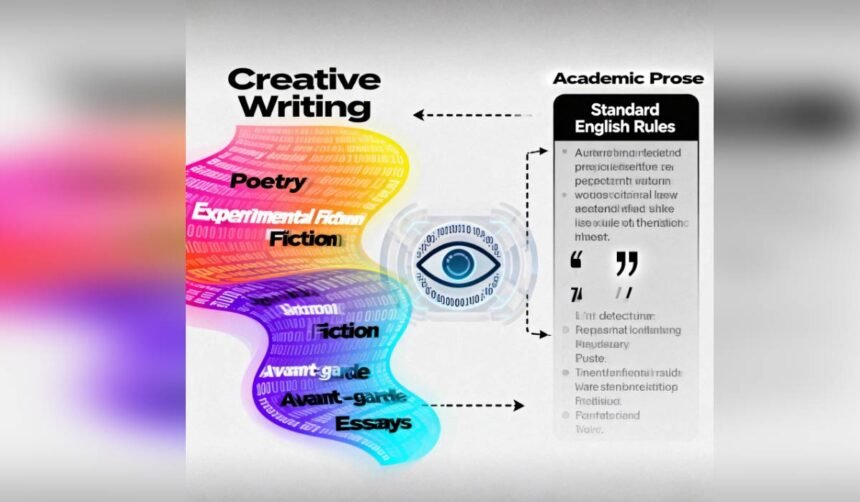
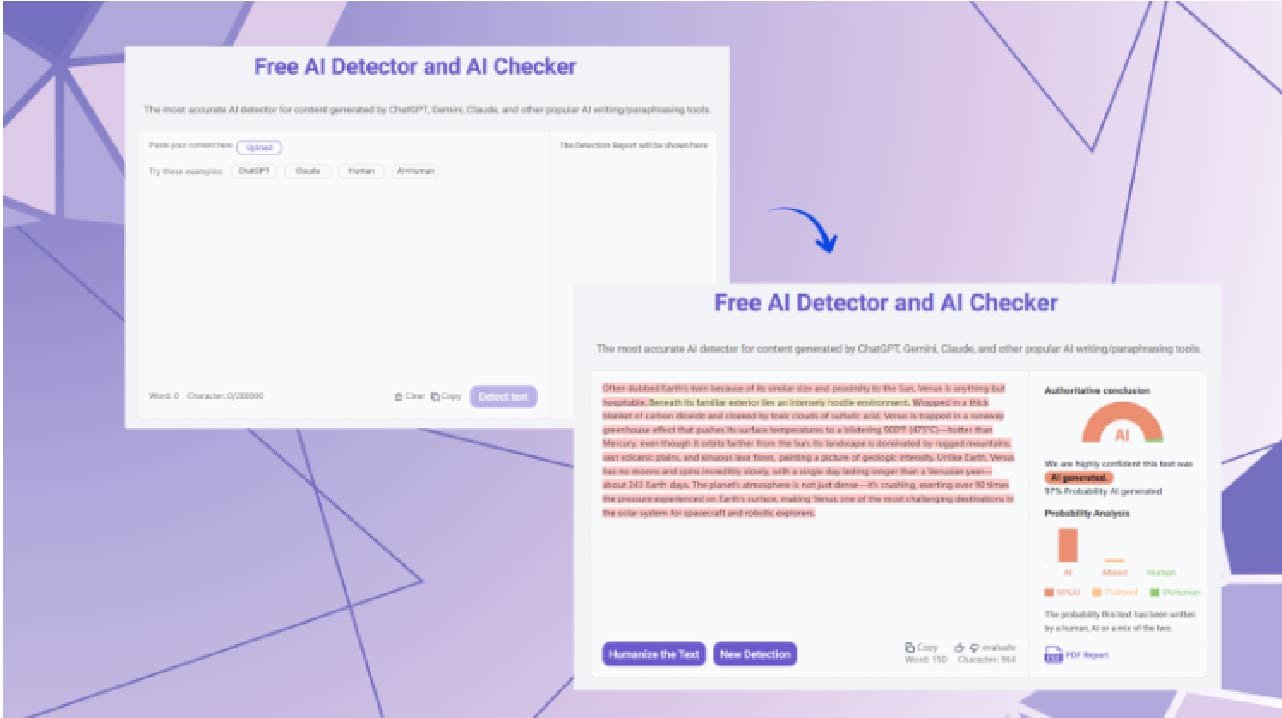
When a professor runs a paper through an ai content detector, they aren’t looking for a “plagiarism” report. Unlike traditional checkers, an ai content detector calculates “perplexity”—the randomness of word choice. If the ai content detector finds the text too predictable, it flags it as machine-generated. This leads many to question the accuracy of ai content detectors for academic essays, especially when students write in a highly structured, formal style that can mimic a bot.
The Ethics of Detection
There is a growing movement toward the ethical use of ai content detector by professors. The consensus in 2025 is that an ai content detector should be the start of a conversation, not the end of a student’s career. Many institutions now allow a “rebuttal” phase, where a student can prove their process. Interestingly, we are seeing a trend where how students use ai content detector to verify originality is becoming a self-check habit. Students scan their own work with an ai content detector before submission to ensure their unique “human” voice shines through clearly.
Solving the False Positive Crisis
The biggest challenge remains preventing false positives in university ai detection. Non-native English speakers or neurodivergent students often use specific linguistic patterns that an ai content detector might misidentify. To combat this, advanced ai content detector models are being trained on more diverse datasets to recognize that “structured” does not always mean “synthetic.”

Conclusion
The ai content detector is an essential part of the modern degree. By fostering transparency, we can ensure that the transition to AI-assisted learning remains honest, fair, and focused on genuine human growth.