



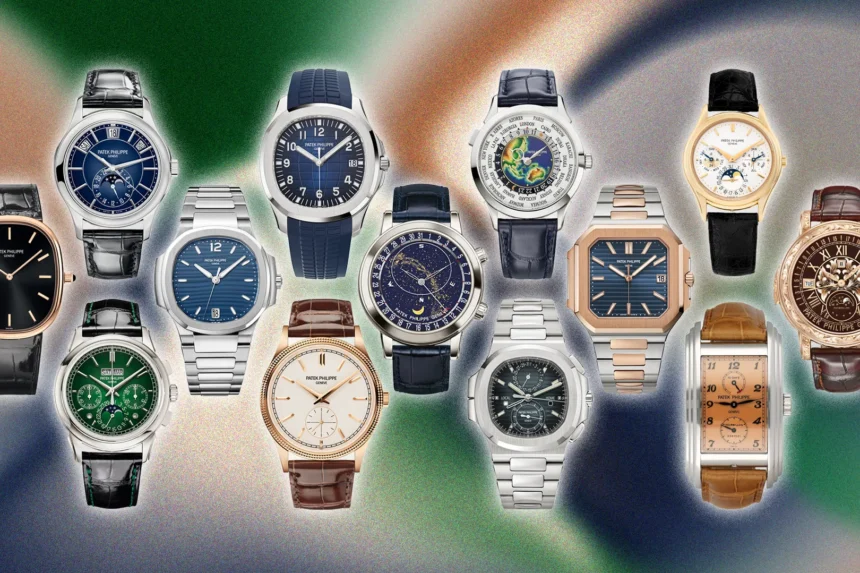
Patek Philippe makes roughly 60,000 to 70,000 watches per year. Rolex produces closer to a million. That scarcity alone doesn’t explain why a single Patek Philippe reference has sold for over $31 million at auction, but it’s part of the story. The real reason collectors keep returning to Geneva’s most storied manufacture is architectural: Patek builds watches that appreciate as objects of study, not just objects of desire.
If you’re thinking seriously about building a Patek collection, the challenge isn’t enthusiasm. It’s prioritisation. The catalogue spans centuries of horological tradition, and not every reference serves the same purpose. Some anchor a collection; others diversify it. Getting that sequence right matters more than most buyers initially realise.
Collectors who spend time exploring resources like Wrist Aficionado and sourcing through reputable specialists tend to develop that understanding faster than those who approach the market cold. Both are worth bookmarking before you start.
This guide walks through the best Patek Philippe models to consider across different categories, explains what each one contributes to a collection, and offers some honest perspective on where to start and where to go next.
The Calatrava: Where Every Collection Should Begin
The Calatrava is Patek’s purest expression of what a dress watch should be. Introduced in 1932 and built around the now-iconic round case with a smooth bezel, it’s remained almost unchanged in its fundamental character for over ninety years. That’s not inertia. It’s mastery.
For a collector, the Calatrava serves as the foundation piece. It demonstrates an understanding that watchmaking, at its highest level, is about restraint. A well-executed simple dial, a clean case profile, a movement finished to a standard most brands don’t attempt. The reference 5227 is particularly worth studying: it features a hinged inner dust cover on the caseback, a detail borrowed from the watchmakers of the eighteenth century.
The reference 6119 brought the Calatrava into a slightly more contemporary conversation with a new officer-style case, while remaining entirely faithful to the dress watch format. Either makes a credible starting point.
- Why it belongs in your collection:It contextualises everything else you’ll buy. Once you understand the Calatrava, you understand what Patek values at its core.
- It transitions across virtually any setting, which maximises wearability.
- Entry-level relative to grand complications, though pre-owned prices have firmed significantly since 2020.
The Nautilus: The Reference That Changed the Conversation
Gerald Genta designed the Patek Philippe Nautilus in 1976 on a paper napkin, reportedly overnight, as a response to Audemars Piguet’s Royal Oak. The result was a sports watch with a porthole-inspired case, an integrated bracelet, and a horizontally embossed dial that became one of the most imitated designs in horological history.
The reference 5711 is the version most collectors obsess over, partly because Patek discontinued it in 2021 with barely any warning. That decision sent secondary market prices into extraordinary territory, with the blue dial 5711 trading at four to five times its retail price almost immediately.
The 5726A Annual Calendar Nautilus is, in many collectors’ view, the more complete piece. It wraps Patek’s highly practical annual calendar complication into the Nautilus case, giving you sporting credentials alongside genuine mechanical interest.
The current production Nautilus ref. 5811 follows the same design language with a few subtle updates. It remains extraordinarily difficult to source through authorised dealers, which means the secondary market is effectively the primary route for most buyers. Specialists in Patek Philippe luxury watches are often the most realistic path to actually acquiring one.
- Key considerations:Blue dial references consistently hold value better than olive or white variants in the resale market.
- The Nautilus bracelet is notoriously complex. Always check for stretch and wear on pre-owned examples.
- Expect to pay a premium. The Nautilus market has not meaningfully corrected despite broader watch market softening.
The Aquanaut: A More Accessible Sports Alternative
Launched in 1997, the Aquanaut was initially dismissed by some collectors as a casual, entry-level counterpart to the Nautilus. That reading has aged poorly. The Aquanaut reference 5168G in white gold with a khaki green dial, released in 2018, sparked serious collector interest and demonstrated that the line had genuine horological identity of its own.
The 5167A remains one of the most balanced pre-owned acquisitions in Patek’s sports category. Stainless steel, clean proportions, a cushion-shaped case with a composite strap, and a self-winding movement with date. It wears more casually than the Nautilus and is slightly more attainable in the secondary market, though not by a dramatic margin.
For collectors building a two-piece sports foundation, an Aquanaut paired with a Nautilus covers meaningfully different aesthetic territory.
The Annual Calendar: The Most Practical Complication You’ll Actually Use
Patek Philippe invented and patented the annual calendar mechanism in 1996. That’s worth stating plainly: before Patek, no watch manufacturer had managed to create a calendar that automatically distinguished between 30-day and 31-day months without requiring the kind of deep expertise most wearers don’t have.
The annual calendar needs a single manual correction once a year, at the end of February. Every other month, it handles itself.
Reference 5396 houses this complication in a traditional round case with a silver dial and sub-dials at three, six, and nine. Reference 5235 takes a more contemporary approach, with a regulator-style layout and a rectangular case. Both are excellent. The 5396 is the one most collectors gravitate toward because it sits more naturally alongside the Calatrava in a collection’s aesthetic narrative.
For those building a watch wardrobe rather than a static display, the annual calendar is arguably the most sensible complication to acquire. It’s useful every day, visible at a glance, and beautifully executed in Patek’s hands.
The World Time: Patek’s Most Visually Striking Complication
The World Time mechanism, developed by Louis Cottier in the 1930s and adopted by Patek Philippe, allows the wearer to read the current time in all 24 time zones simultaneously using a rotating disc of city names and a 24-hour ring. It’s a complication that functions as both instrument and art object.
Reference 5230 is the current production World Time in white or yellow gold. The cloisonné enamel dial variants, produced in very limited numbers, have become serious collector targets. Reference 5131, with its enamel map dial, regularly sells for double or triple retail in the secondary market.
For a collection, the World Time contributes something no other category does: visual drama rooted in genuine mechanical purpose. It’s the piece people notice and ask about. It also signals a collector who has moved beyond status symbols into technical appreciation.
Collectors like those who visit Wrist Aficionado’s boutique locations often cite the World Time as the reference that shifted their perspective on what watchmaking could communicate.
Grand Complications: The Pinnacle Pieces
Patek Philippe’s grand complications occupy a category that most collectors approach after building a foundation, not before. These are watches that require context to fully appreciate.
The Perpetual Calendar (Ref. 5320G)
The perpetual calendar accounts for the irregular length of months and leap years automatically until 2100. The 5320G, released in 2021, revived a vintage-inspired case profile with a stepped dial, blending historical aesthetics with modern finishing standards. Perpetual calendars in round cases have broad appeal; the 5320G represents one of the strongest current-production options.
The Minute Repeater
A minute repeater chimes the time on demand using a series of hammers and gongs. It is among the most technically difficult complications to produce well, and Patek’s examples, particularly the 5178 and the Sky Moon Tourbillon, represent the upper tier of what the manufacture can achieve. These are pieces for collectors who have already developed a genuine appreciation for mechanical watchmaking at its most extreme.
The Split-Seconds Chronograph
Reference 5370P in platinum remains one of the finest manually-wound chronographs available today. The split-seconds function allows the user to time two separate events with the same start time. It’s a complication with deep roots in competitive timing and adds significant mechanical complexity to an already challenging movement.
Building the Collection: A Suggested Sequence
Order matters. Buying a perpetual calendar before owning a dress watch is a bit like reading the last chapter of a novel first. You’ll understand the words but miss the architecture.
A logical sequence for most collectors:
- Start with a Calatrava to establish the aesthetic and philosophical foundation.
- Add a sports piece, either Nautilus or Aquanaut depending on budget and access, to introduce a contrasting register.
- Incorporate a complication, ideally the annual calendar, to add functional depth without moving into rarified territory.
- Consider a World Time once you’ve developed a clear sense of what the collection is saying.
- Approach grand complications as statement pieces for a mature collection, not as entry points.
This isn’t the only path, and personal taste should override any framework. But it’s a structure that tends to build genuine knowledge alongside the physical collection.
Key Takeaways
- The Calatrava is the essential foundation piece; it contextualises Patek’s entire design philosophy.
- Nautilus demand significantly outpaces supply, making secondary market access through reputable specialists a practical necessity for most buyers.
- The annual calendar is Patek’s most useful everyday complication, requiring only one correction per year.
- World Time references, particularly the enamel dial variants, offer visual drama with genuine mechanical depth.
- Grand complications are best approached after building a foundation; they reward collectors who already understand what they’re looking at.
Frequently Asked Questions
What is the best Patek Philippe model for a first purchase? The Calatrava is the most considered first choice for most buyers. It’s available across a range of price points in the secondary market, wears well in virtually any context, and introduces you to Patek’s movement finishing standards without the complexity or pricing pressure of a complication or sports reference.
Is the Patek Philippe Nautilus still worth buying at secondary market premiums? That depends on your purpose. If you’re buying to wear and hold long-term, the Nautilus has demonstrated exceptional value retention. If you’re hoping for short-term appreciation, the market has softened from its 2021 peak. Most serious collectors treat it as a core holding rather than a speculative play.
How do annual calendars differ from perpetual calendars in practical terms? An annual calendar requires one manual correction per year, at the end of February. A perpetual calendar accounts for leap years and requires no manual correction until 2100. Perpetual calendars are considerably more mechanically complex and correspondingly more expensive. For everyday practicality, the annual calendar is arguably the smarter choice for most wearers.
Are vintage Patek Philippe references worth considering alongside modern production? Absolutely. Vintage Patek, particularly early Calatrava and reference 1518 or 2499 chronographs, represents some of the most historically significant watchmaking available. Provenance, condition, and dial originality matter enormously in vintage examples, so sourcing from specialists with documented authentication processes is essential.
What should I check when buying a pre-owned Patek Philippe? Authentication is non-negotiable. Beyond that, check for dial originality (refinished dials reduce value significantly), confirm the reference and serial number match, inspect bracelet stretch on sports models, and verify service history where possible. Box and papers add a meaningful premium in resale but don’t guarantee condition on their own.
Conclusion
A well-built Patek Philippe collection isn’t assembled quickly, and it isn’t built on impulse. It develops through deliberate choices, each piece adding something the others don’t. The Calatrava grounds it. The sports references bring it to life. The complications deepen it. And the grand complications, eventually, define it.
The best place to start is wherever your genuine interest is strongest. Study the references, handle as many as you can in person, and prioritise condition and authenticity over convenience. A collection built that way tends to hold both its value and its meaning for a very long time.