



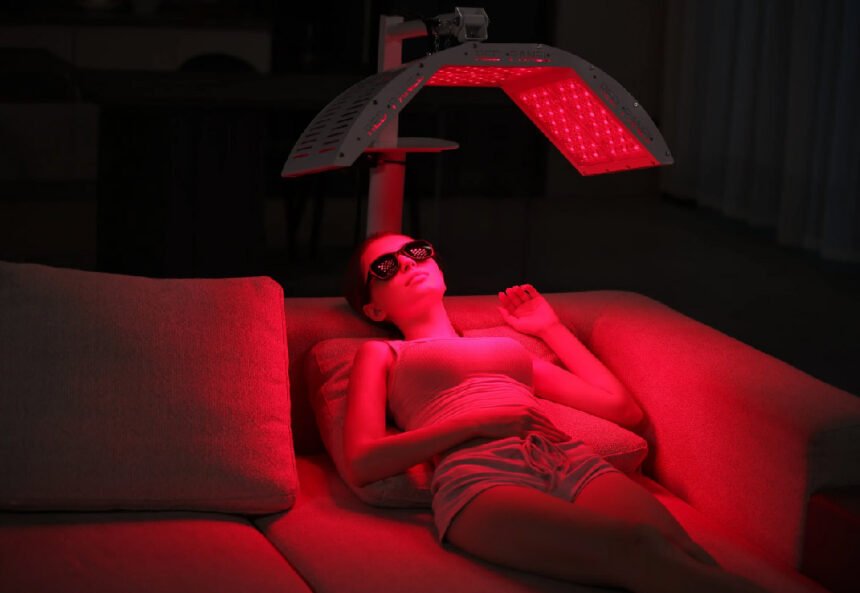
When browsing red light therapy reviews, it is easy to get lost in irradiance numbers and forget the physical reality: these are large, heavy, bright metal boxes. A full-body setup can weigh over 80 pounds and dominate a room. In 2025, manufacturers have developed distinct form factors to solve this, but choosing the right one requires an honest assessment of your floor plan and storage capabilities.
The “Apartment Saver”: Door-Mounted Systems
For most users living in apartments or shared spaces, the door mount is the gold standard for saving space. This setup utilizes vertical dead space, allowing you to hang the panel on the back of a bedroom or closet door. Mito Red Light is the undisputed leader in this category. Their mounting hardware is robust, modular, and designed to prevent the panel from banging against the door every time you open it. The advantage here is that the panel is always set up and ready to use, which drastically increases adherence to a routine. However, you must check your door gaps; if your doors fit tightly against the frame at the top, the metal hooks might prevent the door from closing properly.
The “Mobile Clinic”: Rolling Stands
If you have the floor space and want to use the light in different rooms (e.g., the living room for a knee treatment while watching TV, then the bedroom for sleep hygiene), a mobile rolling stand is the ideal solution. Both Mito Red Light and PlatinumLED offer heavy-duty, hospital-grade rolling stands. These allow you to tilt the light horizontally, which is crucial if you want to lie down on a bed or yoga mat during treatment. The downside is the footprint: the base of these stands is often wide (to prevent tipping), meaning they do not tuck away easily into corners. If you have narrow hallways or a cluttered room, a rolling stand can quickly become a nuisance.
The “Hidden Gem”: High-Density Tabletop Panels
For those with zero floor space or who want a portable solution that can be stored in a drawer, the optical efficiency of RLT Home makes a compelling case for a smaller form factor. Because RLT Home uses tight 30-degree beam angles, their smaller “tabletop” (with a sturdy stand) or “half-body” panels (with a stand with wheels on one side) can project energy effectively over a distance. This means you can place a smaller unit on a desk or dresser and still get deep penetration on your face, chest, or thyroid without needing a 6-foot tower. Hooga also excels here with their PRO series, offering compact, punchy lights that are easy to move. The trade-off is time: with a smaller panel, you cannot treat your whole body at once; you must treat the top half, then move the light to treat the bottom half, doubling your session length.
The “Relaxation” Factor: Horizontal vs. Vertical
Consider how you want to spend your 10 to 20 minutes. Most people buy vertical door mounts, but they soon realize that standing still for 20 minutes staring at a wall is boring and fatiguing. If your goal is relaxation or treating back pain, being able to lie underneath the light is superior. This requires either a floor stand that can articulate 90 degrees (like the Mito Heavy Duty Stand) or a dedicated horizontal support. RLT Home focuses heavily on this ergonomic aspect, often recommending setups that allow the user to be passive and relaxed, which helps lower cortisol levels during the session – a hidden benefit of the therapy itself.
Aesthetics and Storage
Finally, consider the “visual noise.” Not all red light therapy panels give priority to aesthetics in the same way. Joovv panels are designed with sleek, rounded edges and an Apple-like aesthetic that blends reasonably well into a modern bedroom. In contrast, Hooga panels are unapologetically industrial; they look like server equipment or grow lights. If you do not have a dedicated closet to hide the device, and it will be sitting out in your master bedroom, the industrial look of a budget panel might be an eyesore. If you plan to store the device after every use, avoid the large full-body panels entirely; they are too heavy to unhook and move daily. Instead, opt for two medium-sized panels (like the Mito MID or RLT Home half-body) which are manageable to lift and can be stacked in a closet when not in use.
For More Information Visit Fourmagazine