



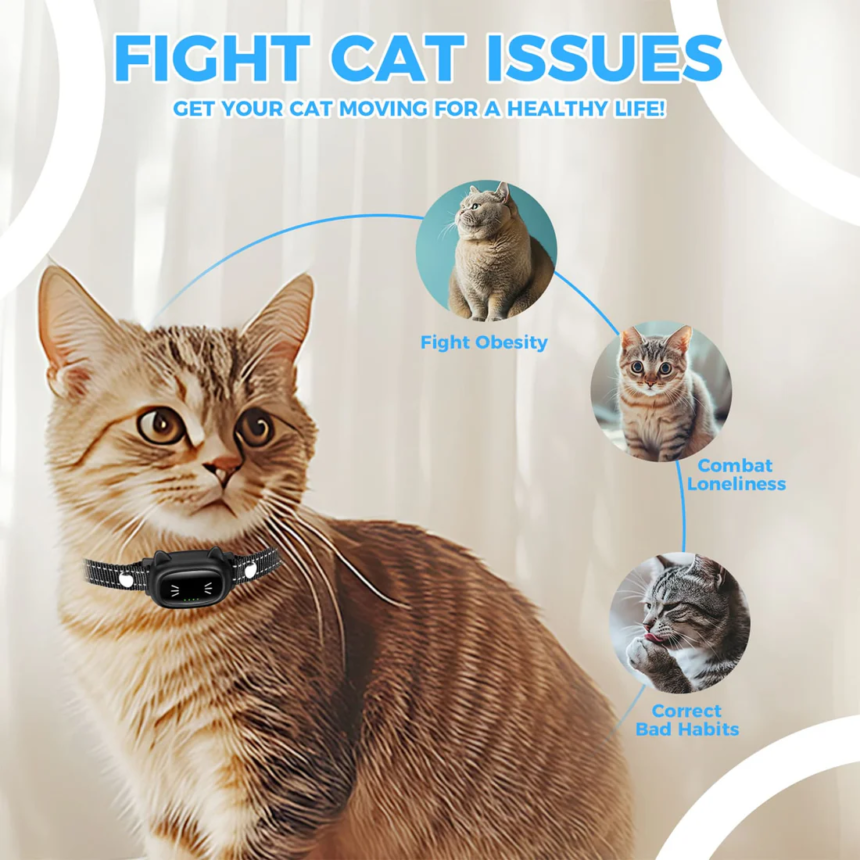
Training collars for cats are becoming more popular as pet owners search for ways to manage scratching, biting, nighttime hyperactivity, and general misbehavior. But are these collars effective — and more importantly, are they safe? This short guide walks you through what they are, how they work, their benefits, risks, and when you should or shouldn’t use one.
What Are Training Collars for Cats?
Training collars are wearable devices designed to help redirect or correct unwanted behavior in cats. Unlike standard ID collars, these models include features such as tone alerts, vibration modes, or laser stimulation to capture the cat’s attention.
Because cats are more sensitive than dogs, these collars should always use gentle cues only — never shocks — and should be worn only during supervised sessions.
Why People Consider Cat Training Collars
Many cat owners turn to training collars when dealing with:
● Destructive scratching
● Play biting
● Excessive meowing
● Jumping on forbidden surfaces
● Overactive behavior
For multi-cat homes, a collar can sometimes help redirect one cat without disturbing others.
Spotlight: Sovelivee Training Collars for Cats
A commonly searched option is the Sovelivee Training Collars For Cats available at:
● Homepage: Sovelivee pet products
● Product: Sovelivee Training Collars For Cats
Their collar includes:
● 1–16 vibration and tone levels for custom sensitivity
● 8 laser modes to redirect attention
● IP67 waterproof receiver for indoor/outdoor use
● Long-distance remote range (up to 1968 ft)
● Dual-cat control, useful for households with more than one cat
● Lightweight PU and nylon materials designed for comfort
These features aim to provide a distraction-based training method rather than forcing or punishing the cat.
Benefits of Cat Training Collars
1. Interrupting Bad Behavior
A brief vibration or tone can stop scratching, biting, or jumping long enough for you to redirect your cat to a healthier activity — like a scratching post or toy.
2. Encouraging Activity
Laser modes stimulate play and exercise, which can reduce boredom-driven behaviors.
3. Useful for Multi-Cat Homes
If one cat is bullying another or getting into trouble, a dual-channel remote lets you target only the problem behavior.
Risks and Concerns
Training collars are not perfect, and some cats may react negatively.
1. Stress and Anxiety
Cats may become scared of the vibration or tone if it’s too strong or used too often. Some may hide or become less social.
2. Misuse
Leaving the collar on too long, using strong levels, or constantly correcting a cat may cause fear rather than learning.
3. Lack of Breakaway Design
Some collars do not release if a cat gets stuck, which can be dangerous for roaming or active cats.
4. Not Effective for All Cats
Some cats simply don’t respond well to behavior signals, making training collars ineffective.
When to Use a Training Collar
A training collar may be helpful if:
● Your cat is an adult (not a kitten)
● The behavior is mild to moderate
● You supervise usage
● You combine it with rewards and redirection
● You use gentle levels (tone/vibration only)
It’s not recommended for:
● Kittens
● Stressed or anxious cats
● Outdoor cats wearing non-breakaway collars
● Owners who can’t supervise training
How to Use a Cat Training Collar Safely
● Ensure the fit is comfortable — two fingers should fit between collar and neck.
● Use lowest-level vibration or tone first.
● Limit sessions to a few minutes.
● Remove the collar when not training.
● Pair correction with a positive action: toys, treats, or affection.
● Regularly check for discomfort or skin irritation.
Alternatives to Training Collars
Before using a collar, try:
Positive Reinforcement
Reward good behavior with treats, praise, or toys.
Environmental Enrichment
Provide scratching posts, climbing trees, puzzle toys, or window perches.
Physical Barriers
Close doors, use baby gates, or block access to restricted areas.
Harness Training
Better for exercise or outdoor walks without using a collar.
Conclusion
Training collars for cats can be useful when applied gently, responsibly, and alongside positive training methods. Devices like the Sovelivee Training Collars For Cats offer vibration, tone, and laser modes that can redirect behavior without causing harm — but they must be used carefully and never as punishment.
For many cats, simple alternatives like enrichment, treats, and playtime work just as well, if not better. Always choose what keeps your cat safe, happy, and stress-free.