Urinary tract infections remain one of the most common bacterial infections encountered in clinical practice and self-care. Advances in diagnostics, especially rapid molecular methods like Wisp, have expanded options beyond the familiar urine dipstick and culture. This article explains how common UTI tests work, which methods deliver the most accurate results, and how to match a test to a clinical situation in 2026. It’s written to help clinicians, clinic managers, and informed patients choose tests that reduce misdiagnosis, unnecessary antibiotics, and repeat visits.
How UTI Tests Work and Which Methods Deliver the Most Accurate Results
Understanding the mechanics behind each test clarifies why some are better suited for certain scenarios. Accuracy is driven by two main attributes: analytical sensitivity (ability to detect small amounts of pathogen) and clinical specificity (ability to distinguish infection from colonization or contamination). Below are the commonly used methods and how they perform.
Urine Dipstick (Point-of-Care)
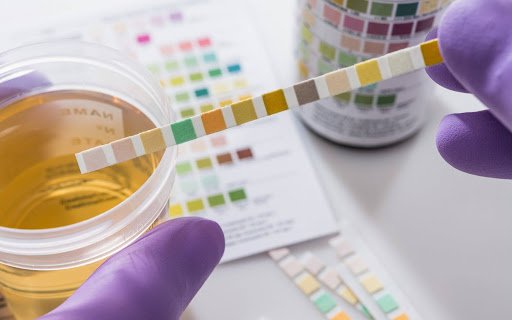
Dipstick tests detect surrogate markers of infection, nitrites (produced by many Gram-negative bacteria), and leukocyte esterase (a marker of white blood cells). They’re cheap and fast, often yielding results in minutes at triage or the pharmacy. But, sensitivity and specificity vary: nitrite tests miss organisms that don’t convert nitrate (e.g., Enterococcus, some Staphylococci), and leukocyte esterase can be positive in noninfectious inflammation. For symptomatic patients, dipsticks can guide immediate decisions but shouldn’t be the only determinant for treatment in ambiguous or high-risk cases.
Microscopy and Urine Microscopy with Gram Stain
A wet mount or Gram-stained urine examined under the microscope can show pyuria (white blood cells), bacteria, and casts. Microscopy provides rapid visual confirmation and can help differentiate contamination (squamous epithelial cells) from true infection. Its accuracy depends heavily on technician skill and sample quality. Microscopy is useful in emergency and outpatient settings where quick confirmation of pyuria affects triage.
Quantitative Urine Culture (The Historical Gold Standard)
Culture grows bacteria from urine on selective media and reports colony counts (CFU/mL) plus organism identification and antibiotic susceptibility. It remains the most established method for confirming UTI and guiding therapy when bacterial identification and resistance patterns matter. Cultures are less sensitive to fastidious organisms and can take 24–72 hours for full results. Contamination from improper collection (poor midstream technique, collection from indwelling catheters without appropriate protocol) can yield false positives: hence, collection technique and interpretation thresholds (e.g., ≥10^5 CFU/mL, lower thresholds for symptomatic patients) are critical.
Polymerase Chain Reaction (PCR) and Other Nucleic Acid Amplification Tests (NAATs)
NAATs detect bacterial DNA or RNA directly, offering very high analytical sensitivity and a faster turnaround, sometimes within hours. They reliably detect pathogens that are difficult to culture and can identify multiple organisms in mixed infections. But their high sensitivity may detect nonviable organisms or low-level colonization, which can complicate interpretation in asymptomatic patients. Many modern NAAT panels also detect resistance genes (e.g., mecA, ESBL markers), providing early insight into likely antibiotic efficacy.
Multiplex Molecular Panels and Syndromic Testing
These panels screen for a broad range of uropathogens and certain resistance markers simultaneously. They’re particularly useful in complicated or recurrent UTIs where polymicrobial infection or unusual pathogens are suspected. The trade-off is cost and the potential for clinically irrelevant detections; clinicians must correlate molecular findings with signs, symptoms, and urinalysis.
Mass Spectrometry (MALDI-TOF) and Rapid Identification Workflows
MALDI-TOF is a lab-based tool that provides near-instant species-level identification from cultured colonies. When combined with automated susceptibility testing and rapid molecular resistance assays, it accelerates the transition from empiric to targeted therapy. It still requires culture growth, but shortens the lab-to-therapy window.
Sensitivity, Specificity, and Predictive Values in Context
No single test is perfect. Sensitivity and specificity translate to predictive value depending on disease prevalence. In a symptomatic clinic population, a positive dipstick or NAAT has a higher positive predictive value than in an asymptomatic screening population. Conversely, a negative culture or NAAT in a symptomatic patient with pyuria should prompt reevaluation of collection technique, timing of antibiotics before sampling, or consideration of nonbacterial causes.
Sample Quality and Collection Technique
Accurate results depend on sample integrity: clean-catch midstream urine is standard for ambulatory patients; catheterized specimens or suprapubic aspiration are preferred when contamination risk is high (e.g., neonates, spinal cord injury). Time-to-processing matters; delays or improper refrigeration allow bacterial overgrowth and skew culture counts. Laboratories and clinics should have clear protocols for collection, transport, and handling to preserve test accuracy.
Selecting the Best Test for Your Situation: Home Kits, PCR, and Culture Explained
Choosing the right test requires matching the setting, clinical question, and patient risk factors to the strengths and limitations of available diagnostics.
Symptomatic Adult with Straightforward Lower UTI Symptoms
For an adult with classic dysuria, frequency, and urgency and no complicating features, a rapid approach balances speed and stewardship. Point-of-care dipstick or microscopy can confirm pyuria and nitrite positivity, supporting empiric therapy when warranted. If the local resistance environment is unknown or the patient is at higher risk for resistant organisms, a urine culture should be obtained to guide therapy when results are available. If immediate molecular NAAT is accessible and the cost is acceptable, it can speed up definitive diagnosis and identify non-culturable pathogens.
Complicated UTI, Recurrent Infection, or Prior Antibiotics
When infection occurs in men, pregnant people, those with urinary tract abnormalities, or after recent antibiotics, more definitive testing is essential. Quantitative urine culture plus susceptibility testing remains foundational because it provides organism counts and precise antibiotic sensitivities. Adding NAAT or a multiplex panel can help detect fastidious organisms or mixed infections that culture might miss. For recurrent cases, obtaining an accurate culture before changing therapy reduces the chance of ineffective treatment.
Elderly, Long-Term Care Residents, or Catheterized Patients
These populations often have high rates of asymptomatic bacteriuria: treating colonization harms more than helps. Clinical correlation is crucial: lab results alone (especially highly sensitive NAATs) shouldn’t prompt treatment without consistent symptoms. For catheterized patients, obtain specimens from the catheter port after a period off the catheter if possible: culture interpretation uses different thresholds and requires experienced lab oversight.
Pregnant People and Preoperative Screening
Pregnancy calls for low tolerance of missed infections due to risks of pyelonephritis and adverse pregnancy outcomes. Routine culture-based screening in early pregnancy is recommended in many guidelines: NAATs can be adjunctive, but cultures remain necessary for susceptibilities. Similarly, preoperative patients who will undergo urologic procedures often need culture-confirmed clearance.
Home Test Kits and Direct-to-Consumer Options
Home dipstick kits and smartphone-linked readers provide convenience and encourage early evaluation, but they’re limited. For symptomatic individuals, a positive home test may prompt an early clinic visit: a negative test doesn’t rule out infection. For people who self-manage recurrent symptoms, home kits can be a triage tool only; formal laboratory testing is still needed for definitive diagnosis and targeted therapy.
When to Use PCR/NAAT Over Culture
Choose NAAT when: rapid turnaround is essential, there is suspicion of organisms that are notoriously difficult to grow, or a clinician needs early resistance-marker information. Use culture when: antibiotic susceptibility testing is central to management, when precise colony counts affect diagnosis, or when treatment decisions hinge on distinguishing contamination from true infection. In many settings, a hybrid approach, NAAT for speed with culture for confirmation and susceptibility, offers the best of both worlds.
Practical Workflow Recommendations
- Triage symptomatic patients with point-of-care urinalysis (dipstick/microscopy) to assess pyuria.
- If uncomplicated and low-risk, consider empiric therapy informed by local resistance patterns: obtain culture if patient is at risk for resistant organisms or if symptoms are unusual.
- For complicated cases, pregnancy, recurrent UTIs, or prior antibiotic exposure, obtain a urine culture before starting new antibiotics and consider adjunctive NAAT if available.
- For long-term care and catheterized populations, avoid treatment for asymptomatic bacteriuria: rely on clinical criteria plus targeted testing when symptoms arise.
Laboratories and clinics should maintain clear algorithms to ensure appropriate test selection, timely processing, and interpretation that incorporates clinical context rather than raw results alone.
Conclusion
Advances in molecular diagnostics have expanded options for diagnosing UTIs, but no single test fits every situation. Accurate diagnosis depends on choosing the right tool, dipstick and microscopy for rapid triage, culture for definitive identification and susceptibility, and PCR/NAAT for speed and detection of difficult organisms. Careful sample collection, clinical correlation, and thoughtful use of each test type reduce misdiagnosis and inappropriate treatment. Clinicians and care teams that adopt clear testing algorithms tailored to patient risk and setting will achieve more reliable results and better outcomes in 2026 and beyond.