



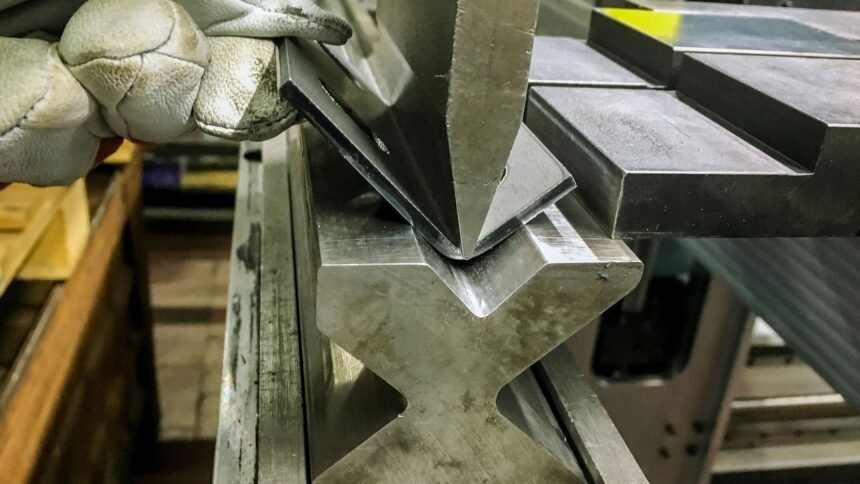
In many fabrication environments, the shaping of metal components is only one step in a much larger production process. Pipes and tubes may later be welded, assembled, or integrated into machinery, structures, or transport systems. Because of this, the accuracy of each bend plays an important role in how smoothly later stages of manufacturing proceed. Equipment such as a bending machine is used to create consistent curves and angles that allow parts to fit together as intended.
When metal components are formed with precision, the rest of the fabrication process becomes far more predictable. Parts align correctly, assembly time is reduced, and quality control becomes easier to maintain. Small deviations during bending can lead to significant complications further down the line, particularly when large numbers of identical components are required.
Why Precision Matters in Tube Forming
Metal tubing is used in a wide range of applications, from automotive exhaust systems to architectural frameworks and industrial equipment. Each application requires specific shapes and dimensions that allow the tubing to perform its intended function.
During bending, the outer surface of the tube stretches while the inner surface compresses. If this movement isn’t controlled carefully, the material can distort, flatten, or wrinkle. These imperfections may affect the strength of the component or prevent it from fitting accurately during assembly.
Modern fabrication relies on equipment capable of controlling these forces so that bends are smooth and repeatable. Maintaining the correct radius and alignment ensures that each component matches the design specifications used throughout the production process.
Consistency Across Large Production Runs
Manufacturing often involves producing hundreds or thousands of identical parts. In these situations, repeatability becomes just as important as initial accuracy. A single bend may appear correct, but the true test is whether the same result can be achieved again and again.
Reliable bending equipment allows operators to set precise parameters for angle, radius, and positioning. Once configured, the machine can reproduce the same movement repeatedly, ensuring that every part follows the same geometry. This consistency helps maintain uniform quality across the entire production run.
Without this level of repeatability, small differences between parts can accumulate, making assembly slower and more complicated.
Reducing Waste and Material Loss
Metal fabrication can be costly when errors occur. Tubing that bends incorrectly may need to be discarded or reworked, which increases both material waste and production time. In large scale manufacturing, even small inefficiencies can have a noticeable impact on overall costs.
Precise forming processes help minimise these losses. By controlling the bending process carefully, manufacturers reduce the risk of deformation that would render a part unusable. This makes the workflow more efficient and ensures that materials are used effectively.
Reducing waste also contributes to better planning. When the number of usable components remains consistent, production schedules become easier to manage.
Supporting Complex Designs
Modern product design often requires tubing to follow complex paths within limited space. Automotive components, industrial machinery, and architectural structures frequently depend on curved metal sections that must fit precisely within tight dimensions.
Accurate bending makes these designs possible. Engineers can specify detailed shapes knowing that fabrication processes are capable of reproducing them reliably. This opens the door to more efficient layouts and innovative structural solutions.
As products become more sophisticated, the ability to form metal components accurately becomes even more valuable.
The Role of Reliable Equipment in Fabrication
Metal forming processes combine material behaviour with mechanical control. Skilled operators understand how tubing responds to pressure and movement, while equipment provides the stability needed to apply those forces consistently.
When the forming process is controlled and repeatable, manufacturers gain confidence that each component will meet the required specifications. This reliability supports the entire production chain, from fabrication through to final assembly.
Accurate bending may appear to be a small step within manufacturing, but it plays a key part in ensuring that complex products come together exactly as intended.