



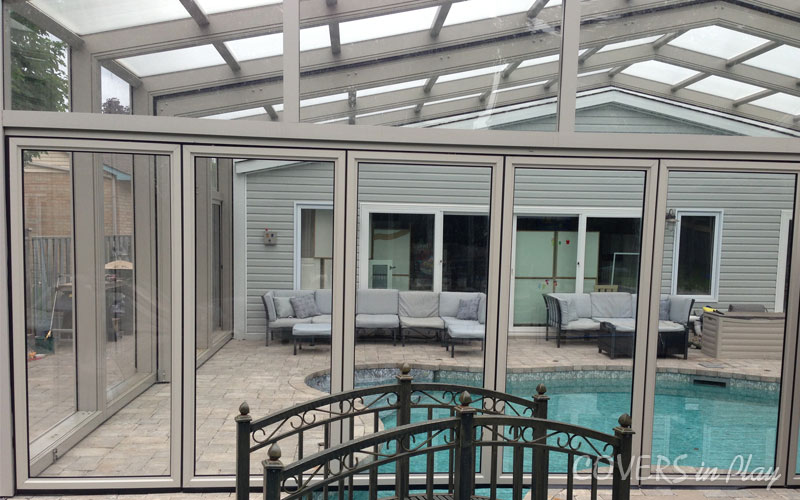
Every pool owner knows the struggle: leaves covering the surface, insects floating in the water, dust settling overnight, and algae showing up the moment you blink. Maintaining a clean pool feels like a never-ending routine of skimming, vacuuming, and chemical balancing. This is exactly why Pool Enclosures have become one of the most practical solutions for reducing day-to-day maintenance. Instead of constantly reacting to dirt and debris, enclosures help prevent these problems from happening in the first place. By creating a controlled environment around the swimming area, they keep the water cleaner, more stable, and far easier to manage year-round.
What Are Pool Enclosures and How Do They Work?
Pool enclosures are protective structures built around swimming pools to shield them from external elements. They can be made of aluminum frames, tempered glass, or polycarbonate panels, materials strong enough to resist wind, debris, and UV rays. Some models are fixed in place, creating a permanent “indoor” feel, while others are retractable, allowing you to open or close the enclosure depending on the weather.
At their core, enclosures work by forming a barrier between the pool and the surrounding environment. This controlled space limits the entry of dirt, leaves, bugs, pollen, and other contaminants that would normally fall directly into the water. By reducing exposure to these elements, pool owners experience fewer cleaning cycles and more stable water quality throughout the year.
How Pool Enclosures Block Debris Before It Reaches the Water
One of the biggest sources of pool maintenance is debris. Leaves, twigs, grass, dust, and small insects constantly find their way into uncovered pools, especially during windy or seasonal changes. Installing Pool Enclosures dramatically reduces this problem by acting as the first line of defense.
The physical structure prevents debris from falling straight into the water, while the sides and roof block airborne particles carried by wind. Even pollen and fine dust are minimized because the enclosure acts like a natural filter. This means fewer hours skimming the surface, fewer vacuuming sessions, and significantly cleaner water daily. With less organic matter entering the pool, the filtration system experiences lower stress and can operate more efficiently.
Lower Chemical Usage Thanks to Less Contamination
Every piece of debris that lands in a pool affects the water chemistry. Leaves introduce organic material, insects break down into nutrients, and dust alters pH and clarity. This forces the pool owner to use more chlorine, stabilizers, and balancing agents to maintain safe water conditions.
When Enclosures protect a pool, the reduction in contamination directly leads to reduced chemical usage. Cleaner water requires fewer sanitizers because there is less material for the chlorine to break down. The pH remains more stable, and the water stays clear for longer periods. As a result, pool owners spend less on chemical treatments and enjoy a healthier, more consistent swimming environment.
Reduced Algae Growth Through Controlled Sunlight Exposure
Algae growth is one of the most frustrating maintenance problems because it spreads quickly and is difficult to control once it takes hold. Algae thrives on two things: sunlight and organic waste. Enclosures naturally limit both.
By filtering or reducing UV exposure, an enclosure prevents algae from getting the intense sunlight it needs to multiply. At the same time, with fewer leaves and insects falling into the water, there are fewer nutrients available for algae to feed on. This combined effect results in significantly reduced algae growth throughout the year, leading to fewer brushing sessions, fewer shock treatments, and a more visually appealing pool.
Protection From Weather Elements That Increase Maintenance
Weather is one of the biggest contributors to pool contamination. Wind brings dust and grit, storms wash soil into the water, and seasonal changes bring waves of pollen and dried leaves. A single windy afternoon can undo an entire weekend of cleaning.
This is where Pool Enclosures shine. The enclosure creates a stable environment, preventing dirt, rainwater, and seasonal debris from entering the pool. It also helps regulate temperature, which further stabilizes water chemistry. Whether you live in a rainy region, a dusty climate, or an area with heavy autumn foliage, an enclosure dramatically reduces weather-related cleaning hassles.
How Pool Enclosures Extend the Life of Pool Equipment
Cleaner water doesn’t just look better, it also protects your pool system. Pumps, motors, filters, and heaters are designed to operate with minimal debris flow. When dirt enters the system, filters clog faster, pumps work harder, and parts wear down quicker.
With Enclosures, the filtration system handles fewer contaminants, resulting in longer equipment life. Filters stay cleaner for longer periods, pumps run at lower strain levels, and heating systems work more efficiently because the water temperature remains more consistent. This translates into real savings: fewer repairs, fewer replacements, and lower energy bills over time.
Retractable vs Fixed Enclosures
Both types of pool enclosures reduce maintenance, but they serve different needs. Fixed enclosures offer year-round protection and are ideal for harsh climates where debris and weather changes are constant. They provide the most stability and the least amount of manual cleaning.
Retractable enclosures, on the other hand, give you flexibility. You can open them during pleasant weather and close them when protection is needed. While they still reduce maintenance significantly, they may allow some debris when opened. Choosing between them depends on your climate, preferred pool usage, and maintenance goals.
Overall Maintenance Savings With Pool Enclosures
Installing an enclosure isn’t just about cleanliness; it’s also about long-term savings. Reduced debris means fewer cleaning tools, fewer chemical purchases, and less manual labor. More stable water chemistry prevents premature equipment damage. And because the pool stays cleaner, owners spend less on professional maintenance services.
On average, pool owners report saving several hours per week on cleaning and hundreds of dollars annually on chemicals and equipment repairs. For many, the convenience alone makes the investment worthwhile.
Conclusion
In the end, Pool Enclosures give pool owners what they really want: a cleaner pool with less effort. By blocking debris, reducing algae, stabilizing water chemistry, and protecting equipment, enclosures turn high-maintenance pools into manageable, enjoyable spaces. For anyone looking to spend more time swimming and less time scrubbing, a pool enclosure is one of the smartest improvements you can make.