



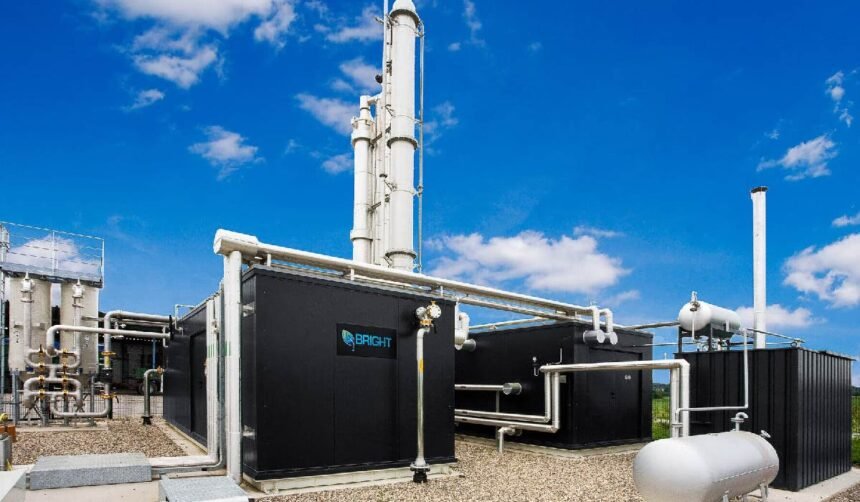
As industries accelerate their efforts to reduce emissions, carbon capture has become a critical technology in the transition to net zero. Among the various approaches available, solvent-based systems remain the most established and widely deployed. At the heart of these systems are chemical solvents, which play a central role in separating carbon dioxide (CO₂) from industrial emissions.
Here’s why understanding how these solvents work (and why they matter) is key to understanding the effectiveness of modern carbon capture systems.
What Solvents Actually Do in Carbon Capture
In simple terms,the role of solvents in carbon captureis to absorb CO₂ from gas streams produced by industrial processes. These solvents are formulated to selectively capture CO₂ from emissions, making them the foundation of many commercial carbon capture technologies.
When flue gas passes through a capture system, the solvent interacts with the CO₂ molecules, separating them from other gases such as nitrogen. This selective capture is what makes solvent-based systems so effective at reducing emissions.
The Chemistry Behind CO₂ Absorption
Most solvent-based systems rely on chemical absorption, particularly using amine-based solvents. These compounds react with CO₂ to form temporary chemical bonds, effectively “trapping” the gas within the liquid.
This process is reversible, which is crucial. Once the solvent has absorbed CO₂, it can be heated to release the captured gas, allowing the solvent to be reused. This cyclical process is what makes solvent-based carbon capture both practical and scalable.
The Two-Stage Capture Process
Solvent-based carbon capture typically operates in two main stages: absorption and regeneration.
In the absorption phase, flue gas is passed through a column where it comes into contact with the solvent. The solvent selectively removes CO₂, leaving other gases behind.
In the regeneration phase, the CO₂-rich solvent is heated in a separate unit. This releases the captured CO₂ in a concentrated form, which can then be compressed and stored or reused. The regenerated solvent is then recycled back into the system to capture more CO₂.
This continuous loop is one of the reasons solvent-based systems are considered the most mature carbon capture technology available today.
Why Solvents Are So Widely Used
Solvent-based carbon capture has been used for decades in industries such as natural gas processing and refining. Its widespread adoption comes down to several key advantages.
First, solvents offer high capture efficiency. In many industrial applications, they can capture up to 90% or more of CO₂ emissions, making them highly effective for large-scale decarbonization.
Second, the technology is well understood and proven. Amine-based systems, in particular, have a long track record and can often be integrated into existing industrial infrastructure with relatively minor modifications.
Finally, solvents are adaptable. Different formulations can be tailored to suit specific industries, gas compositions, and operating conditions.
Types of Solvents Used in Carbon Capture
Not all solvents are the same. The most common types include:
- Amine-based solvents
These are the most widely used and rely on chemical reactions with CO₂. Compounds like monoethanolamine (MEA) are standard due to their strong reactivity and reliability. - Blended and advanced solvents
Newer formulations combine different amines or additives to improve performance, reduce energy use, and increase stability. - Physical solvents
Unlike chemical solvents, these absorb CO₂ without forming chemical bonds. They are typically used in high-pressure systems and can require less energy for regeneration. - Emerging alternatives
Innovations such as ionic liquids and hybrid systems are being explored to overcome limitations like solvent degradation and energy intensity.
Each type has trade-offs, and the choice depends on factors such as pressure, temperature, and the composition of the gas stream.
The Challenges of Solvent-Based Systems
Despite their advantages, solvent-based systems are not without challenges.
One of the biggest issues is energy demand. The regeneration step, where CO₂ is released from the solvent, requires significant heat, making it one of the most energy-intensive parts of the process.
Solvent degradation is another concern. Over time, exposure to oxygen, heat, and contaminants can break down solvents, reducing their effectiveness and increasing operational costs.
There are also environmental considerations, as some solvents can produce byproducts or emissions if not properly managed.
These challenges are driving ongoing research and innovation in solvent design.
How Innovation Is Improving Solvent Performance
Recent advancements in solvent chemistry are addressing many of these limitations.
New solvent formulations are being developed to:
- Reduce energy requirements during regeneration
- Improve resistance to degradation
- Minimize corrosion and operational issues
- Increase CO₂ absorption capacity
For example, enhanced solvents can significantly lower energy consumption and extend operational lifespan compared to traditional options, making carbon capture more economically viable at scale.
These innovations are critical for expanding the adoption of carbon capture technologies across industries.
The Bigger Picture
Carbon capture is a complex system, but solvents are the engine that makes it work. They enable the separation, concentration, and eventual storage or reuse of CO₂, turning a diffuse emission into a manageable stream.
As industries continue to decarbonize, the role of solvents will only grow in importance. Advances in chemistry and engineering are steadily improving their performance, making carbon capture more efficient, cost-effective, and scalable.
In many ways, the future of carbon capture depends on how far solvent technology can evolve.