



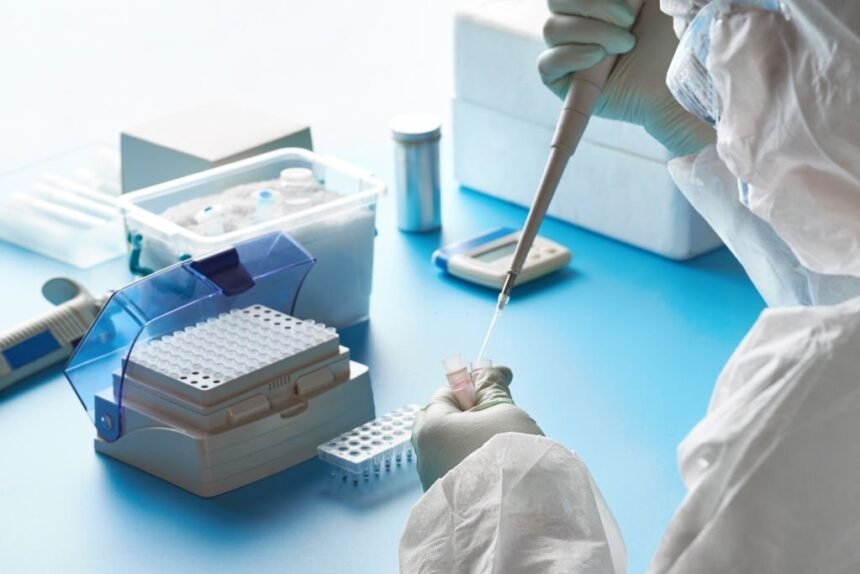
Pipettes are indispensable tools in laboratories, playing a critical role in research and experimentation. This article explores the various applications of pipette technology in research settings, highlighting their importance in accurate measurement and transfer of fluids.
Types of Pipettes
Understanding the different types of pipettes is essential for selecting the right one for a specific application. Some common types include the single-channel pipette, which is ideal for simple liquid transfers, and the multi-channel pipette, which is often used in experiments that require simultaneous transfer of liquids to multiple wells.
Volumetric pipettes are designed to be highly accurate and are typically used when precision is critical, such as in quantitative analysis. On the other hand, serological pipettes are versatile and used in various laboratory applications, including the transfer of cell culture liquids.
Pipettes in Molecular Biology
In molecular biology, pipettes are fundamental for processes such as PCR (Polymerase Chain Reaction) and gel electrophoresis. These techniques require precise measurements of DNA and reagents, which are critical for the accuracy of the experiments.
Pipetting for PCR
During PCR preparation, small volumes of DNA, primers, and nucleotides must be accurately measured and mixed. The use of pipettes ensures that each component is added in the exact quantity needed, which is essential for successful DNA amplification.
Gel Electrophoresis
Gel electrophoresis is another molecular biology technique where pipettes are used to load DNA samples into gels. This technique helps in the separation and analysis of DNA fragments, requiring precise pipetting to ensure sample integrity.
Biotechnology and Pipettes
In biotechnology, pipettes are used extensively for tasks such as the transfer of microbial cultures, preparation of chemical assays, and manipulation of genetic material. Their precision aids in maintaining the consistency and reliability of biotechnological experiments.
Biochemistry Applications
In the field of biochemistry, pipettes are crucial for enzyme assays, protein chemistry experiments, and preparation of buffer solutions. These activities demand accuracy in fluid transfer to ensure reproducibility and validity of the results.
Enzyme Assays
Enzyme assays involve measuring enzymatic activity, which is critical for understanding enzyme functions and mechanisms. Pipettes are used to accurately mix enzymes with substrates, enabling precise measurement of their activity.
Protein Chemistry
In protein chemistry, pipettes are instrumental in sample preparations, such as protein quantification and chromatography. Proper pipetting techniques ensure that protein concentrations are accurately measured, essential for downstream analysis.
Pipettes in Clinical Research
Clinical research often involves blood and other bodily fluids, where pipettes are used for sample collection and testing. Their accuracy plays a vital role in diagnostics and in maintaining the integrity of clinical trials.
Diagnostics
In diagnostics, pipettes are used to transfer patient samples and reagents. This work requires careful handling to avoid contamination and ensure reliable test results.
Clinical Trials
In clinical trials, pipettes are employed for preparing drug formulations and in the analysis of biological samples. They contribute to the precision needed for drawing valid conclusions in research findings.
Environmental Science and Pipettes
Pipettes are also used in environmental science for tasks such as water testing and soil analysis. They help in accurately measuring pollutants and conducting chemical analyses essential for environmental assessments.
Water Testing
In water testing, pipettes are used to measure samples for the analysis of chemical and biological contaminants, playing a key role in ensuring water quality and safety.
In conclusion, pipettes are versatile tools that support a wide range of scientific inquiries in research institutions worldwide. Whether in molecular biology, biotechnology, biochemistry, or environmental science, they provide the precision required for impactful research. Institutions like Techpack Australia offer a variety of pipettes suited for different laboratory needs, highlighting the innovation driving modern scientific exploration.
Furthermore, auxiliary laboratory supplies, such as glass bottles, complement the usage of pipettes by providing suitable storage for samples and reagents, highlighting the essential support materials that facilitate research operations.