



Facebook advertising represents one of the most powerful channels for jewellery businesses to reach qualified buyers at scale. With over 3 billion active users and sophisticated targeting capabilities, the platform offers jewelry brands unprecedented access to audiences actively searching for engagement rings, fashion accessories, and luxury pieces.
The challenge isn’t whether Facebook ads work for jewelry; it’s knowing how to implement strategies that convert browsers into buyers. This guide walks you through every component of a profitable Facebook ads strategy specifically designed for jewellery businesses, from initial setup through advanced scaling techniques.
Understanding Your Jewelry Customer on Facebook
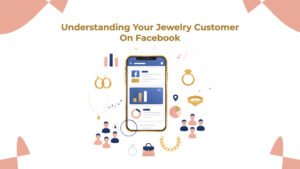

Successful Facebook advertising starts with knowing exactly who you’re trying to reach. Generic targeting wastes budget on unqualified clicks while precise audience definition puts your ads in front of people ready to buy.
Demographic Targeting Fundamentals
Age and gender represent your first targeting layer. Engagement ring shoppers typically fall between 25 and 35 years old, with male purchasers comprising roughly 70% of this segment. Fashion jewelry attracts a broader 18-45 age range, predominantly female audiences interested in accessories and personal style.
Luxury jewelry buyers skew older, 30-55 years, with higher household incomes and established purchasing power. Geographic targeting matters too. Urban and suburban audiences show different shopping behaviors, with metropolitan areas often responding better to contemporary designs while suburban markets may prefer traditional styles.
Psychographic Profiling
Beyond demographics, interest, and behavior, targeting reveals purchase intent. Start with broad jewelry-related interests: fashion, accessories, luxury goods, and online shopping. Then layer more specific interests based on your product category.
Wedding planning interest targeting works exceptionally well for bridal jewelry. Combine this with relationship status filters (recently engaged) to reach people actively shopping for rings and wedding accessories. Anniversary and birthday targeting captures gift-buying opportunities throughout the year.
Behavioral targeting identifies high-value shoppers through purchase history patterns. Target users who’ve bought luxury items, shop online frequently, or engage with premium fashion brands.
Niche Definition Exercise
Your positioning determines which audiences convert best. A hip-hop jewelry brand selling Cuban link chains and bold statement pieces targets completely different demographics than a minimalist fine jewelry retailer.
Define your niche clearly:
- Price positioning: Entry-level ($50-200), mid-range ($200-1,000), luxury ($1,000+)
- Style category: Contemporary, traditional, minimalist, maximalist, hip-hop, bohemian
- Primary occasion: Everyday wear, special events, bridal, gifts, self-purchase
- Material focus: Gold, silver, diamonds, alternative stones
This clarity shapes every subsequent decision from creative strategy to ad copy to landing page design.
Setting Up Your Facebook Ads Foundation
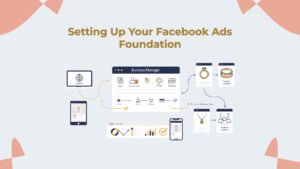
Technical setup determines whether your campaigns can track conversions and scale effectively. Rushed implementation creates data gaps that make optimization nearly impossible.
Facebook Business Manager Configuration
Business Manager centralizes all your advertising assets, ad accounts, Pages, pixels, and catalogs under one dashboard. Create your Business Manager at business.facebook.com and add your jewelry brand’s Facebook Page as an owned asset.
Proper account structure prevents future headaches. For beginners looking to start advertising should immediately purchase facebook ad account, cause they provide an established spending history and help bypass learning phase limitations.
Account restrictions hit jewelry advertisers frequently due to strict policies around luxury goods and high-value transactions.
Facebook Pixel Implementation
The Facebook Pixel tracks visitor actions on your website, enabling conversion optimization and retargeting. Install the pixel base code in your website header. Most e-commerce platforms offer one-click pixel integration through settings.
Configure standard events that matter for jewelry e-commerce:
- ViewContent: Fires when someone views a product page
- AddToCart: Tracks cart additions
- InitiateCheckout: Captures checkout starts
- Purchase: Records completed transactions with order values
Test your pixel using Facebook’s Pixel Helper Chrome extension. Verify that events fire correctly by visiting your product pages, adding items to cart, and completing a test purchase.
Catalog Integration
Product catalogs power a dynamic ads strategy that automatically shows relevant jewelry to people who viewed specific items. Connect your e-commerce platform to Facebook through Commerce Manager or use a data feed.
Optimize product data quality:
- High-resolution images: Use at least 1,000 x 1,000 pixels
- Detailed titles: Include metal type, stone, and style
- Accurate pricing: Keep prices synchronized with your website
- Complete descriptions: Add stone quality, dimensions, and care instructions
Crafting High-Converting Jewelry Ad Creatives
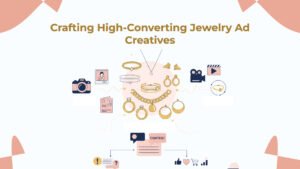
Visual appeal makes or breaks jewelry advertising. Your creatives must stop the scroll while communicating quality and desirability within milliseconds.
Photography and Visual Standards
Professional jewelry photography isn’t optional; it’s the difference between profitable and unprofitable campaigns. Close-up shots showcasing craftsmanship work best for high-value pieces. Macro photography that reveals diamond facets, metal texture, and intricate details builds perceived value.
Lifestyle photography converts differently from product shots. Images showing jewelry being worn by models provide context and help shoppers visualize themselves wearing the piece. Mix both approaches lead with lifestyle to grab attention, then show detailed product shots in carousel ads.
Different jewelry styles demand different visual approaches. Hip-hop pieces like tennis chains benefit from bold, high-contrast photography emphasizing weight and shine, while delicate fine jewelry requires softer lighting and minimalist backgrounds.
Video Content Strategy
Video ads generate higher engagement than static images, but jewelry videos must showcase the product effectively within 3-5 seconds before viewers scroll past.
Keep videos short, 10-15 seconds maximum. Show the jewelry from multiple angles with slow rotation or close-up panning that reveals details. Add text overlays highlighting key selling points: “925 Sterling Silver,” “Lab-Grown Diamonds,” or “30-Day Returns.”
User-generated content outperforms studio videos for authenticity. Request video testimonials from customers showing their purchases and sharing experiences. For efficiently repurposing video content across platforms, Instagram video downloader tools help save and adapt high-performing social content for multi-channel campaigns.
Copywriting for Jewelry Ads
Visual creatives grab attention, but copy converts. Jewelry ad copy must balance emotional appeal with practical information.
Headlines need to stop the scroll immediately. Use pattern-interrupt questions, bold benefit statements, or urgent offers:
- “Still searching for the perfect engagement ring?”
- “Luxury jewelry without the luxury price tag”
- “Last chance: 40% off all diamond studs”
Keep copy concise. Facebook users scroll quickly, so get your message across in 2-3 sentences maximum.
Advanced Audience Targeting Strategies
Precise targeting separates profitable campaigns from budget drains. Facebook’s targeting capabilities enable jewelry brands to reach microsegments with tailored messaging.
Core Audience Building
Start with interest targeting combinations that reveal purchase intent. Single interests cast too wide a net. Layering creates focused audiences.
Effective interest combinations for jewelry:
- Fashion + Accessories + Online shopping
- Weddings + Engagement + Wedding planning
- Luxury goods + Designer fashion + Premium brands
- Jewelry design + Gemstones + Fine jewelry
Custom Audiences
Custom audiences leverage your existing data to target people who’ve already interacted with your brand. These warm audiences convert at higher rates than cold traffic.
Website traffic audiences segment visitors by behavior:
- All website visitors (180-day window)
- Specific product category viewers
- Product page visitors who didn’t purchase
- Add-to-cart but didn’t complete checkout
For jewelry brands creating educational content or styling guides, comprehensive social media content strategies can strengthen your social media foundation that feeds retargeting efforts.
Lookalike Audience Strategy
Lookalike audiences find new people who share characteristics with your best customers. Facebook’s algorithm identifies patterns in your source audience and targets similar users.
Create lookalikes from your highest-value source audiences:
- Top 10% customers by lifetime value
- Recent purchasers (last 30-90 days)
- High-engagement website visitors
- Email subscribers who’ve made multiple purchases
Size your lookalikes strategically. 1% lookalikes closely match your source audience with a smaller reach. 5-10% lookalikes increase reach but reduce similarity.
Campaign Structure and Budget Optimization
Campaign architecture determines how effectively Facebook’s algorithm learns and optimizes. Poor structure handicaps even the best creatives and targeting.
Campaign Objective Selection
Choose campaign objectives aligned with your business goals. Each objective optimizes delivery differently.
Conversion campaigns drive direct sales. Use this objective when your goal is purchases. Facebook shows ads to people most likely to complete transactions based on past behavior patterns.
Traffic campaigns send visitors to your website or landing pages. These work for awareness-stage content like blog posts, gift guides, or educational material that nurtures prospects.
Budget Allocation Framework
Budget determines campaign scale and testing capacity. Allocate strategically across learning, testing, and scaling phases.
Testing budgets validate hypotheses:
- $30-50 daily for initial audience tests
- $50-100 daily for creative variations
- Minimum 2-3 days before judging performance
Scaling budgets expands winners:
- Increase winning ad sets by 20% every 2-3 days
- Duplicate top performers into new campaigns
- Add budget to campaign level with CBO (Campaign Budget Optimization)
Seasonal budget adjustments capture peak buying periods. Jewelry brands should increase budgets 2-3x during Valentine’s Day, Mother’s Day, Wedding season, and Holiday season.
Bidding Strategies
Bidding controls how Facebook spends your budget and what results it optimizes for. Different strategies suit different campaign maturity levels.
Lowest cost bidding (default) maximizes results within your budget. Facebook automatically adjusts bids to get the most conversions possible. Use this for most campaigns with flexible cost tolerance.
Cost cap bidding maintains the average cost per result around a target. Set the cost cap at your break-even CPA (customer acquisition cost) to ensure profitability.
Learning phase matters for all strategies. New campaigns and ad sets need 50 conversion events weekly to exit learning and optimize effectively.
Landing Page Optimization for Jewelry Sales
Traffic from perfect ads still won’t convert on poorly designed landing pages. Your website must match the quality and promise of your advertising.
Page Design Essentials
Mobile-first design is non-negotiable. Over 70% of Facebook traffic comes from mobile devices. Test your landing pages on actual phones. Slow loading, tiny text, or difficult navigation kills conversions.
High-quality images with zoom functionality let shoppers examine jewelry details. Implement 360-degree product views or multiple angles for expensive pieces.
Trust signals reduce purchase anxiety for high-value items:
- Security badges (SSL, payment processor logos)
- Money-back guarantees are prominently displayed
- Return policy clarity (30-day returns, free return shipping)
- Professional certifications for diamonds and precious metals
Conversion Elements
Product descriptions must sell, not just inform. Lead with benefits before features. Instead of “14K gold setting with 1ct diamond,” try “Timeless elegance that lasts generations, handcrafted in 14K gold with a sparkling 1-carat diamond.”
Customer reviews and ratings build social proof. Display review stars prominently. Feature detailed written reviews that mention quality, shipping speed, and satisfaction.
Technical website performance directly impacts Facebook ad ROI. Visitors from ads who encounter slow-loading pages abandon before converting. Professional SEO services can optimize site speed, mobile responsiveness, and user experience to maximize returns from ad spend.
Full-Funnel Campaign Strategy
Single-stage campaigns leave money on the table. Full-funnel strategies nurture prospects from awareness through purchase, maximizing lifetime value.
Top of Funnel: Awareness
Awareness campaigns introduce your jewelry brand to cold audiences who’ve never heard of you. The goal isn’t immediate sales, it’s building recognition and interest.
Educational content positions you as an expert:
- Jewelry care tips and cleaning guides
- Style guides (how to layer necklaces, stack rings)
- Gemstone education (diamond 4Cs, birthstones)
- Gift guides for various occasions
Middle of Funnel: Consideration
Consideration campaigns target warm audiences evaluating options. They’re familiar with your brand and need convincing to choose you over competitors.
Product showcase campaigns highlight your collection’s breadth and quality. Use carousel ads featuring multiple items from a category.
Social proof ads leverage testimonials and user-generated content. Feature customer photos wearing your jewelry, five-star reviews, or influencer partnerships.
Bottom of Funnel: Conversion
Conversion campaigns close the sale with high-intent audiences primed to purchase. Messaging should be direct and action-oriented.
Direct response product ads feature your best-sellers with clear CTAs. Show the item, state the price, highlight the offer, and direct people to buy.
Cart abandonment recovery campaigns target people who added items but didn’t complete checkout. Show them exactly what they left behind. Offer free shipping or a small discount (10%) to overcome objections.
Testing and Performance Optimization
Consistent testing separates amateur advertisers from professionals. What works today may fail tomorrow; optimization never stops.
Key Performance Metrics
Track metrics that actually indicate campaign health. Vanity metrics like impressions and reach don’t pay bills.
ROAS (Return on Ad Spend) measures profitability. Calculate by dividing revenue by ad spend. Jewelry brands should target:
- 2.5-3.5x ROAS: Minimum viable for sustainability
- 3.5-5x ROAS: Healthy performance with growth room
- 5x+ ROAS: Excellent performance ready for scaling
CTR (Click-Through Rate) indicates creative effectiveness. Jewelry ad benchmarks:
- Below 1.5%: Poor creative or misaligned targeting
- 1.5-2.5%: Average performance
- Above 2.5%: Strong creative resonance
A/B Testing Protocol
Structured testing reveals what actually drives results. Test one variable at a time for clear conclusions.
Creative testing should be continuous:
- Test 3-4 image variations per audience
- Compare lifestyle vs. product-only photography
- Test different video lengths (6s vs. 15s)
- Experiment with text overlay vs. clean visuals
Run tests until reaching statistical significance, typically 1,000+ impressions per variation or 30-50 conversions.
Ongoing Optimization Tactics
Active management beats set-it-and-forget-it approaches. Establish optimization routines:
Daily checks (5-10 minutes):
- Review spend pacing
- Check for disapproved ads
- Monitor ROAS on active campaigns
- Pause ads with frequency above 3.5
Weekly analysis (30-60 minutes):
- Compare performance across ad sets
- Identify winning creatives for scaling
- Analyze audience performance trends
- Adjust budgets toward top performers
Creative refresh cycles combat ad fatigue. Even winning ads decay over time as audiences tire of seeing them repeatedly. Rotate new creatives every 2-4 weeks.
Advanced Strategies for Scaling
Once you’ve found profitable campaigns, strategic scaling multiplies results without proportionally increasing costs.
Seasonal Campaign Planning
Jewelry buying follows predictable seasonal patterns. Planning campaigns around key dates captures peak demand.
Valentine’s Day (late January-February 14): Focus on romantic jewelry necklaces, bracelets, and earrings positioned as love expressions. Target men aged 25-45 in relationships.
Mother’s Day (April-early May): Promote sentimental pieces, birthstone jewelry, pendants, and personalized items. Target adult children (25-50 years old).
Wedding Season (March-August): Engagement rings and bridal jewelry peak during these months. Products like custom pendants as bridesmaid gifts perform well.
Holiday Season (November-December): The biggest jewelry buying period. Promote gift sets, luxury items, and stocking stuffers.
Catalog Expansion Tactics
Large product catalogs enable sophisticated automated campaigns that show the right product to each individual.
Dynamic Product Ads automatically promote products to people who viewed them on your website. Facebook matches inventory to user behavior. Someone who views silver bracelets sees ads for those exact items.
Cross-selling strategies increase average order value. Create campaigns showing complementary items:
- Earrings to customers who bought necklaces
- Bracelets for ring purchasers
- Jewelry cleaning kits to anyone who purchased jewelry
Geographic and Audience Expansion
After conquering your initial market, systematic expansion captures new customers without diluting performance.
Start international expansion with English-speaking markets (UK, Canada, Australia) before tackling language barriers. Create country-specific ad sets with local holidays and cultural moments.
New market testing frameworks minimize risk:
- Allocate 10-15% of the budget to expansion tests
- Run for 7-14 days before evaluation
- Require 2.5x+ ROAS to continue
- Scale winning markets gradually (20% budget increases)
Compliance and Best Practices
Facebook’s advertising policies are strict. Violations lead to disapproved ads, restricted accounts, or permanent bans.
Facebook Ad Policies
Jewelry ads face specific policy requirements. Review prohibited content carefully:
Claims and guarantees: Avoid absolute claims about value appreciation. Don’t guarantee results without disclaimers.
Image quality standards: Use clear, high-resolution images. Blurry, pixelated, or amateur photography gets disapproved.
Landing page requirements: Ads must direct to functional, relevant pages. Include privacy policies, terms of service, and contact information on your website.
Account Health Maintenance
Preventing account issues beats fixing them after problems arise. Maintain good standing through policy compliance, vigilance, and proper account structure.
Complete Facebook’s business verification process. Verified businesses face fewer restrictions and faster support responses. For creating memorable and professional brand identities across all platforms, the Unique Nicknames Generator helps develop distinctive naming strategies that enhance brand recognition.
Building Long-Term Success with Facebook Ads
Facebook ads deliver immediate results, but sustainable growth requires integrating paid advertising into a broader strategy.
A comprehensive digital marketing approach combines paid advertising with organic growth tactics. While Facebook ads generate immediate sales, building long-term search visibility reduces customer acquisition costs over time. Strategic link building services help develop organic search presence alongside paid channels, creating multiple traffic sources that reduce dependence on any single platform.
Test aggressively during the initial months. Every jewelry brand’s audience differs what works for hip-hop urban jewelry differs from minimalist fine jewelry. Allocate 20-30% of early budgets to pure testing: new audiences, creative variations, messaging angles.
Build retargeting audiences even during slow periods. Run small awareness campaigns year-round to keep feeding your retargeting pools. These warm audiences convert profitably during peak buying seasons.
Track customer lifetime value, not just first-purchase ROAS. A customer acquired at break-even who purchases three more times over two years represents extreme profitability.
Start with these three campaigns today:
- Conversion campaign targeting 1% lookalike of your past customers
- Dynamic retargeting campaign for website visitors from the last 30 days
- Collection ad campaign showcasing your best-selling jewelry category
Run these for 7-14 days, analyze results, then expand winners while cutting losers. That simple framework generates profit while you build more sophisticated strategies. For lifestyle brands demonstrating consistent quality across all customer touchpoints, studying examples like men’s grooming products reveals how cohesive branding and premium presentation build customer trust that improves ad conversion rates. For incorporating audio elements into video ads, Spotify downloader tools enable efficient music integration. For creating emotionally resonant ad copy that connects across cultures, platforms like Beautiful Shayari demonstrate how culturally-relevant content formats drive authentic engagement. Content creators in specialized markets can study engagement techniques from platforms like Erome to understand community-building strategies applicable across industries.