



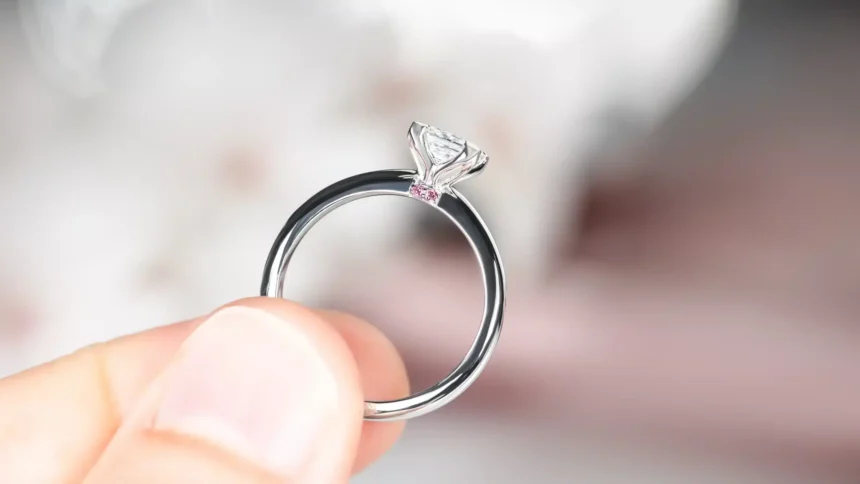
Adding personal touches to an engagement ring makes it uniquely yours and tells your love story in a way that goes beyond tradition. Birthstones offer a beautiful opportunity to infuse symbolic meaning into a custom design while creating something that stands apart from conventional diamond solitaires. How can I incorporate birthstones into a meaningful custom engagement design?
Birthstones can be incorporated as accent stones flanking a center diamond, as a hidden stone set inside the band, as a colorful center stone alternative, or within a halo or pavé setting. The key is choosing a placement that balances personal significance with durability and wearability for everyday use.
While these placement options provide a starting point, the best approach depends on which birthstone you’re working with, since some gemstones are more suitable for daily wear than others. Keep reading to discover which birthstones hold up best in engagement rings, creative design ideas that protect softer stones, and how to combine multiple birthstones if you want to represent both partners in the design.
Which Birthstones Hold Up to Everyday Wear?
Not all birthstones handle daily wear equally. The Mohs hardness scale measures scratch resistance on a 1–10 range, and gemologists generally recommend stones rated 7 or higher for engagement rings worn every day.
Sapphires (September) and rubies (July) rank at 9, making them among the most durable options after diamonds. Aquamarine (March) comes in at 7.5–8. These stones handle typing, cooking, and exercise without significant risk. Emeralds (May) rank 7.5–8 in hardness but are often heavily included, making them more prone to chipping despite the rating.
On the softer end, opals (October) rank 5.5–6.5, pearls (June) fall between 2.5–4.5, and moonstone sits at 6–6.5. These can scratch or crack with regular wear. If your heart is set on a softer birthstone, protective settings and alternative placements open up custom engagement options that honor the symbolism without sacrificing practicality.
Creative Ways to Feature Softer Birthstones
A bezel setting — where metal surrounds the stone’s edges — offers significantly more protection than prongs and works beautifully for softer gems like opals, moonstones, or pearls.
The “secret stone” approach is another popular choice among custom engagement options. Setting the birthstone inside the band or on the underside of the ring’s head keeps it meaningful and protected from impacts. Many couples love this because it creates an intimate detail only the wearer knows about — a private reminder of their partner.
Softer birthstones also work well as accent stones tucked into the gallery (the decorative metalwork beneath the center stone) or placed along the sides of the band where they receive less direct contact. Some designs incorporate birthstones into the prongs or use them as delicate side stones in a three-stone arrangement where a harder center stone takes most of the wear.
If none of these placements feel right, consider featuring a softer birthstone in a companion piece — a wedding band, anniversary band, or right-hand ring worn on special occasions rather than daily.
Combining Birthstones to Represent Both Partners
Incorporating both partners’ birthstones creates a ring that symbolizes your union. The most straightforward approach is a three-stone design where each partner’s birthstone flanks a center diamond — literally placing both of you on either side of your commitment.
For something more subtle, alternating birthstones in a pavé or channel-set band weaves your identities together throughout the ring. This works especially well when both stones are similarly durable and complement each other visually. Hidden dual birthstones offer another romantic option — set inside the band side by side or on opposite sides, sometimes with initials or birth dates engraved alongside.
When one partner’s birthstone is harder than the other’s, feature the more durable stone prominently while incorporating the softer one in a protected placement. A sapphire center with a small pearl hidden inside the band honors both birthstones practically. These kinds of custom engagement options let you balance symbolism, aesthetics, and durability in a way that reflects your unique relationship.
Color Combinations That Work
Understanding color theory helps create a harmonious design when mixing birthstones with diamonds. Cool-toned stones like sapphires, aquamarines, and amethysts pair beautifully with white diamonds in platinum or white gold — classic, sophisticated, and cohesive. Warm-toned stones like rubies, garnets, and citrine create striking contrasts against white diamonds, especially in yellow or rose gold settings.
For green birthstones like emeralds or peridot, yellow gold traditionally brings out their richness, while white metals make the green appear more vivid and modern. Rose gold has become particularly popular for pink-toned stones, creating a romantic monochromatic effect.
Don’t overlook the power of contrast — a deep blue sapphire surrounded by bright white diamonds creates dramatic impact, while soft pink morganite with diamond accents offers gentle elegance. When exploring custom engagement options, request renderings in different lighting conditions. Natural daylight, indoor lighting, and evening light all affect how combinations appear, and you want a palette you’ll love for decades.
Lab-Created vs. Natural Birthstones
Lab-created gemstones offer identical chemical and physical properties to mined stones at a fraction of the cost. For birthstones, this means you can often afford a larger, higher-quality stone than a natural equivalent. Lab-created sapphires, rubies, and emeralds are virtually indistinguishable to the naked eye.
The savings are substantial — typically 30–50% less than comparable natural stones, sometimes more. This price difference lets you allocate more budget toward the setting, a larger center diamond, or simply save for your future together. For couples prioritizing environmental concerns or ethical sourcing, lab-created stones offer peace of mind alongside beauty.
That said, some feel strongly about the romance and rarity of natural gemstones, viewing their formation over millions of years as part of the symbolic value. Natural birthstones may hold value better over time, though most engagement rings are kept as heirlooms rather than investments. Many jewelers offer both, and some couples mix the two — a natural center stone with lab-created accent birthstones — creating custom engagement options that work within both budget and beliefs.
Bringing Your Birthstone Vision to Life
Schedule consultations with two or three custom jewelers who can show you physical examples of birthstone designs and discuss which approaches suit your specific stones. Bring photos of styles you love and be open about your budget — experienced designers can suggest creative solutions that balance your vision with practical durability concerns. Finding the engagement piece is easier when you trust experts who focus on quality and design. The right jeweler will listen to your story and help translate those meaningful elements into a ring you’ll treasure forever.