



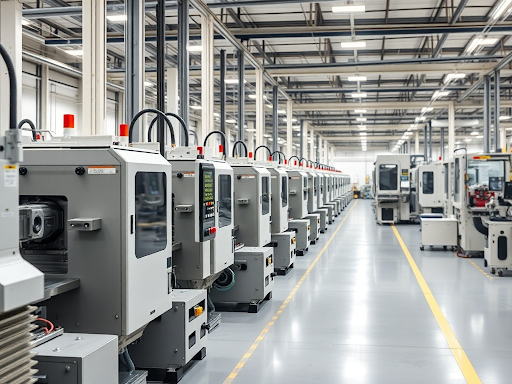
Manufacturing environments rely on precision at every stage, particularly when producing components that must fit together consistently. Equipment choice has a direct impact on accuracy, speed, and overall product quality. Investing in haffner machinery allows production teams to streamline processes while maintaining tight tolerances across high volume output.
As fabrication demands increase and lead times shorten, integrated machinery systems help reduce variation and support reliable production. Well designed equipment brings repeatability into daily workflows, which becomes essential as output scales.
Why Integrated Systems Support Better Accuracy
When production relies on multiple disconnected machines, small inaccuracies can build up at each stage. Measurements drift, alignment varies, and finished components may require adjustment before assembly.
Integrated machinery reduces these risks by keeping processes aligned from start to finish. Components move through cutting, machining, and preparation stages without unnecessary handling. This continuity improves dimensional consistency and helps maintain exact specifications across every unit produced.
Reducing Handling and Setup Time
Manual repositioning and repeated setup slow production and introduce opportunities for error. Integrated systems limit the need for constant recalibration by keeping tooling and positioning consistent throughout the workflow.
With fewer interruptions between stages, operators can focus on monitoring quality rather than resetting equipment. This not only speeds up production but also reduces fatigue and improves concentration, supporting better outcomes over long shifts.
Supporting Consistency Across Large Production Runs
Consistency becomes harder to maintain as volume increases. Even small deviations can cause delays when hundreds or thousands of components are involved. Integrated equipment helps maintain uniform results by applying the same parameters repeatedly with minimal variation.
This level of control simplifies quality checks and reduces rejection rates. When components arrive at assembly stages already aligned and consistent, overall efficiency improves and delivery schedules become easier to manage.
Adapting to Changing Production Requirements
Manufacturing needs rarely stay static. Product ranges evolve, specifications change, and output levels fluctuate. Flexible machinery systems allow adjustments without disrupting the entire workflow.
Integrated equipment can be configured to handle different profiles, materials, or dimensions while maintaining accuracy. This adaptability helps manufacturers respond to new requirements without sacrificing quality or incurring excessive downtime.
Supporting Long Term Reliability and Planning
Reliable machinery contributes to predictable production planning. When equipment performs consistently, managers can schedule work with confidence and avoid delays caused by unexpected adjustments or rework.
Over time, this reliability supports better cost control and resource management. Fewer rejected parts, reduced waste, and stable output all contribute to a more resilient and efficient manufacturing operation.