



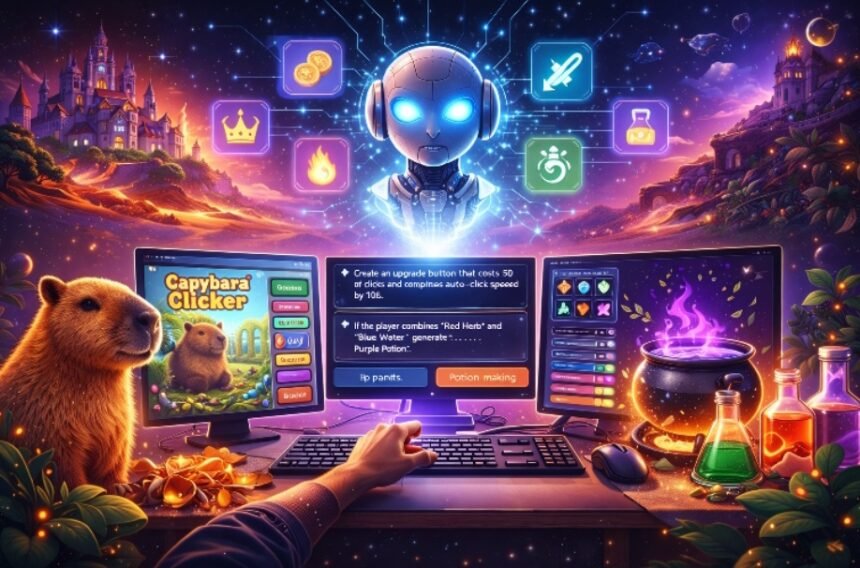
The dream of building a video game has inspired millions, but for a long time, it remained just that, a dream. The path was guarded by the formidable dragon of programming, a beast that required years of study to tame. If you were an artist, a writer, or simply a creative person without a background in computer science, the gates to game development were closed. Today, those gates are being blown wide open.
A new generation of no-code game development platforms, powered by artificial intelligence, is changing everything. These intuitive tools are turning the complex craft of game creation into an accessible art form. They provide a guided pathway for aspiring creators to build, publish, and share their interactive worlds without writing a single line of code.
This guide will walk you through how these AI-enhanced platforms work, what benefits they offer, and how they empower creators to build everything from atmospheric experiences like Aether Isle to simple, relaxing digital toys like Cozy Fireplace.
What Are No-Code Game Development Platforms?
At its core, a no-code game development platform is a software environment that replaces traditional coding with visual, intuitive interfaces. Instead of typing commands into a text editor, you build your game by dragging and dropping elements, connecting logic blocks, and adjusting properties in a user friendly menu.
The process is similar to building with digital LEGOs. The platform provides the blocks characters, objects, and behaviors and you assemble them to create your game.
The AI Supercharger
While no-code tools have been around for a while, the integration of artificial intelligence has transformed them from simple hobbyist tools into powerful creation engines. AI acts as an intelligent assistant, streamlining every part of the process.
Here’s how AI enhances no-code game development:
- Generative Asset Creation: You can create characters, backgrounds, and items by simply describing them in text. A prompt like “a spooky, gnarled tree for a dark forest” can generate the visual asset in seconds.
- Natural Language Logic: Instead of searching for the right logic block, you can describe what you want to happen. “When the player collects a key, open the locked door” can be translated by the AI into a functional game mechanic.
- Automated Optimization: AI can help manage the technical side of things, like optimizing textures or ensuring the game runs smoothly, tasks that would typically require a programmer.
Why Creators Are Choosing No-Code AI Platforms
Benefits of AI-Powered No-Code Game Development
- Accessibility for Everyone: Artists, writers, educators, and hobbyists can build games—no technical background required.
- Faster Development Time: Games that once took months can now be built in days or even hours.
- Creative Freedom: Without coding limitations, creators can focus on: Storytelling/Visual style/Player experience.
- Lower Cost
No need to hire developers or buy expensive software tools.
Real-World Game Types You Can Build
No-code AI platforms aren’t limited to one genre. You can create:
- War games (like war tower defense)
- Relaxing ambient experiences
- Casual clicker games (e.g., global tap)
- Puzzle and logic games
- Educational and interactive storytelling games
The Definitive Guide to Getting Started
Feeling inspired? Here is a step-by-step guide to beginning your journey with no-code game development platforms.
Step 1: Choose Your Platform
Many platforms are emerging, each with different strengths. Look for one that emphasizes AI assistance, features a strong community for support, and allows for easy publishing, like Astrocade.
Step 2: Start with a Simple Concept
Don’t try to build your dream open-world RPG on day one. Start with a single-screen game. Recreate a classic like Pong, build a clicker game like Capybara Clicker, or design a simple interactive scene like Cozy Fireplace. The goal is to learn the tool’s interface.
Step 3: Lean on the AI
Treat the AI as your co-developer. Use it for everything.
- Ask it for game ideas.
- Prompt it to create your character sprites and backgrounds.
- Use natural language to build your game logic.
- When you get stuck, describe your problem to the AI and ask for a solution.
Step 4: Focus on the “Game Feel”
Since you aren’t spending time debugging code, you can invest your energy in what makes a game feel good to play. Tweak the speed of your character, the height of their jump, or the sound a coin makes when collected. These small details make a huge difference.
Step 5: Publish and Share
The best way to learn is to get feedback. Most no-code platforms have a one-click publish feature that lets you share your game with the world. Don’t be afraid to share your first project. The feedback you receive will be invaluable for your next one.
Conclusion
The world of game development is no longer an exclusive club. AI powered no code game development platforms have torn down the technical walls, inviting artists, writers, and dreamers of all backgrounds to become creators.
Whether your goal is to build a mysterious, atmospheric world like Aether Isle or a simple, relaxing experience like Cozy Fireplace, the tools are ready for you. They are accessible, powerful, and designed to turn your creative vision into an interactive reality. The only thing you need to start is an idea.