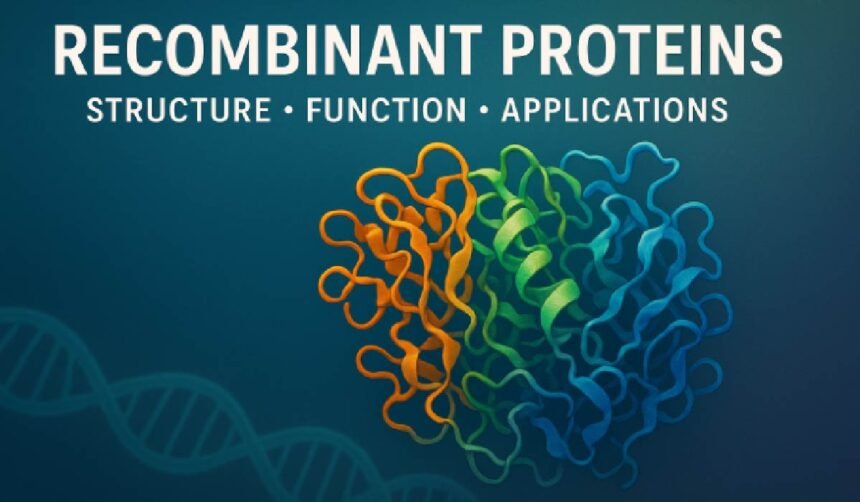
Recombinant proteins have changed the way we think about biology and medicine. Scientists create these proteins by inserting specific genes into host cells, like bacteria or yeast, to produce large amounts of the desired molecule. This process opens doors to new treatments and tools in research. At BETA LIFESCIENCE, we focus on delivering high-quality recombinant proteins for labs and companies.
The idea behind recombinant proteins started in the 1970s with genetic engineering. Today, they play a key role in drugs, vaccines, and diagnostics. Understanding their structure and function helps explain why they matter so much.
This post dives into what recombinant proteins are, how they work, and where they fit in real life. Keep reading to see the full picture.
What Are Recombinant Proteins?
Recombinant proteins come from DNA that scientists combine and insert into a host organism. The host then makes the protein based on that DNA instructions.
Common hosts include E. coli bacteria, yeast, or mammalian cells. Each type offers different benefits depending on the protein needs.
For example, bacteria grow fast and cost less, but they might not fold complex proteins correctly. Mammalian cells handle folding better but take more time and money.
LSI terms like protein expression, gene cloning, and purification steps tie into this process. These steps ensure the final product stays pure and active.
Structure of Recombinant Proteins
The structure of recombinant proteins determines how they behave. It includes primary, secondary, tertiary, and quaternary levels.
Primary structure is the amino acid sequence. Secondary involves alpha helices or beta sheets. Tertiary is the 3D fold, and quaternary means multiple subunits.
Scientists use X-ray crystallography or NMR to map these structures. This knowledge guides improvements in stability and activity.
At BETA LIFESCIENCE, we apply structural insights to produce reliable recombinant proteins. Our team checks every batch for correct folding.
Disulfide bonds and post-translational modifications, like glycosylation, add to the complexity. These features mimic natural proteins and boost performance in applications.
Function of Recombinant Proteins
Recombinant proteins carry out specific tasks in the body or lab. Enzymes speed up reactions, hormones signal cells, and antibodies fight invaders.
Insulin, a classic example, treats diabetes. Patients once relied on animal sources, but recombinant human insulin is safer and more consistent.
Growth factors promote cell growth in tissue engineering. Cytokines regulate immune responses in cancer therapy.
Functions depend on binding sites and active regions. Mutations can enhance or alter these roles for custom needs.
In research, recombinant proteins serve as standards in assays. They help measure biomarkers accurately.
Production Process
Making recombinant proteins follows clear steps. First, design the gene and insert it into a vector.
Next, transform the host cells and select those that take up the DNA. Then, grow cultures under controlled conditions.
Induce expression with chemicals like IPTG for bacteria. Harvest cells and purify the protein using chromatography.
Quality control tests for purity, activity, and contaminants. Scale-up moves from lab to industrial levels.
BETA LIFESCIENCE excels in this production. We offer custom recombinant proteins tailored to your project.
Challenges include inclusion bodies in bacteria or low yields. Solutions involve optimized codons or different hosts.
Applications in Medicine
Recombinant proteins drive many medical advances. Monoclonal antibodies target cancer cells precisely.
Vaccines like HPV use recombinant antigens to train the immune system. This avoids live viruses.
Erythropoietin stimulates red blood cell production for anemia patients. Factor VIII helps with hemophilia.
Gene therapy vectors often include recombinant proteins. They deliver corrected genes safely.
Diagnostics rely on recombinant proteins for ELISA kits. These detect diseases quickly.
Applications in Research and Industry
Labs use recombinant proteins to study pathways. Knockout models combine with them for deeper insights.
In industry, enzymes break down waste or produce biofuels. Detergent additives remove stains effectively.
Agriculture benefits from recombinant pest-resistant proteins. Food processing uses them for better textures.
BETA LIFESCIENCE supplies recombinant proteins for these fields. Our catalog covers enzymes, cytokines, and more.
Emerging uses include CRISPR tools and synthetic biology. The potential keeps growing.
Benefits and Challenges
Recombinant proteins offer scalability and consistency. They reduce reliance on animal sources.
Ethical production avoids animal testing in some cases. Customization meets exact specs.
Challenges include high costs for complex proteins. Immunogenicity can occur in therapeutics.
Ongoing research improves yields and reduces side effects. New hosts like insect cells expand options.
Conclusion
Recombinant proteins blend science and practical solutions. Their structure supports diverse functions, from healing to research.
As demand rises, companies like BETA LIFESCIENCE lead with expert production. Contact us for your recombinant proteins needs today.