



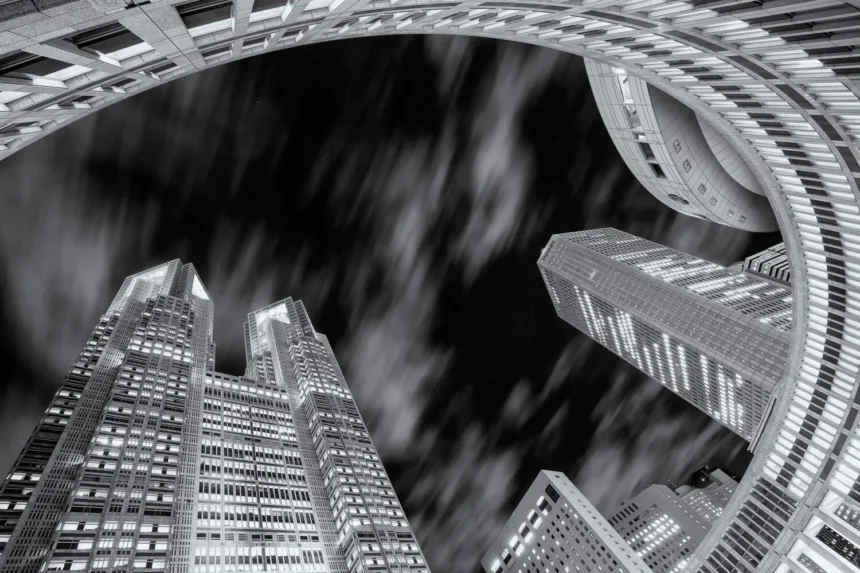
Brick, glass, concrete, what you frame says as much about you as it does the architect. Professional architectural photography seeks both story and structure, balancing aesthetics with documentary fact. You might find that the best images rarely shout: they rather hum quietly about provenance and detail.
Unlike other genres, you are working with environments already shaped by visionaries but open to your reinterpretation. You are collaborating, in a sense, across time with those who imagined these spaces. Your goal? To translate a structure’s function, material, atmosphere, and relationship to its surroundings. Try asking yourself: What was the architect hoping to achieve, and how can your image echo or even subvert that intention for your audience?
In the case that you sense a location’s pulse, the energy of use, the way rain beads on limestone, you are already ahead. Every time you step with camera in hand, you build understanding through repetition and curiosity. Architecture stands still, but your approach will not.
Essential Techniques for Capturing Architecture
Precision has its charms, doesn’t it? With architectural photography, technique carries equal weight to your creativity. You will find that a sturdy tripod soon becomes your closest companion, especially when chasing the crispness needed for detailed exteriors or dim cathedral interiors. A tilt-shift lens can work wonders if you wish to correct converging lines common with tall structures, helping to present a scene true to the human eye (or alternatively, to amplify perspective for dramatic effect).
Straightening verticals might seem like a minor detail, yet neglect can nudge even the grandest building toward cartoonish distortion. The trick here is checking your lines both through your viewfinder and once more in post. Meticulous focus, low ISO for noise control, and deliberate control of aperture (often f/8 to f/16 for deep sharpness) will serve you well. And don’t forget: patience is every bit as valuable as your kit. Waiting for passing clouds, shifting crowds, or a fleeting warmth of sunset, all grant you an edge.
Creative Approaches to Architectural Shots
There’s a risk that classic shots become a visual lullaby, beautiful, yes, but easily forgotten. Disturb routine by seeking fresh vantage points. Try lying low to exaggerate looming columns or climbing a nearby stairway to peer down at a hidden courtyard. Use puddles to mirror arches in moody symmetry or blur traffic streaks against a static historic facade for visual contrast.
You might experiment with abstraction, cropping tightly to transform familiar shapes into puzzles for your viewer. Or perhaps, you introduce human presence as scale, a well-placed figure dwarfed by a Victorian viaduct invites viewers to reflect on ambition and vulnerability in one breath.
Ask yourself: What visual story haven’t you told in this space? Tilt shadows into unexpected forms, overlay texture and repetition, or shoot through foliage for an almost voyeuristic frame. The city waits to be reimagined by your unique view.
Lighting Strategies for Architectural Photography
Sunlight, mist, the odd glint off a passing car, within architecture, lighting refuses to stand still. Your patience might wander, but your best photographs rarely will. Soft golden hour light, just after sunrise or before sunset, reveals textures that midday glare washes into oblivion. In the UK, soft light from overcast skies can be your ally, pulling out subtle details without harsh shadow play.
You may discover that artificial lighting transforms a structure by night, creating dramatic contrast and a new sense of story. Using long exposures after dusk, you can render a blank window as a glowing beacon, and streets as rivers of colour.
Adapting to what weather gives you is key. Sometimes the day’s drizzle, reflecting in slick pavement, turns a dull modern block into something theatrical. You can incorporate backlight, sidelighting, or even silhouette to shape mood and meaning, pulling your audience deeper into the moment you captured.
Composition and Framing Tips
Architecture is measured, but your framing needn’t be regimented. Play with the rules, sometimes you bend the grid to purpose. Use the rule of thirds to lead the eye, but don’t treat it as scripture. Symmetry can be satisfying, yet an off-centre placement might spark unexpected intrigue.
Leading lines, be they balustrades or a row of lamps, pull viewers toward your story. Foreground interest, framing a cathedral spire through an archway or a burst of greenery beside harsh masonry, adds depth to your narrative.
Vertical shots can lend grandeur to slender towers, while horizontals might speak to expansiveness. You might experiment with negative space to provide breathing room, or fill the frame to accentuate pattern and repetition. Trust your instincts, and revisit your shots, often, your best composition reveals itself in hindsight.
Showcasing Context and Environment
No building rises alone. You can choose to frame its relationship with the messiness and charm of its locale, rows of bikes chained outside a university, the bustle of street life jostling against an ancient stone wall. Context whispers a structure’s secrets.
Pull back to include the wider scene, or drop in hints of the surrounding climate, city blocks, or vegetation. This not only situates your subject in place but invites viewers to interpret architecture as part of a living, shifting world.
Environmental context transforms a rigid façade into part of an unfolding story. Look for signs of adaptation, weathering, graffiti, rooftop gardens, a wild tangle of cable. In each case, your photograph becomes a record of interaction, use, and endurance.
Post-Processing for Professional Results
You will want the aftercare to match the precision of your fieldwork. Post-processing in Lightroom or Capture One can refine what your lens collects. Correct perspective drift, adjust white balance to reflect authenticity, and coax out shadows and highlights for better balance.
You’ll find that subtlety trumps spectacle. Remove distractions, errant car, unsightly litter, a ghosting pedestrian, but avoid the temptation to over-polish. Architecture’s soul lives in its imperfections, and a clinical gleam can smother what made you stop in the first place.
Work in layers, using masks to preserve detail in glass or stone while gently raising the contrast. Keep an eye out: over-sharpening or excessive HDR might flatten your image into something synthetic. Instead, strive for a look that feels honest, inviting curiosity with every glance.
In Closing
To practise professional architectural photography is to engage in a silent conversation with buildings and their history. Through care in technique, inventiveness in vision, and a patient eye for light and context, your photographs can offer fresh interpretations of even the oldest stones. Next time you stand before a familiar exterior, take a breath and ask what you have missed, each weathered detail or curious shadow holds a fragment waiting to be seen anew. So, where will your lens travel next?