



Vahagn Sargsyan, the founder of the workforce productivity platform WebWork, publishes a new book, Builder’s Time, a non-fiction book that describes how people and organisations use time, work organisation, and performance. The book covers issues that are commonly encountered by builders, such as founders, engineers, designers, and distributed teams, and introduces time as a form of structure of work and not a resource that can be managed passively.
The essence of Builder time is in the manner in which the modern work settings determine behaviour, attention, and results. The book does not focus on speed or amount of work, but instead on the allocation of time, decision making, and workflow design, and their effect on long-term progress. It is informed by the experience that Sargsyan has had in the process of building and operating software products and managing technical teams over a period of over a decade.
Themes Addressed in the Book
Builder’s Time considers the relationship of builders with time that has been influenced by the ever-present connectivity and shifting work hours. It argues that traditional ideas of productivity do not account for the cognitive and structural requirements of contemporary work.
There is no one particular methodology promoted in the book. Rather, it states observations and structures that can be adjusted to fit the reader’s role, group size, and working conditions. Cases are based on the startup setting, software project teams, and long-term product projects.
Applicability to Existing Work Trends.
The most common challenges reported in many organisations are related to visibility, accountability, and sustainable work practices. The book has also influenced the current debate concerning the way in which work is organised, and not the place where it is conducted.
Investigating the concept of time as a design feature, Builder’s Time aligns with a broader discourse on transparency in workflows, performance measurement based on results, and the constraints of conventional productivity indicators. The book tackles these concerns, but does not brand itself as a management guide, giving an analysis based on operational experience.
Intended Audience
The book is aimed at professionals who have to work with products, systems or organisations building. It consists of founders, team heads, engineers, designers, and independent contributors who have complex work over long-term periods. It is also applicable to the readers who are interested in finding out the effects of organisational structures on individual work patterns.
Although the book is based on the experience of the software industry, its ideas do not apply only to the world of technology companies. The discussed principles can be applied in a working environment that requires sustained attention, teamwork, and continuous development.
About the Author
Vahagn Sargsyan is a technology entrepreneur and product developer who has experience in software development and workforce analytics. He is the creator of WebWork and has experienced distributed work teams in different time zones. He works on the issue of studying the impact of systems, tools, and structures on human productivity.
His work experience has been in the field of internal tool building, engineering team management, and scaling of a software product in use by organizations across various locations. It is these experiences that underlie the observations and frameworks that are presented in Builder time. Challenges faced in the process of product execution have been reflected in the book, and not the theoretical aspects of abstract productivity.
About WebWork
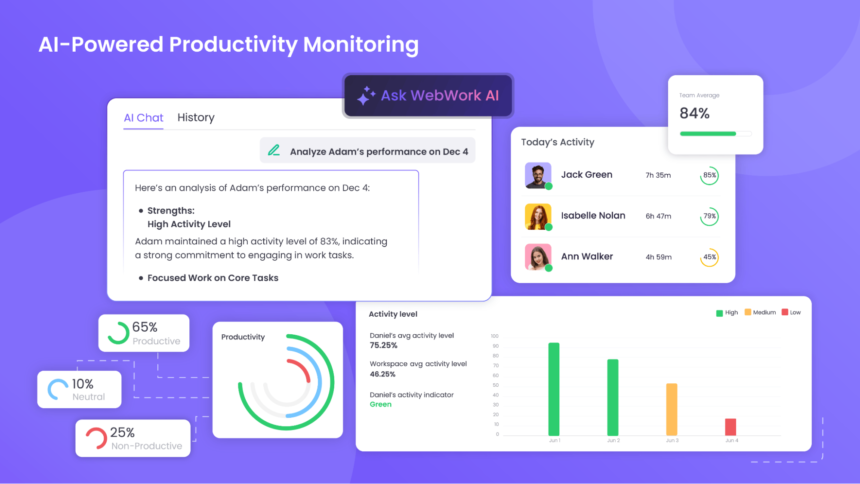
WebWork is a workforce productivity and time tracking solution that offers the means of tracking the working hours, analysing the trend in the activity and managing the working patterns of the team. The platform is built to assist organisations that want to gain an informational understanding of work performance and resource allocation through data.