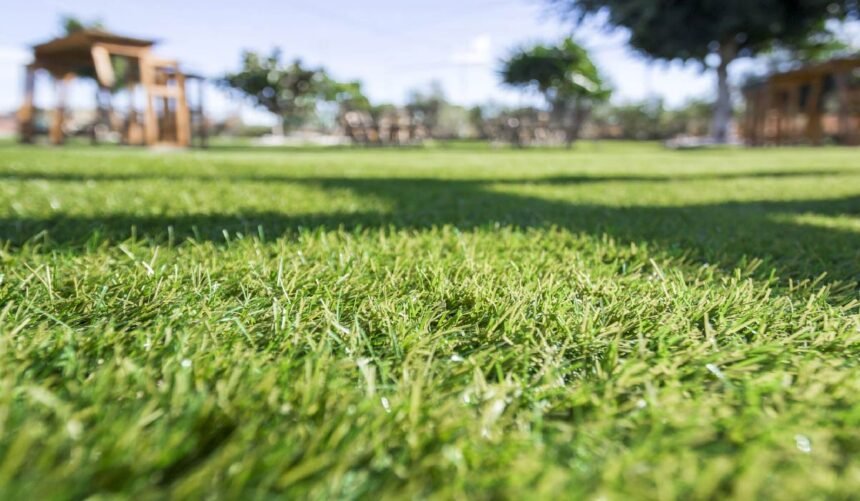
Some gardens stay usable all year. Others turn to mud after three days of rain. The difference is rarely luck. Drainage decides it. Soil type underneath, surface choice on top. Clay-heavy ground with no sub-base improvement stays wet. That changes how the whole garden gets used, from the path to the back door to the patch where children or dogs run most. Artificial grass laid over a properly prepared base drains efficiently and holds its shape through the wet months without recovery cycles.
Soil Type and Drainage Capacity Determine Garden Resilience
Soil composition decides how a garden handles rain. Clay holds water long after the rain stops. Three dry days and the ground still feels wet underfoot. Sandy soils go the other way: water runs through fast and takes nutrients with it. Loam sits between them. Across many UK residential areas, heavy clay soil makes autumn and winter waterlogging a recurring problem. Grass roots cannot establish properly in saturated ground.
For homeowners dealing with clay-heavy ground, Urmston Grass can assess the site, prepare the sub-base, and install artificial grass with drainage built into the job from the start.
Every footfall compacts the surface slightly. Over a season of regular use, that adds up. Children, dogs and regular foot traffic all reduce how much water the soil can take before it pools. Compaction is slow and invisible until the muddy patches appear.
The test is straightforward: dig where the new surface will go, fill it with water, time the drain. Sixty minutes and still standing means the ground needs extra drainage work before any surface layer goes down.
UK Climate Patterns and Seasonal Rainfall Impact Garden Conditions
Totals miss the point. Annual rainfall varies across the UK, but the rainfall pattern matters more. October to March delivers rain in sequences, not single events. Two wet days, one dry, three more wet. Clay ground never recovers between cycles.
Grass cannot repair itself in saturated ground. High-traffic spots show damage first. Bare patches spread outward from there.
Keeping a garden functional through wet months requires deliberate action. Drainage improvements and surface changes both need skilled preparation to perform over time, not just in the first season.
Drainage Solutions and Surface Alternatives for Year-Round Use
Waterlogged gardens have options. French drains move subsurface water sideways, away from the saturated zone. Soakaways take it downward and release it slowly. Raised beds sit above the saturated zone entirely. Gravel paths and permeable paving cut pooling on routes affected by surface water and regular foot traffic.
A year-round lawn surface starts below ground level, not above it. Excavation to 75 to 100 millimetres removes topsoil and organic debris. Compacted aggregate goes in first. It moves water downward while giving the surface something firm to sit on.
A geotextile membrane goes above the aggregate. Weeds blocked from below. Drainage layers held in place. The surface needs a 1 in 100 slope at minimum. Less than that and water sits underneath rather than clears. Ask any installer for previous work on comparable ground before committing.
Artificial Grass Installation Requirements
Percolation test first. It establishes whether the ground drains adequately or needs additional measures before installation starts. Ground water can change how stable the base stays after heavy rain, so excavation depth matters. Anything less than 75 millimetres creates a sub-base that cannot drain or support the surface properly over time.
Confirm the geotextile membrane is included. It separates drainage layers and blocks weed growth from below. Check the finished surface slope. 1 in 100 minimum. Skip the slope and the surface fails in wet weather. The one condition it was supposed to handle.
Previous residential projects on clay soils are the reference point worth asking for. Not accreditations. Actual results on ground that presented the same drainage challenge.
Lifecycle Costs and Environmental Considerations
Mowing every fortnight. Fertiliser in spring. Reseeding after summer. On clay-heavy UK ground, that reseeding is not optional and it is not a one-off. Same patches, same cost, same result every year the soil situation stays unaddressed.
Switch to synthetic turf and most of those costs stop. A properly installed surface runs for over a decade. Brushing and rinsing occasionally. That covers it for most residential gardens.
Environmental considerations require attention at every stage. Microplastic release is reduced by regular sweeping and rinsing to keep loose fibres contained. Gentle brushing works. Harsh jet-washing loosens fibres faster than normal wear does. Buffer planting at the edges of an installation, shrubs or hedging, captures fragments before they reach drains or adjacent garden areas.
Biodiversity does not have to disappear entirely. Keeping natural planting borders or wildlife-friendly sections alongside an artificial grass installation maintains soil access for insects. Where full replacement is necessary, raised beds or bare tree surrounds preserve some soil contact for ground-level wildlife.
Sort disposal before the turf comes up, not after. Confirm in writing whether the contractor uses synthetic turf recycling or approved landfill before removal starts. Collect all offcuts in sealed bags, separated from general waste. Standard skip hire does not always process synthetic turf separately. Written confirmation of regulatory compliance from the waste contractor is worth obtaining before the job starts. Some regional councils and specialist waste handlers provide collection points or arrangements for synthetic turf disposal. Checking with the local council or the original installer gives the most current options.
A garden that stays usable through wet weather is rarely the result of the surface alone. It comes from the ground preparation, the drainage plan and the way the installation is handled from the start. For homeowners dealing with clay soil, heavy foot traffic or repeated waterlogging, the best result comes from fixing the base before choosing the finish. Get that right, and the garden has a much better chance of staying clean, stable and useful through the months when natural grass usually gives up.