



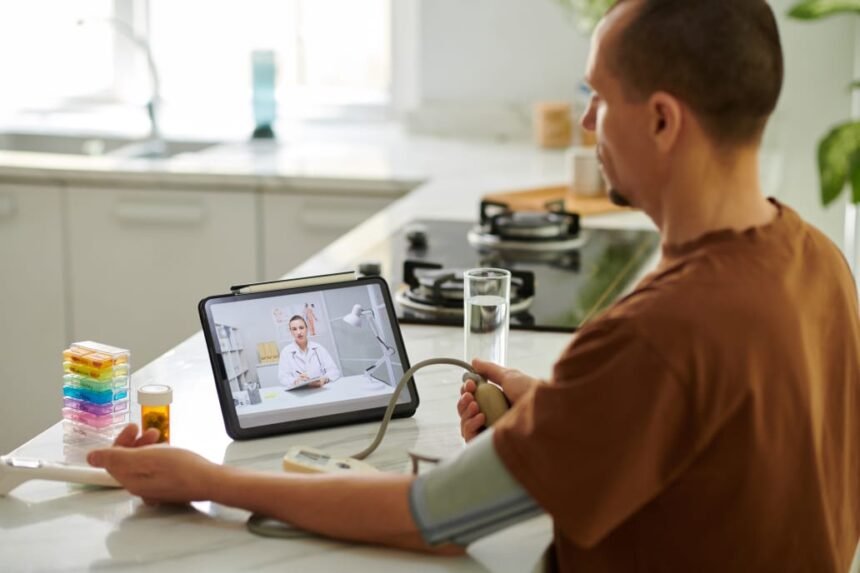
Federally Qualified Health Centers and Rural Health Clinics play a very important role as an access point to millions of patients who visit them because of economic, geographic, and social barriers to care. The structures of these organizations are intended to provide inclusive, low-cost health services in underserved areas, and in most cases, with low staff levels and small budgets. Remote patient monitoring for FQHCs is a viable method of extending care beyond the confines of the clinic, but in line with the mission of enhancing access and equity.
The Care Challenges Facing Community Health Clinics
FQHCs and RHCs regularly treat large numbers of chronic patients with diabetes, hypertension, COPD, and heart disease, among others. Patients also have difficulty getting to and getting to the hospital due to issues with transport, job issues, or long distances, which result in late appointments and care. These barriers render continuity of care in clinics solely based on traditional models of visits difficult. Remote patient monitoring serves to address these lapses by enabling care teams to be in touch with patients between visits.
What Remote Patient Monitoring Looks Like in Practice
Remote patient monitoring in a community health setting normally implies the provision of patients with simple medical equipment to monitor vital signs at home. Data is transported to clinical dashboards safely, and the nurses, care coordinators, and providers can track the trends as time goes by. Care teams can detect issues and intervene prior to the escalation of conditions to lessen unnecessary emergency and hospitalization, as opposed to patients coming back to the clinic only to realize they are experiencing a condition that causes an issue.
Improving Chronic Disease Management at Scale
One of the most effective applications of remote patient monitoring in FQHCs and RHCs is chronic disease management. With continuous data collection, the providers obtain the condition of the patients under real-world settings in response to medications, lifestyle modifications, and treatment regimes. This transparency allows making changes more quickly and providing more individual care. In the case of the clinics with large patient panels, remote monitoring will facilitate scalable monitoring without necessarily having to be present at all times.
Addressing Access Barriers in Rural and Underserved Areas
In the case of a rural health clinic, distance can be the greatest impediment to regular treatment. Routine checkups may require hours of travel by the patient, and thus, frequent monitoring is not realistic. Remote patient monitoring saves travel and clinically monitors the patient. It serves to keep patients in underserved urban areas involved in their care, as they struggle with transportation, caregiving, or work-related issues. The outcome in either of the two settings is enhanced access without the need to enlarge physical infrastructure.
Supporting Care Teams With Limited Resources
FQHCs and RHCs tend to have slim staffing schemes and scanty specialty backup. An effective remote patient monitoring program can improve the efficiency of the care team and not complicate it. The automated notifications, trend overviews, and simplified work processes assist employees in prioritizing patients who require their attention the most. Remote monitoring is a force multiplier that increases the already-strained teams when combined with other systems.
Aligning With Value-Based Care and Quality Measures
The value-based care program and alternative payment models are increasingly involving community health clinics. Remote patient monitoring helps in these issues by enhancing quality measurements, decreasing the usage of hospitals, and enhancing the strength of care coordination. Early detection of problems assists clinics in avoiding the expensive complications that adversely affect performance measures. This preventive measure integrates financial sustainability and improved patient outcomes.
Reimbursement Opportunities for FQHCs and RHCs
With the increasing reimbursement options, remote patient monitoring is becoming more cost-effective for community clinics. As long as they are used properly, the monitoring programs may result in recurring revenue, which may then be used to coordinate care and engage patients in their efforts. In the case of FQHCs and RHCs, this revenue is capable of covering operational expenses and reinvesting in personnel, technology, and other patient care services without affecting the mission-driven care.
Building Patient Trust and Engagement
Effective care in underserved communities involves trust. Remote patient monitoring reinforces this trust by showing a continued interest even after the clinic and session. Patients also feel comfortable with the fact that their health information is being reviewed and that the health care professional will contact them in case of something wrong. In the long term, this regular interaction enhances compliance, self-management, and patient satisfaction, which are essential for long-term health improvement.
The Role of Technology Equity and Simplicity
Effective remote patient monitoring initiatives in FQHCs and RHCs are focused on simplicity and inclusiveness. Devices should be user-friendly, should have minimal technical expertise, and should work efficiently in situations where connectivity is low. The programs that consider the language, literacy, and digital access barriers have a much higher chance of success. Patients should be accommodated by technology and not the other way round.
Conclusion
Remote patient monitoring does not substitute face-to-face care, but is a potent continuation of it. In the case of FQHCs and RHCs, it would provide a viable means of reach expansion, enhanced outcomes, and increased financial stability without becoming detached due to a focus on community-centered care. With healthcare on the rise, remote patient monitoring will become significant in assisting community clinics to provide proactive, equitable, and sustainable care to the most needy populations.