



At A Glance
- While useful and cost-effective, shared washrooms can make privacy a little challenging
- Installing a high-quality bathroom door lock helps to ensure privacy is maintained for all
- Choose from latch locks, thumb-turn locks, and door chains for affordable toilet door locks
- Make sure your locks for doors are compatible with your door type and are easy to use
If you have a shared washroom, does it have a working bathroom door lock? If not, it’s time to change that. Bathroom door locks are essential for privacy; nobody wants someone walking in on them when they are just out of the shower or in the middle of nature’s call!
To help you improve bathroom security and guarantee privacy, we’ll show you how to find the ideal locks for bathroom doors. This guide contains information supplied by Locks & Hardware, a provider of a wide range of bathroom door lock options and other door locks. Use our insights below to help ensure your shared washrooms remain safe, secure, and private when in use.
Privacy And Safety Are Critical For Shared Washrooms
In any shared space, privacy can be a challenge. From shared living accommodation like student flats to shared washrooms in communal buildings, privacy is often tested to the limit. People want to be able to take a shower or handle their natural duties in privacy, right? Well, without a bathroom door lock, that isn’t so easy.
Yes, we can all put up the ‘Engaged’ sign on the door. Or we can hope that people notice the bathroom door is closed and/or that the light is on. However, that’s not always enough. If someone is in a rush to get to the toilet, they might just open the door and walk in. That can seriously impact your privacy and make it hard to use the bathroom. Nobody wants to be interrupted when using the toilet!
For anyone who owns a property with a shared washroom, it helps to take privacy concerns seriously. That means installing a suitable bathroom door lock. Bathroom door locks are durable and remain locked once activated. With a simple thumb-turn lock or latch lock, or even a simple chain, you can avoid the risk of people walking in on one another while using the toilet or shower.
What type of bathroom door lock should you invest in, though? There are, after all, many options. In our discussion with Locks & Handles, we identified a few commonly recommended types of bathroom door locks. If you wish to install a bathroom door lock, we recommend using one of the following.
The Best Types Of Bathroom Door Locks Explained
The challenge you might face is that bathroom door locks come in various styles. Our advice would be to look at the following bathroom door lock types:
Lockable Door Knobs
The most basic choice is a lockable doorknob. These fit into the palm and have a lockset fitted into the knob itself. When you twist the knob or press the button on the knob, it should lock the door behind you. They are simple to install, provide a standard level of security, and are easy to use. With the handle locked, the bathroom door can now only open from the inside, granting valuable privacy.
Thumb-Turn Handles
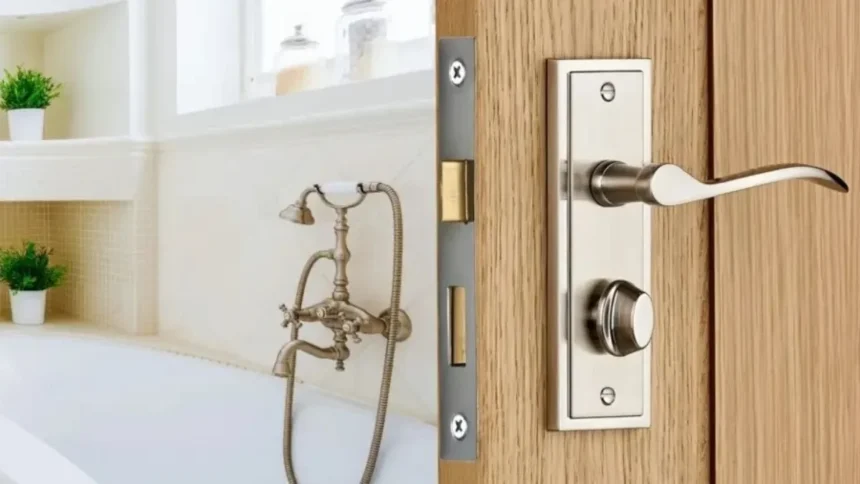
Thumb-turn door handles are a good place to start. These are similar to the above in that they have a simple thumb-turn lock mechanism that can be activated. They are great for shared spaces, as they can be kept secure from the inside but overridden manually from the outside. If someone has an accident or the lock sticks, someone on the other side can disengage the lock. For general bathroom privacy, though, they work extremely well.
You also get thumb-turn-and-release locks for bathroom doors. These can be opened from the outside with the emergency release, while the occupant can quickly secure the door and keep it shut by using the thumb-turn mechanism.
Door Bolts & Chains
A great alternative is a simple physical bolt. A bolt is effective as it can be manually locked from the inside. Once the bolt is engaged, no one can force the door open.
Another option would be to go for a door chain. The person in the bathroom manually activates these. Chains are simple to install yourself and require no internal lock changes.
Door chains and bolts can only be engaged from the inside, though, so if someone has an accident and the door is locked with the chain, then the door would need to be forced open to help them. Not ideal, but a door chain is among the most cost-effective ways to improve bathroom privacy.
What bathroom door lock is the right choice for you? There is no universal answer. Determine your choice based on the cost, compatibility with your current bathroom door(s), and usage level. Washrooms with multiple users might see the door used more often, so look for bathroom door locks designed for frequent use without wearing out.
Remember to Maintain Your Bathroom Door Lock(s)
With your new bathroom door lock chosen and installed, anyone living in or using this shared space should feel much safer. At the same time, you now know that people’s privacy isn’t being regularly invaded, which is always a positive!
However, this is just the start of improving shared washroom security and privacy. You should also regularly maintain your bathroom door locks. Most of the time, a little cleaning and a bit of lubricant are enough.
Over time, though, wear and tear, and the humid conditions in a bathroom can mean you might need to tighten screws to keep the lock mechanism aligned. You may also need to replace screws if they become worn or start to rust.
Just remember to check the doors’ function frequently: if you notice the lock sticking or jamming, or signs of wear and tear such as rust, take action ASAP. The sooner you act, the longer it will take for the lock to fail and need to be replaced. With regular maintenance, you can keep that bathroom door lock working for longer!