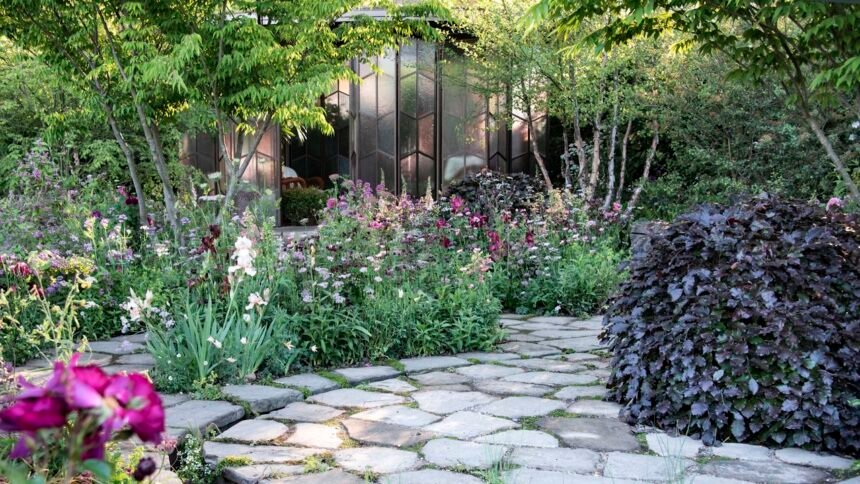
Picture this. It’s a grey Tuesday in February. You glance out of the kitchen window whilst waiting for the kettle to boil, and instead of a bare, muddy expanse staring back at you, there’s colour. There’s structure. There’s something worth looking at. It sounds like a fantasy reserved for professional garden designers and people with far too much time on their hands — but it really isn’t. A garden that earns its keep across every season is entirely achievable, and it starts with understanding a few principles that most gardening guides never bother to explain properly.
This isn’t a list of plants to buy. Well, not entirely. It’s more of a way of thinking about your garden differently — as a living space that changes, breathes, and surprises you, rather than a summer project that gets forgotten about the moment October arrives.
The Problem With “Summer Gardens”
Most people, if they’re honest, only really think about their garden between May and September. That’s when the furniture comes out, the barbecue gets lit, and suddenly everyone’s an outdoor living enthusiast. Come October, the cushions get stuffed into the shed, the dahlias go over, and the garden becomes something you hurry past on the way to the bins.
The result is that for roughly half the year, your outdoor space is doing nothing for you. And that’s a shame — not just aesthetically, but practically too. A garden with no winter interest tends to get neglected, which means more catching up to do in spring, which means more stress, more work, and fewer of those genuinely relaxing evenings outside that you spent all winter looking forward to.
The fix isn’t complicated. It just requires thinking a little further ahead than the next bank holiday weekend.
Start With Structure, Not Flowers
Here’s the thing about flowers: they’re temporary. Glorious, yes. Worth growing absolutely. But if flowers are doing all the heavy lifting in your garden, you’re going to be staring at a lot of bare earth for a significant chunk of the year.
Structure — the bones of a garden — is what makes it look considered and cared-for even when nothing much is in bloom. This means evergreen shrubs, interesting tree forms, clipped topiary, statement grasses, and hard landscaping like paths, raised beds, and walls.
Evergreens like box (Buxus), Portuguese laurel, Viburnum tinus, and Sarcococca (winter box) provide year-round greenery that acts as a backdrop to seasonal planting. A couple of well-placed box balls or a neatly clipped yew hedge instantly makes a garden look intentional, even if everything else around it is a work in progress.
Ornamental grasses are particularly underrated for winter. Varieties like Miscanthus sinensis, Calamagrostis, and Pennisetum hold their structure through frost and wind, catching the low winter light in ways that flowering plants simply can’t. Leave them uncut until late February — the seedheads are beautiful, and they provide habitat for overwintering insects.
Trees, even small ones, give a garden genuine presence. A multi-stem Betula (birch) with its distinctive white bark looks stunning against a clear winter sky. Cornus alba (dogwood) grown for its vivid red stems is as eye-catching in December as any summer border.
Get the structure right first, and flowers become a bonus rather than the whole show.
Layer Your Planting for Continuous Colour
Once you’ve got structure sorted, the next task is ensuring that something is always happening in the garden — some colour, some fragrance, some texture — whatever the month. This is where layering comes in.
The idea is simple: plant in waves, so that as one thing finishes, the next thing takes over. In practice, this means thinking about your garden in seasonal blocks and making sure each block has something to offer.
Winter (December to February) is where most gardens fall completely flat, but it doesn’t have to. Hellebores (Christmas and Lenten roses) flower reliably from January onwards and come in an exquisite range of colours from palest blush to near-black. Snowdrops and winter aconites are among the most cheerful sights imaginable in a cold garden. Sarcococca confusa produces tiny, inconspicuous flowers but fills the air with a honey-sweet fragrance that’s completely disproportionate to its size. Mahonia produces architectural spikes of yellow flowers from November right through to spring.
Spring (March to May) needs the least encouragement — it’s the season when gardens practically look after themselves. But without planning, you can end up with everything peaking at once and then nothing for weeks. Stagger your bulb planting across early, mid, and late varieties. Crocuses and miniature narcissi in February give way to tulips in April and alliums in May, creating a relay of colour that carries you all the way to summer without any gaps.
Summer (June to August) is where most gardeners are most confident, but even here there are traps. Planting everything to peak at midsummer means a glorious June and a disappointing August. Extend your summer display by including late-season perennials like Echinacea, Rudbeckia, Agapanthus, and the spectacularly underused Persicaria amplexicaulis, which flowers prolifically from July all the way through to first frost.
Autumn (September to November) is a season in its own right, and one that rewards those who plan for it. Japanese acers set the garden ablaze with colour in October and November. Sedums (now reclassified as Hylotelephium) provide rich, dusty pink flowerheads beloved by late bees. Asters and Japanese anemones carry on bravely well into November. And don’t underestimate the value of berrying shrubs — Cotoneaster, Pyracantha, and Callicarpa with its extraordinary violet berries are genuinely stunning in autumn light.
Don’t Ignore the Vertical Dimension
A common mistake in smaller gardens especially is to think entirely horizontally — borders, beds, lawn. But vertical space is often completely untapped, and using it well can transform the look and feel of even the most modest plot.
Walls and fences are prime real estate. A sunny south- or west-facing fence is capable of supporting climbers that would struggle anywhere else. Wisteria, climbing roses, Clematis in all its many forms, and the fast-growing Trachelospermum jasminoides (star jasmine, with its intoxicating fragrance) will all thrive in such a position and add layers of interest that no amount of border planting can replicate at ground level.
Even on shadier walls, there are options. Hydrangea petiolaris — the climbing hydrangea — is slow to establish but ultimately spectacular. Garrya elliptica produces extraordinary long catkins throughout winter that genuinely stop visitors in their tracks.
Obelisks, arches, and pergolas extend the vertical planting opportunities even into open spaces, and when clothed in roses or clematis, they become the kind of architectural focal points that make a garden look as though it’s been thoughtfully designed rather than assembled over successive Sunday afternoons.
Give Some Thought to Night-Time Interest
The garden doesn’t have to disappear at dusk. Well-planned lighting turns an outdoor space into something magical on summer evenings and makes the garden visible and enjoyable from indoors throughout the darker months.
Solar-powered stake lights have improved enormously in quality and are a low-commitment way to experiment with lighting positions. For a more permanent and atmospheric solution, low-voltage LED systems hardwired into the garden are worth the investment — professional installation aside, the running costs are minimal and the transformative effect on evening entertaining is remarkable.
Think about what you want to illuminate: uplighting a specimen tree creates drama; path lighting adds safety and definition; subtle downlighting from a pergola or wall creates an intimate glow for outdoor dining. A good lighting plan uses a mix of all three.
The Practical Bit: Planning Your Planting Calendar
All of the above sounds wonderful, but making it actually happen requires a degree of planning that gardeners are sometimes reluctant to commit to. The good news is that it needn’t be complicated.
The simplest approach is to walk around your garden in winter — preferably in January, when it’s at its bleakest and most honest — and note down every area where there is nothing of interest. No colour, no structure, no texture. These are your gaps, and they’re your priorities for the coming season.
For those looking to complete their outdoor space alongside their planting, Dobbies Garden Centres offer one of the best-curated selections of garden furniture in the UK — from classic hardwood dining sets to contemporary rattan loungers that complement naturalistic planting schemes beautifully. Getting the furniture right is as important as the planting when it comes to creating an outdoor space you’ll actually want to spend time in: browse all of the full garden furniture from Dobbies there.
A Few Honest Words on Patience
There is one thing no blog post can give you, and that’s patience. A truly great garden takes years to reach its potential. Trees need time to mature. Climbers need time to establish. Perennials need a season or two to settle before they really perform. This is simultaneously the most frustrating and most rewarding thing about gardening — the delayed gratification, the long game.
But here’s the reframe: you’re not just gardening for this summer. You’re gardening for every summer after it too. Every shrub you plant now, every bulb you tuck in this autumn, every climber you train up a fence this weekend — they’re all investments in a future version of your garden that will be more beautiful, more full, and more satisfying than anything you can buy fully formed.
The garden you want is already waiting. You just have to start.
Quick-Reference Planting Highlights by Season:
Winter: Hellebores, Sarcococca, Mahonia, Snowdrops, Cornus, Birch bark
Spring: Tulips, Alliums, Narcissi, Camellia, Prunus (ornamental cherry)
Summer: Roses, Echinacea, Agapanthus, Persicaria, Phlox, Lavender
Autumn: Japanese acer, Asters, Sedums, Cotoneaster, Callicarpa, Japanese anemone
Year-round: Box, Yew, Viburnum tinus, Ornamental grasses, Evergreen climbers