Introduction
In the current competitive manufacturing environment, efficiency, consistency and quality are no longer a choice, rather must now be the order of the day. The bottled liquefied industries and in particular, water, beverages and other consumable industries should engage in new heightened solutions to meet the demand and at the same time, uphold high standards of hygiene and quality.
The advent of automation has created a game-changer as it has brought to the market processes of traditional bottling and converted them into optimized processes of high output. The integration of automated filling systems and business alliances with skilled partners in the sphere of packaging are among the most powerful innovations.
This article highlights the value of automation to modern bottling operations and how choice of partners can impact greatly on long term success.
Understanding Modern Bottling Systems
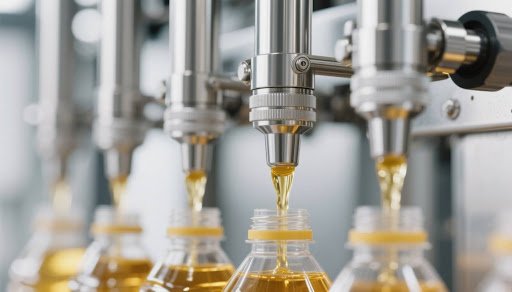
Automatic Water Filling machine is an essential part of any modern production premises as it facilitates the accurate, efficient and hygienic filling. Such machines will be specific to large volumes where there is low involvement of human labor so that the likelihood of contamination and wrong operations is minimized.
With automated machines being compared to manual or semi-automatic systems, the machine has the capability of doing numerous tasks in their entirety, i.e. rinsing, filling and capping a bottle in one integrated line. Industry reports by various organizations such as the International Society of Beverage Technologists have shown an increased production efficiency to up to 40 percent through automated bottling line production and a significant cost cut on labor.
Moreover, such machines come with sophisticated sensors and programmable logic controllers (PLCs) to guarantee precision in each fill cycle. Such a degree of accuracy is of great significance in the industries where any discrepancy, regardless of its absence, may influence the quality of the products and their need to comply with the regulations.
Key Benefits of Automation in Liquid Packaging
Improved Efficiency
Automation is a big boost in saving the time that is spent at every stage of the bottling process. High speed filling systems have the ability to process thousands of bottles in one hour hence suitable for large scale bags.
Enhanced Hygiene and Safety
Robots ensure that there is less interaction between people and the product, thereby lowering chances of contamination. This becomes of most importance in sectors such as drinking water and drinks where there are highly established standards of hygiene that are maintained.
Cost Reduction
Although the initial cost can be high, automated systems also reduce the operational costs in the long run through decreasing the number of people working in an organization, and wastage of products.
Consistency and Quality Control
High-quality filling machines help in the consistency of filling volume and packaging thus retain brand name and customer confidence.
A report introduced by the Food Processing Suppliers Association indicates that organizations using automation experience a quantifiable increase in product quality and as much as 25% defect reduction.
Factors to Consider When Choosing Filling Equipment
Production Capacity
Choose your equipment that meets your present and future production requirements. Inefficiencies can occur due to either overestimating or underestimating capacity.
Material Compatibility
Make sure that the machine is appropriate when it comes to liquid, i.e. water, juice, oils, or chemicals.
Maintenance and Support
Good after-sales services and serviceability are essential in minimizing downtimes as well as maintaining smooth operations.
Compliance with Standards
Seek machines that are internationally tested in terms of quality and safety like the ISO certifications. Compliance also guarantees safety besides making the market more credible.
Scalability
When selecting systems, make sure that you are able to upgrade them or expand them as the business expands. Temporal modular designs can be advantageous in scaling operation to create disruptions that are not significant.
The Role of a Trusted Packaging Partner
It is equally crucial to select the liquid packaging provider as it is with the choice of the machinery. A credible partner will provide expertise, innovation and end-to-end solutions not just limited to mere packaging. With a worthy vendor, you can optimize your complete production line – not to mention sourcing the appropriate materials, but also creating efficient processes.
They tend to provide tailor-made solutions to suit particular needs of the industry, with maximum efficiency and product integrity. Additionally, seasoned vendors are abreast with the current trend in the industry and necessary regulatory audits, which assist companies in staying afloat and operative.
As per a market research conducted by Packaging World, those businesses which have partnered with specialized providers of packaging are faced with accelerated time to market and excellent operational efficiency.
Real-World Applications and Case Insights
Beverage Industry
The automated filling systems have been instrumental in big beverage producers to satisfy the high demand. Firms with advanced bottling lines state that their output and errors in how they operate have decreased.
Pharmaceutical Sector
When it comes to pharmaceutical packaging, it is essential to pay attention to precision and hygiene. Robotics provide dosage correctness and follow strict rules.
Food Industry
Automated liquid packaging systems are used across various products such as sauces all the way to edible oils, to ensure uniformity and enhance the shelf life of products via secure packaging and sealing.
A case study at a mid size bottled water company demonstrated that the productivity of the company rose by 35 percent and labor expenditure was cut by 20% in the first year after installation of automation in the filling system.
Future Trends in Liquid Packaging
Smart Manufacturing
IoT (Internet of Things) is reshaping the process of bottling together with AI. In real time, smart machines will be able to track performance, anticipate maintenance needs and optimize production.
Sustainable Packaging
Green materials and low-energy consumption machines are gaining prominence because companies strive to minimize the impact of the environment.
Customization and Flexibility
Contemporary customers seek diversity and the producers need to be responsive. Flexible packaging systems enable one to make changes in bottle sizes and designs in a short period with no occasion of major down time.
It is projected that the worldwide liquid packaging industry will keep expanding in a steady pattern owing to forthcoming technological changes, as well as rising demand for package products.
Conclusion
Automation in liquid packaging is not only a trend, but a need for companies that want to stay at par with the fast-changing environment of today. The further development of filling systems makes it more efficient, guarantees product quality, and lowers operational expenses.
It is also very crucial that you align with the right packaging expert whom you can give strategic direction and get out-of-the-box solutions that best suit your requirements. These factors combined form an efficient, future-compromising production system that is able to produce both the demands today and the challenges in the future.
Sustainable growth, enhanced profitability and long-term success in the liquid packaging industry can be attained by businesses with the adoption of automation and making informed decisions.